Key facts
- Yum Brands' stock fell amid an investigation into a potential link between Taco Bell's lettuce and a Cyclospora outbreak.
- Federal and state health officials are examining Taco Bell's role in the outbreak, which has affected at least 34 states.
- Taco Bell has temporarily removed lettuce and other fresh ingredients from some restaurant menus as a precautionary measure.
- Cyclospora infections cause diarrhea, nausea, and other gastrointestinal symptoms, with over 1,600 lab-confirmed cases nationwide.
- Michigan is the epicenter of the outbreak, reporting a significant number of cases and hospitalizations.
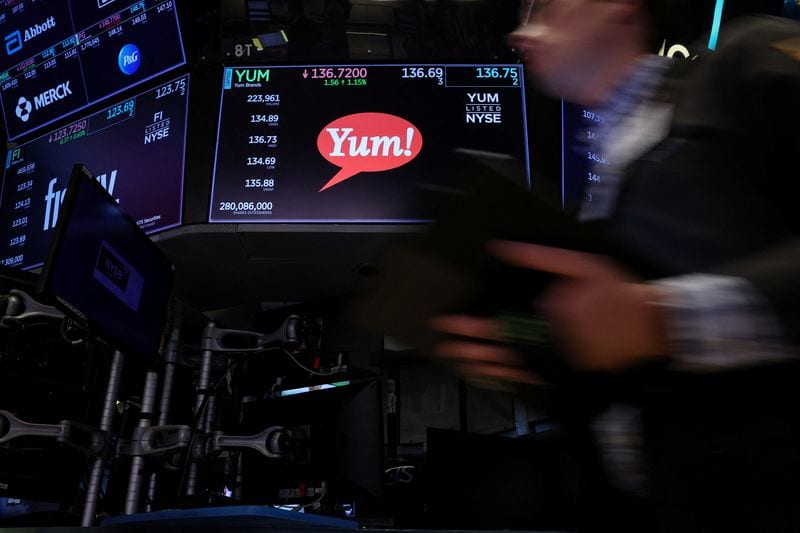
Yum Brands' stock declined after a report surfaced indicating that federal and state health authorities are investigating a potential association between lettuce served at Taco Bell and a nationwide outbreak of cyclosporiasis, an intestinal illness. The company, which owns Taco Bell, saw its shares drop as much as 4.5% following the report.
As a precautionary measure, Taco Bell has reportedly removed certain fresh ingredients, including lettuce, from its menus at some locations. The chain has not yet responded to requests for comment.
Cyclosporiasis cases have been on the rise across the United States in recent months, with 34 states reporting infections. According to the CDC, as of Tuesday, there were 1,645 lab-confirmed cases, an increase of over 800 from the previous week. The outbreak, which began on May 1, is primarily centered in Michigan, with significant case numbers also reported in Ohio and New York. A total of 141 hospitalizations have been recorded, though no deaths have been reported.
Health officials are examining whether Taco Bell played a role in what is described as one of the largest foodborne parasite outbreaks in recent U.S. history. The CDC notes that cyclosporiasis is typically contracted by consuming food or water contaminated with feces, often raw fruits and vegetables. The incubation period can be up to two weeks, complicating source identification.
Analysts suggest that even an unconfirmed link to a foodborne illness can impact consumer perception and potentially weigh on sales in the short term, citing past instances involving McDonald's and Chipotle Mexican Grill during their respective outbreaks.