Key facts
- Thousands of migrants crossed into Spain's North African enclave of Ceuta from Morocco.
- Social media rumors on platforms like Instagram, Facebook, and TikTok fueled the surge.
- Moroccan police allegedly directed some migrants toward Ceuta, contradicting earlier actions.
- At least 72 people died during the crossing, with Spain returning approximately 69,500 migrants to Morocco.
- Hundreds of migrants, including children, remain stranded in Ceuta.
- The European Union has praised Spain's 'swift response' to the crisis.
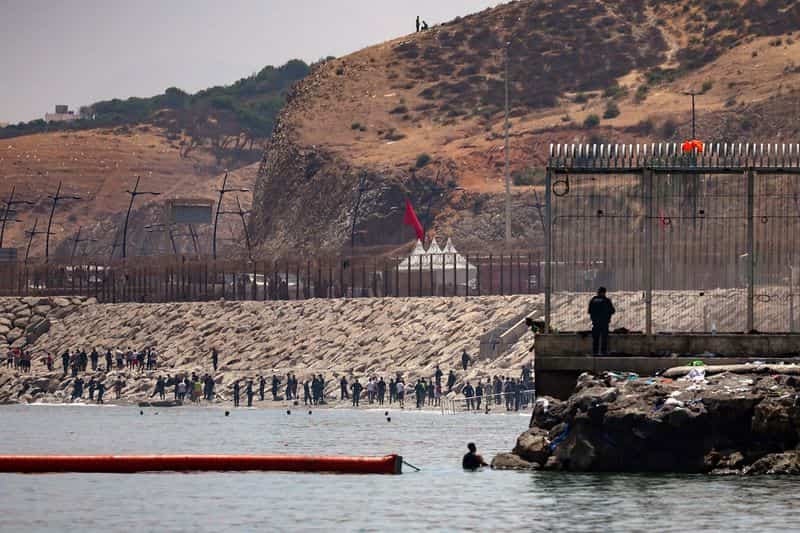
Hundreds of migrants were pictured collecting aid on a beach in Ceuta on Tuesday, following a massive surge into the Spanish territory from Morocco. Spain's Interior Minister Fernando Grande-Marlaska stated that around 72,000 migrants crossed into the enclave between July 30 and 31, with approximately 70,000 since returned to Morocco. The European Union has commended Spain's 'swift response' to the crisis, with EU interior ministers meeting to discuss the situation. Irish Justice Minister Jim O'Callaghan, who chaired the meeting, expressed solidarity with Spain and emphasized the need for a united European response to migration. The incident had been anticipated to cause tension, as Italy's Prime Minister Giorgia Meloni had previously described the images from Ceuta as 'shocking' and a security threat, leading Italy to suspend the Schengen zone agreement with Spain for flights. Finland and Denmark supported Italy's move, while the Czech Prime Minister urged a temporary suspension of Spain's Schengen membership. Spanish Prime Minister Pedro Sánchez criticized some European governments for acting out of 'prejudice, fake news, ignorance, or political interest,' noting Ceuta is not part of the Schengen area. Grande-Marlaska stated the Schengen zone was not compromised and hoped Italy would lift its controls soon. Denmark's immigration minister expressed satisfaction with Spain's response but stressed the importance of controlling EU borders. EU commissioner Magnus Brunner called the incident a 'test' of European resilience that had been 'passed,' and noted the EU offered Spain emergency financial support for border strengthening. The influx is believed to have been fueled by criminal networks and social media disinformation, following a Spanish Supreme Court ruling that migrants intercepted at sea could not be summarily returned to Morocco. Morocco claimed it had warned Spain of potential issues, a claim Spain denied. At least 75 people died on the Spanish side and 11 in Morocco.