Key facts
- South Korea's Kospi index has entered a technical bull market.
- The Kospi index experienced a sharp sell-off in July, falling 22% and ending the month 30% below its peak.
- Active stock-trading accounts in South Korea increased significantly, exceeding two per person.
- Retail investors borrowed heavily to buy stocks, with margin-loan balances reaching a record high.
- Forced selling intensified in July due to settlement shortfalls, totaling nearly 1 trillion won.
- Renewed optimism in artificial intelligence and strong performance from memory chip makers like Samsung Electronics and SK Hynix are driving the current rebound.
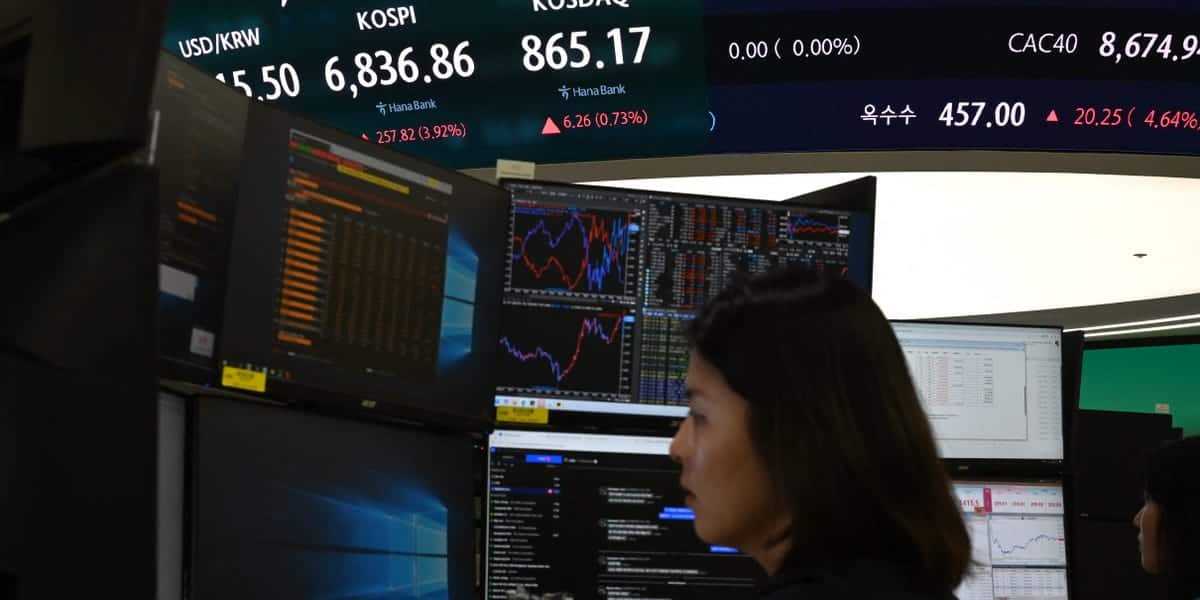
South Korea's benchmark Kospi index has re-entered a technical bull market, recovering from a significant downturn in July. The market experienced a surge through the first half of 2026, propelled by strong demand for AI chips and substantial gains in major memory manufacturers like Samsung Electronics and SK Hynix. This rally saw a dramatic increase in active stock-trading accounts, with individuals borrowing heavily to invest, including in leveraged ETFs.
However, the market experienced a sharp reversal in July, with the Kospi index falling 22% and ending the month 30% below its peak. This decline was partly attributed to the unwinding of leveraged positions and forced selling by retail investors struggling to meet settlement obligations. Data from the Korea Financial Investment Association showed margin-loan balances reaching a record 38.6 trillion won in late June before a sharp decrease.
In August, renewed optimism surrounding artificial intelligence and eased volatility from July's extremes helped the Kospi index rebound into bull market territory. Following the market rout, Goldman Sachs observed that market positioning had become 'much cleaner' as retail investors reduced borrowed positions and regulators tightened rules on leveraged products. Despite the previous volatility, the bank maintains a bullish stance on Korean stocks.