Key facts
- Israeli settlers have seized water resources in the occupied West Bank, including diverting a spring near Fasayil.
- The diversion of the spring has cut off water supply to the Palestinian village of Fasayil, impacting agriculture and livelihoods.
- Over 100 Palestinian families have been displaced due to settler attacks and water seizures.
- Settlers have attacked at least 160 water and sanitation sites across the West Bank this year, according to UN data.
- Palestinians describe the actions as a 'water war' aimed at forcing them off their land.
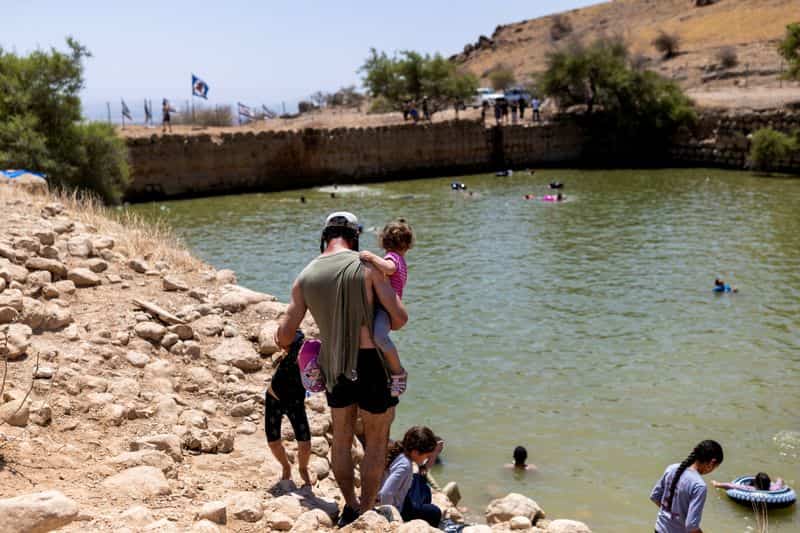
Israeli settlers are increasingly seizing water resources in the occupied West Bank, a tactic Palestinians describe as a systematic campaign to force them off their land. Near Fasayil, settlers diverted water from a spring that had been a lifeline for the local Palestinian community, irrigating crops and supplementing domestic use. The seizure of Saad Nemer's irrigation pipeline in June led to the spring's water being channeled to an ancient pool, which settlers are developing into a tourist attraction with financial backing from Israel's far-right finance minister. This action has deprived villagers of water for their homes and livelihoods, with Nemer reporting significant losses and families losing their work. Settlers have also reportedly attacked individuals attempting to access the spring. The United Nations reports that settlers have attacked at least 160 water and sanitation sites across the Palestinian territory this year. Palestinians estimate that settlers now control 95% of springs in the northern Jordan Valley, displacing communities. In another village, Qusra, settlers have also cut off water and electricity to besieged homes. An Israeli archaeologist noted that the pool's historical provenance is unclear and that settlers are damaging the archaeological site by filling it with water. The actions are part of a broader pattern of settlement expansion overseen by Israel's far-right coalition government, which Palestinians and most of the international community consider illegal under international law.