Key facts
- Russian military education historically trained officers for tactical tasks but not independent decision-making.
- NATO's 'mission command' philosophy emphasizes trust and initiative, allowing subordinate commanders flexibility.
- Ukrainian forces are adopting a mission command culture, prioritizing initiative and responsibility.
- The Russian army's top-down command structure, inherited from the Soviet era, limits independent decision-making.
- NATO armies utilize a professional NCO corps, while Russian forces often assign these roles to junior officers.
- Russian officers report issues with micromanagement and distrust of subordinates, hindering initiative.
The Russian army is adapting its tactics and command philosophy, drawing lessons from its full-scale war against Ukraine and observing NATO's military doctrines. Initial failures in the invasion highlighted fundamental issues in Russian military education, which historically prioritized rigid adherence to orders over independent decision-making.
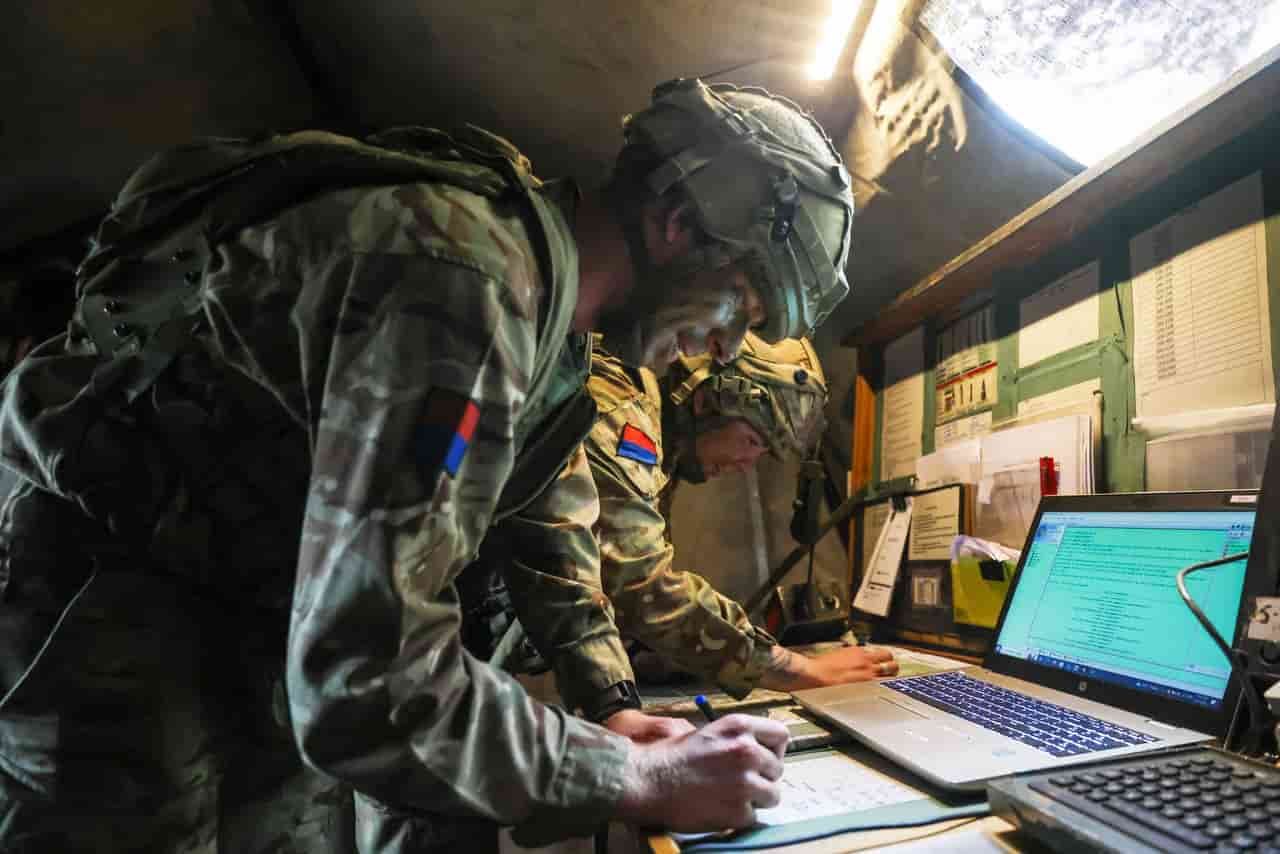
NATO's approach, known as 'mission command,' relies on trust and disciplined initiative, where senior commanders define objectives and constraints, allowing subordinates to determine the best methods to achieve them. This philosophy enables faster decision-making at the ground level, without constant reliance on higher command. The Ukrainian Defense Forces have increasingly embraced this model, emphasizing initiative, responsibility, and continuous learning.
In contrast, the Russian military tradition, influenced by its Soviet-era roots, is characterized by centralized control, leaving lower-level commanders with limited autonomy. This top-down system was evident in early war failures, such as the battles for Hostomel Airport and the Siverskyi Donets River crossing, where units reportedly lost time or repeated ineffective actions while awaiting orders.
Supporting mission command in NATO armies is a professional non-commissioned officer (NCO) corps, which acts as a crucial link between officers and enlisted personnel, handling training, mentorship, and day-to-day leadership. In the Russian military, these roles are often filled by junior officers, with sergeants having a more limited scope for leadership and initiative, creating a bottleneck when rapid adaptation is needed.
Both systems have mechanisms for learning from mistakes, but NATO's After Action Review (AAR) process encourages honest discussion of failures without fear of punishment. The Russian system, however, tends to punish 'failures,' leading to reporting inaccuracies and a reluctance to deviate from instructions. A 2023 survey of Russian artillery officers indicated that a significant majority favored 'intelligent initiative' but cited excessive micromanagement and distrust from commanders as major obstacles.