Key facts
- Russia is using mesh networking to extend the range of its attack drones for precision strikes in Kyiv.
- Mesh networks allow drones to relay communications and live video feeds to operators, overcoming EW systems.
- The technology enables drones to operate effectively at ranges two to four times greater than direct radio links.
- Russian drones are reportedly fitted with Chinese-made XK-F358 mesh radios.
- A chain of mesh-controlled drones can maintain connectivity up to 150-175 kilometers from a ground control station.
Russia is increasingly using mesh networking technology to enhance the range and effectiveness of its attack drones, particularly for strikes within Ukraine's capital, Kyiv. This advanced communication system allows drones to relay signals and video footage to operators over much greater distances than traditional radio links, even in the presence of electronic warfare systems.
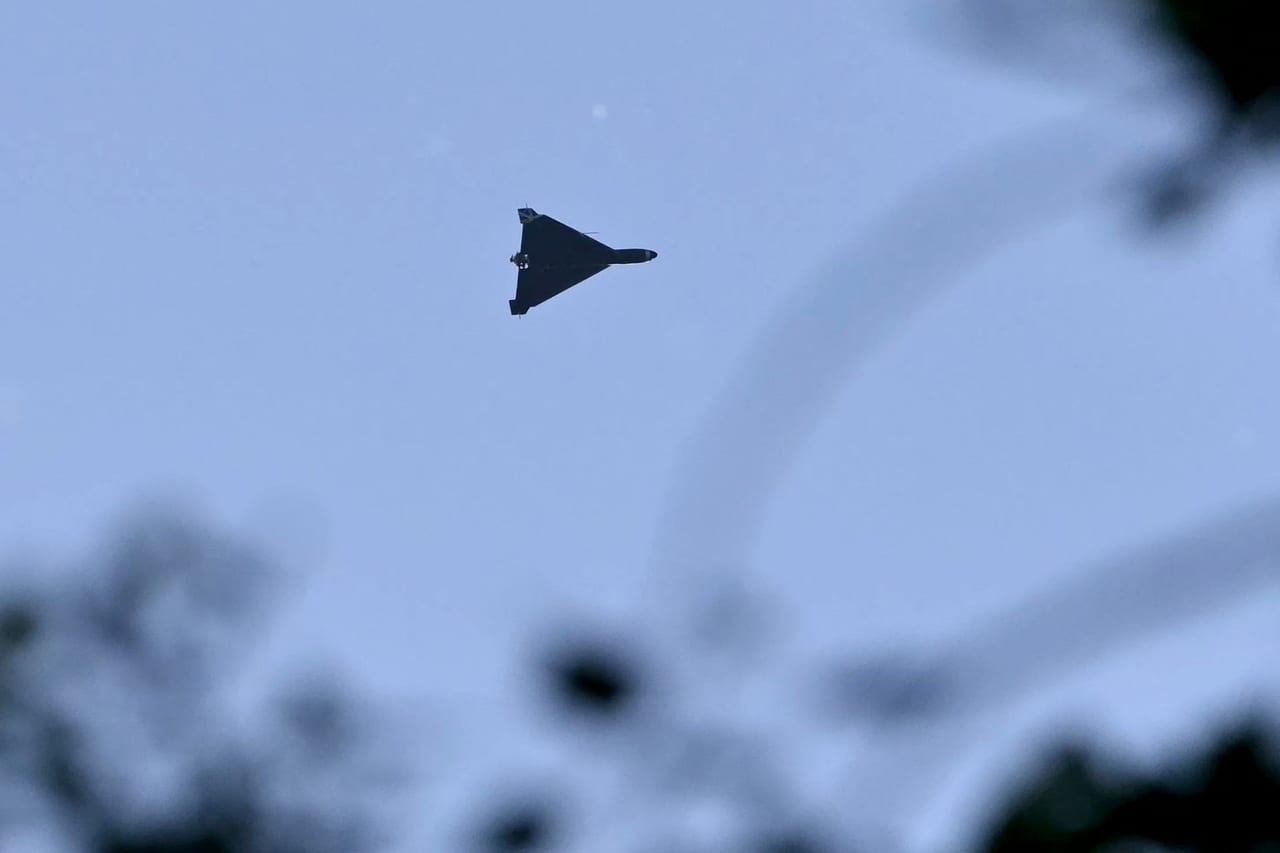
Footage released on September 29, 2026, showed a Russian drone strike on the Inkom business center in Kyiv, with control and video transmission maintained despite deployed EW systems. According to Serhii Beskrestnov, an adviser to the Ukrainian president, a Geran-5 drone struck the target while a second Shahed drone, acting as a mesh relay at nearly three kilometers altitude, transmitted live video.
This adaptation comes after SpaceX blocked Russian forces' use of unauthorized Starlink terminals. Russian fixed-wing drones are now being fitted with mesh radios, such as the Chinese-made XK-F358, which can support networks with multiple 'hops' or relays. This technology allows for high-resolution reconnaissance and precision strikes at unprecedented ranges, reportedly extending operational distances two to four times further than direct radio links.