Key facts
- Russia and Iran are allegedly using the Caspian Pipeline Consortium (CPC) to circumvent EU sanctions on Russian oil.
- The volume of 'CPC Blend' crude oil has surged by 38.5% since June 2022, despite limited growth in Kazakhstan's own oil production.
- An EU source claims discounted Russian and Iranian crude is blended and laundered through the CPC to Europe.
- This operation reportedly finances Iran's IRGC and its proxies, and funds Russia's military purchases.
- Iran allegedly transfers crude to Russia at a 35%-42% discount, which is then disguised as Kazakh oil.
- Russia and Iran are planning to shift this operation to the Baku-Tbilisi-Ceyhan (BTC) pipeline by early 2027.
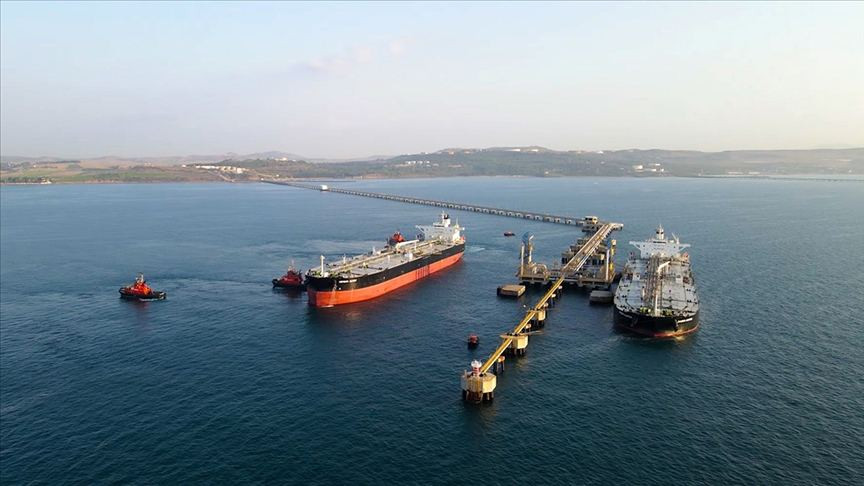
Despite the European Union's commitment to phase out Russian oil and gas imports by the end of 2027, a report suggests that Russia and Iran are exploiting a loophole to continue supplying European markets with discounted crude. According to an unnamed senior EU source speaking to OilPrice.com, the Caspian Pipeline Consortium (CPC) is being used to launder a blend of Russian and Iranian oil, circumventing Western sanctions.
The EU officially banned seaborne Russian crude imports on June 3, 2022, but the CPC Blend, which terminates at Novorossiysk, received an exemption on the grounds that its volumes originate in Kazakhstan. Since then, the throughput of this blend has surged by 38.5% to a record 72 million metric tonnes annually. This increase is disproportionate to Kazakhstan's own oil production, which has grown by less than 2% and has faced operational disruptions and OPEC+ quota limits.
The EU source claims that the discrepancy represents 'ghost volumes' of heavily discounted Russian crude mixed with Iranian oil, which are then blended and shipped to Europe outside G7 monitoring. This operation is reportedly a financing mechanism for Iran's Islamic Revolutionary Guard Corps (IRGC) and its proxies, enabling them to pay Moscow for advanced Russian military hardware and software, including missiles and satellite data.
Tehran, unable to easily conduct transactions through Western financial networks, is allegedly allocating crude directly to the IRGC and its proxies to cover expenses and pay Russia. This Iranian crude is reportedly transferred to Russia at a 35% to 42% discount, then integrated into Russia's domestic pipeline system and pushed into the CPC network using forged Kazakh certificates.
Looking ahead, Russia and Iran are reportedly planning to pivot to the Baku-Tbilisi-Ceyhan (BTC) pipeline as the EU's statutory phase-out date approaches. Kazakhstan's state energy company KazMunayGas has framed this shift as a commercial diversification strategy to mitigate geopolitical instability on the CPC route. However, Kazakhstan's energy ministry director of oil transportation and refining, Daulet Arykbayev, stated on October 1 that Kazakhstan aims to increase its crude supply through the BTC pipeline to 7 million metric tons per year. This target is considered highly improbable given Kazakhstan's declining production and existing infrastructure limits, suggesting the deficit will be met by illicit Russian-Iranian oil.
The report suggests that by February 2027, the clandestine blueprint aims to pump 600,000 to 750,000 barrels per day through the BTC, a volume equivalent to nearly half of Kazakhstan's OPEC+ quota. This upcoming pipeline pivot is seen as exposing the EU's sanctions timeline as political theatre, with the South Caucasus infrastructure being re-engineered to absorb the overflow of discounted Russian and Iranian energy.