Key facts
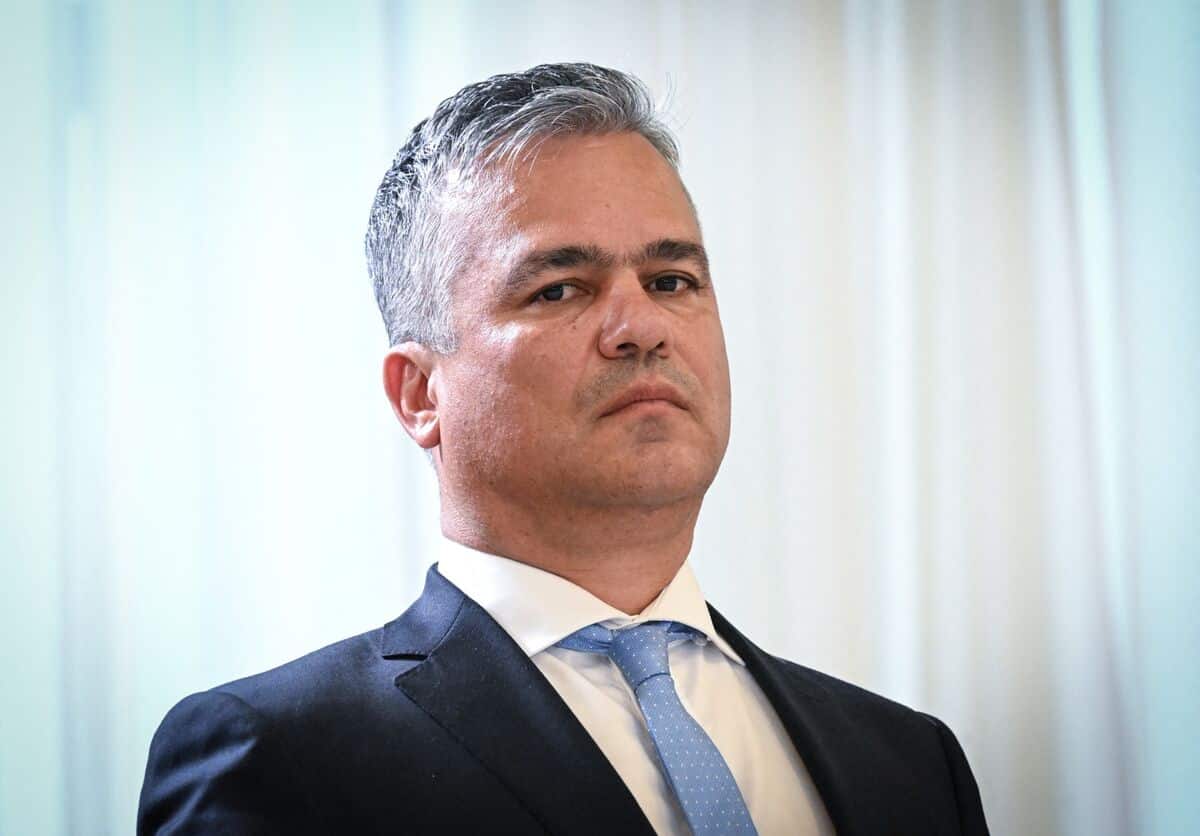
- Romanian lawmakers rejected a new government proposed by Prime Minister-designate Adrian Vestea.
- The vote failed with 189 votes for and 23 against, requiring at least 233 to pass.
- The outcome deepens a protracted political crisis that began in May.
- Vestea's proposed cabinet was backed by the Social Democrats (PSD) but not by his own Liberal Party (PNL) or the opposition AUR.
- Romania faces significant economic challenges, including a large budget deficit and high inflation.
Romanian lawmakers on Monday rejected a new government proposed by Prime Minister-designate Adrian Vestea, failing to secure the necessary parliamentary majority and deepening the country's prolonged political crisis. The vote saw 189 lawmakers vote in favor, 23 against, and more than half abstaining, falling short of the 233 votes required for approval.
Vestea, a member of the National Liberal Party (PNL), was nominated by President Nicusor Dan after his previous choice, Eugen Tomac, failed to form a government. While Vestea's proposed cabinet received support from the largest party, the Social Democrats (PSD), his own PNL party refused to endorse him. The hard-right opposition party, the Alliance for the Unity of Romanians (AUR), also declared it would not back the government, with its lawmakers leaving Parliament before the vote.
AUR leader George Simion criticized the political establishment, stating that "betrayal has been the order of the day" in Romania for 35 years. PSD leader Sorin Grindeanu indicated his party might not support a minority government. Political consultant Cristian Andrei suggested the outcome benefits AUR by highlighting the inability of mainstream parties to govern, predicting the crisis will continue due to conflicts among pro-Western parties.
The failed confidence vote is expected to exacerbate Romania's economic challenges, including one of the largest budget deficits in the European Union and rampant inflation. President Dan must now nominate another candidate, and failure to form a government could trigger snap elections before the scheduled general election in 2028. Vestea himself acknowledged the country faces "serious economic challenges, social tensions... and an international context more unstable and risky," identifying a "crisis of trust" as the core problem.