Key facts
- Prime Minister Sanae Takaichi visited Kumamoto Prefecture following a magnitude 7.1 earthquake.
- The earthquake caused 38 deaths, with at least one attributed to heatstroke.
- Over 46,000 households are without water, and many face fuel shortages.
- Extreme heat is hampering recovery efforts and raising concerns about heat-related illnesses.
- An explosion occurred at a collapsed shopping mall after employees were instructed to retrieve sales proceeds.
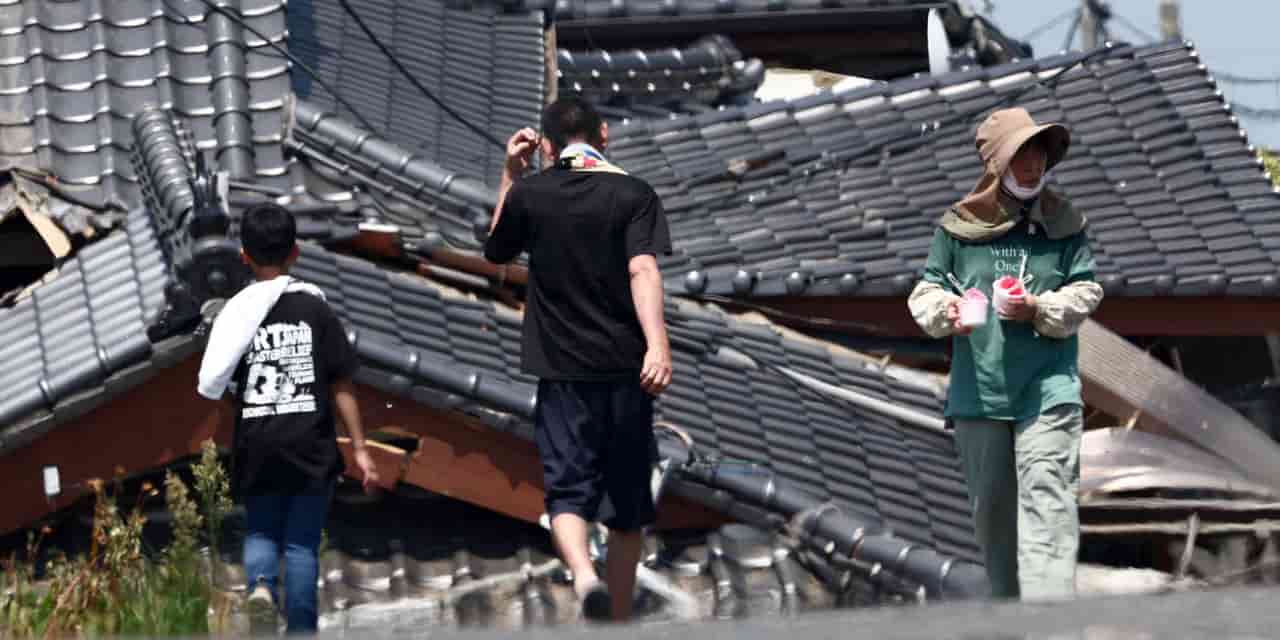
Residents in Japan’s quake-hit Kumamoto Prefecture are facing immense challenges as cleanup efforts are hampered by sweltering heat and shortages of water and fuel. Prime Minister Sanae Takaichi visited the region, which was struck by a magnitude 7.1 earthquake last Tuesday, causing widespread destruction and fatalities.
Thirty-eight people have died, including at least one suspected heat stroke victim and another whose cause of death is under investigation. Many of the over 8,500 people remaining in crowded emergency shelters, often lacking air-conditioning, are sleeping in cars or outdoors as temperatures approach 40 C (104 F). Construction of temporary housing has commenced in the towns of Uki and Hikawa.
Adding to the tragedy, a company acknowledged instructing two employees to return to a collapsed shopping mall to secure sales proceeds, leading to their deaths in a subsequent explosion. The mall's operator believes the explosion was caused by a gas leak, occurring after approximately 3,000 shoppers had been evacuated. Rescuers recovered seven bodies and five survivors from the mall. In total, 114 people have been injured, 700 homes destroyed, and over 11,300 buildings damaged across Kumamoto Prefecture.