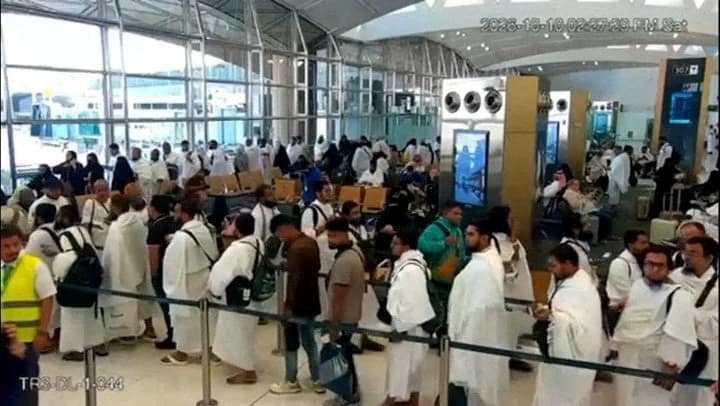
Key facts
- A Houthi missile struck a Riyadh airport departure terminal on Saturday, killing 13 people and wounding 300.
- A Bangladeshi imam leading a group of pilgrims was killed in the attack.
- The Houthis are targeting Saudi airports in retaliation for Saudi attacks.
- The strikes have caused Saudi Arabia to ground many flights, disrupting travel for pilgrims, business figures, and residents.
- Travelers are rerouting via road to Bahrain, Qatar, or Dubai, with fares doubling.
Pilgrims visiting Saudi Arabia for religious purposes have been caught in the crossfire of escalating Houthi strikes on the kingdom's airports. On Saturday, a Houthi missile struck a departure terminal at Riyadh airport, killing 13 people and wounding 300. Among the casualties was a Bangladeshi imam leading a group of pilgrims.
While the Houthis have stated they will not target Mecca or Medina, Islam's holiest cities, they are continuing to strike other Saudi airports as retaliation for Saudi-led coalition attacks. This has instilled anxiety among pilgrims, such as Fadi Anwar, a Jordanian living in Mecca, who expressed deep worry for his family's safety due to frequent security alerts.
Saudi officials have sought to reassure visitors, emphasizing the kingdom's safety and the high value placed on visitor security. However, Western governments have advised against using most Saudi airports. The attacks have led to widespread flight cancellations, significantly disrupting travel plans for pilgrims, business travelers, and residents. Many are resorting to lengthy road journeys to neighboring countries like Bahrain, Qatar, and Dubai to find alternative flights, with transport fares to these destinations doubling.
The broader conflict, described as a spillover from the US-Iran conflict reigniting Yemen's civil war, has also led to schools in Riyadh switching to online learning and some offices implementing work-from-home policies.