Key facts
- Two oil slicks have appeared in Iranian waters, one near Qeshm Island and another near Sirri Island.
- The Qeshm Island slick is likely from the Minoan Pioneer, a dry bulk ship struck on August 3rd.
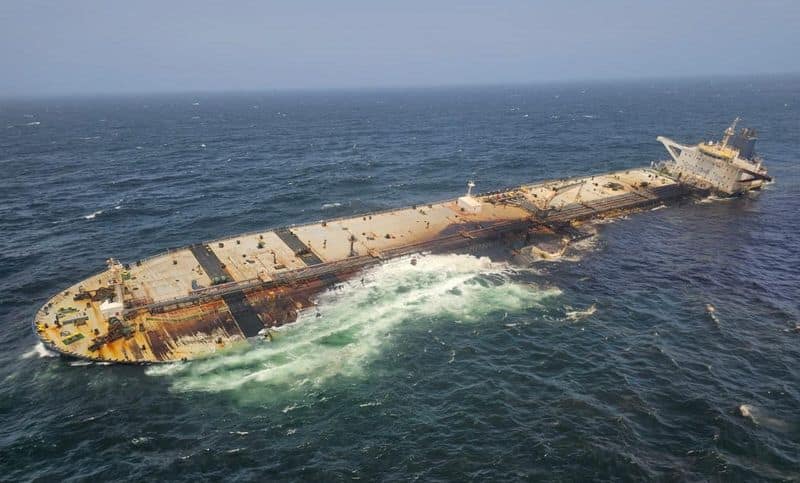
- A separate, larger oil spill is unfolding off Oman from the grounded tanker Caroline Bezengi.
- Satellite imagery confirmed the slicks, with one near Qeshm Island appearing by August 10th and another near Sirri Island by August 13th.
- Iran's Foreign Ministry suggested a foreign bulk carrier may be the source of the Qeshm Island pollution.
Two oil slicks have appeared in Iranian waters, with one near Qeshm Island likely originating from the Minoan Pioneer, a Liberia-flagged dry bulk ship that was struck by an unknown projectile near Oman on August 3rd. Satellite imagery from August 10th showed a slick off the southern tip of Qeshm Island, with a lighter, diluted slick stretching around 160 km. Video verified by Reuters showed a dark, bubbling liquid washing ashore on Qeshm Island on August 11th.
A second slick was spotted near Sirri Island, an area with Iranian offshore oil and gas production, on August 13th. Iran's Ministry of Foreign Affairs suggested preliminary evidence indicates a foreign bulk carrier as the source of the pollution reaching Qeshm Island.
Separately, a potential environmental disaster is unfolding off Oman, outside the Strait of Hormuz, where the grounded tanker Caroline Bezengi is leaking Russian crude oil in a protected marine area, creating a massive slick estimated by some to be 2,000 square km. This incident is not linked to the Iran conflict.
Environmental researchers noted the dark color of the Qeshm slick indicated heavy fuel oil. Experts warn that the longer oil leaks into the environment, the more it can spread and cause damage to ecosystems and coastlines, with the conflict in the region complicating cleanup efforts.