Key facts
- Oil prices rose due to escalating Middle East conflict and tanker attacks.
- Two tankers were attacked near the Strait of Hormuz and off the coast of Oman.
- One attacked tanker was a Suezmax loaded with Iraqi crude; two sailors are missing.
- The other attacked tanker was a product carrier hit by a drone.
- India called for de-escalation and an end to attacks on commercial vessels.
- Goldman Sachs raised its December Brent crude price forecast to $90 a barrel.
Oil prices extended gains on Monday as escalating conflict in the Middle East and attacks on tankers raised concerns about supply from the region. Brent crude futures rose 0.73% to $105.48 a barrel, while US West Texas Intermediate crude was up 0.64% at $92.44 a barrel.
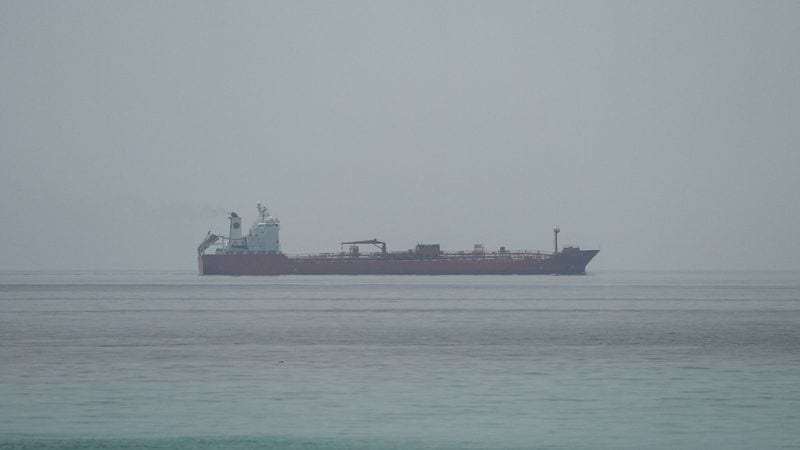
Two more tankers were attacked near the Strait of Hormuz on Sunday, one in Hormuz and the other off the coast of Oman, according to ship-tracking data and the Indian shipping minister. One of the targets was a Suezmax loaded with Iraqi crude, which had set sail on October 8. It was hit by an unknown projectile that caused fire on board, and two sailors were reported missing. The other tanker was a product carrier that was hit by a drone.
India reiterated the need for immediate de-escalation and a resolution to the ongoing conflict through dialogue and diplomacy, stating that attacks on commercial vessels, seafarers and civilian infrastructure must cease and that freedom of navigation must be upheld.
Iran’s Islamic Revolutionary Guard Corps has stepped up attacks on tankers in the Strait of Hormuz in recent weeks, targeting vessels trying to transit the strait in dark mode, along a southern corridor near the coast of Oman. The U.S. Navy is meanwhile striking Iranian-linked vessels, heightening the shipping risk in the area. The IRGC’s Navy forces stated that all ships within the Strait of Hormuz that turn off their navigation and identification systems will be identified as hostile and dealt with severely.
Goldman Sachs raised its Brent crude price forecast for December to $90 a barrel from $85 previously, citing potential renewed escalation in the Middle East as a significant upside risk. The analysts estimated a risk premium of just over $20 a barrel.
In the Gulf of Mexico, energy majors Shell, Chevron and BP were working to restore production at their platforms after Hurricane Isaias made landfall.