Key facts
- The OIC condemned Israeli attacks on Palestinians in Gaza and the occupied West Bank.
- Ministers reaffirmed support for a Palestinian state on 1967 borders with Jerusalem as its capital.
- The council rejected Israeli settlement expansion and attempts to impose new political realities.
- The OIC condemned Israel's ongoing war in Gaza, including killings, starvation, and destruction of infrastructure.
- The council called for the full implementation of UN Security Council Resolution 2803 and an immediate transition to a ceasefire.
- The OIC rejected calls for the forced displacement of Palestinians from Gaza or the West Bank.
The Organisation of Islamic Cooperation (OIC) convened an extraordinary session of its Council of Foreign Ministers in Jeddah, Saudi Arabia, where member states condemned Israeli attacks on Palestinians in Gaza and the occupied West Bank. The ministers reaffirmed the centrality of the Palestinian cause and Jerusalem to the Muslim world and reiterated support for the Palestinian people's right to self-determination, independence, and freedom, advocating for an independent Palestinian state on the 1967 borders with Jerusalem as its capital.
In its final statement, the council rejected Israeli settlement expansion and any attempts to impose new political, security, or administrative realities on the ground. The OIC condemned Israel's ongoing war in Gaza, citing killings, starvation, forced displacement, and the destruction of civilian infrastructure. It called for the full implementation of UN Security Council Resolution 2803 and an immediate transition to a ceasefire, including a full Israeli withdrawal from Gaza and the sustained delivery of humanitarian aid.
The council also categorically rejected any calls for the forced displacement of Palestinians from Gaza or the West Bank, including Jerusalem, and urged the international community to prevent such actions. Furthermore, the OIC strongly condemned Israel's expanding settlement activity and land seizures across the occupied West Bank, including attacks by colonists and the destruction of homes and agricultural land. Specific condemnation was directed at Israel's implementation of the E1 settlement plan, which the OIC warned would sever the territorial contiguity of the West Bank and isolate Jerusalem.
Additionally, the council condemned ongoing Israeli measures targeting occupied Jerusalem and Al-Aqsa Mosque, including daily incursions and the performance of Jewish religious rituals. It rejected all measures aimed at altering the historical and legal status quo and warned against plans to impose temporal or spatial division at Al-Aqsa Mosque. The OIC also condemned decisions by some countries to relocate embassies or establish diplomatic missions in Jerusalem, urging them to reverse such decisions. The organization reaffirmed the central role of UNRWA and rejected attempts to undermine it.
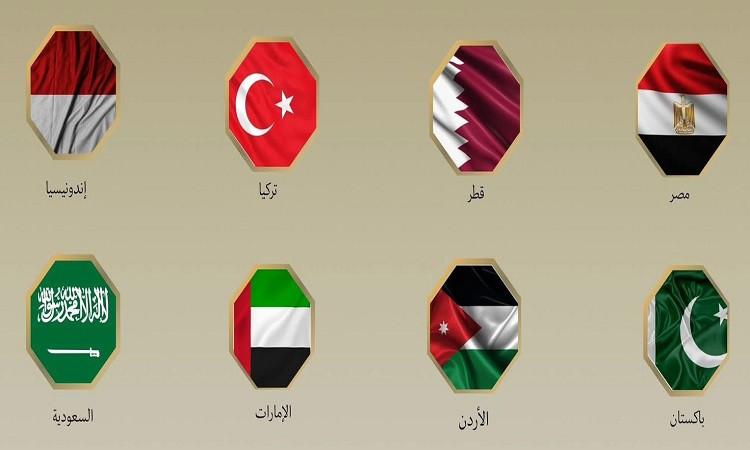
Separately, foreign ministers from Egypt, Qatar, Jordan, the United Arab Emirates, Indonesia, Pakistan, Turkey, and Saudi Arabia issued a joint statement condemning the ongoing Israeli violations in Gaza, particularly the targeting of health facilities and civilian infrastructure, and the continued civilian casualties. They stressed that these violations threaten to derail the political process and deepen the humanitarian catastrophe, calling for the protection of civilians and immediate, unhindered humanitarian aid delivery. The ministers also categorically rejected any attempts to annex occupied Palestinian territory or forcibly displace Palestinians, affirming that a just peace requires a two-state solution.