Key facts
- Norway will continue developing oil and gas resources in the Barents Sea, irrespective of the EU's position on Arctic hydrocarbon supplies.
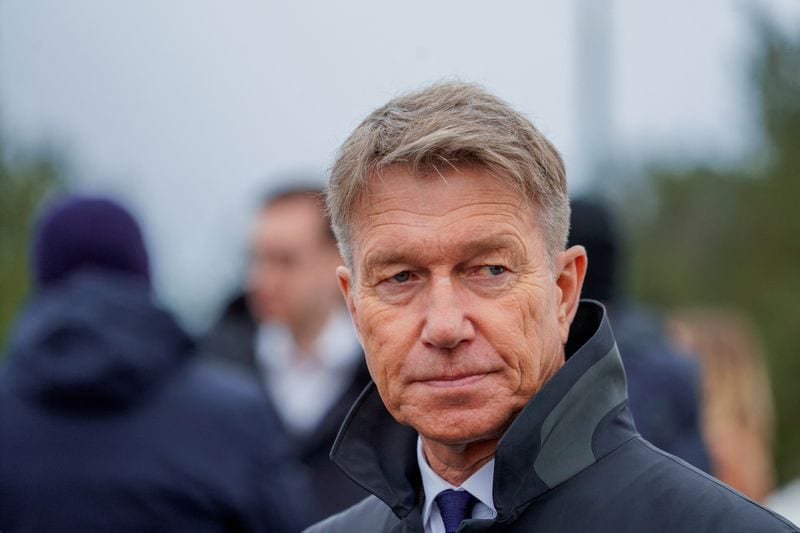
Norway plans to continue exploring for oil and gas in its Arctic waters, regardless of the EU's stance on drilling moratoriums. Energy Minister Terje Aasland stated that these resources are crucial for European energy security and Norwegian interests.
Norway's decision to continue Arctic drilling highlights the ongoing tension between energy security needs and climate commitments, particularly as Europe seeks to reduce reliance on Russian fossil fuels.
Norway intends to proceed with oil and gas exploration and development in the Barents Sea, even if the European Union maintains its moratorium on Arctic hydrocarbon supplies. Energy Minister Terje Aasland stated that Norway is no longer positioning itself as Europe's 'green battery', emphasizing that continued activity in the Barents Sea serves both Norwegian and European interests in the current geopolitical climate.
Following Russia's invasion of Ukraine, Norway has become Europe's primary supplier of natural gas, fulfilling about 30% of the EU and Britain's gas needs. Last year, the country experienced near-record gas production and its highest oil output since 2009. However, official forecasts indicate a significant decline in production after 2030 unless new resources are developed.
Aasland believes that maintaining petroleum production and exports at current levels until at least 2035 is essential, with the Barents Sea playing a key role. He argued that for Norway to remain a long-term supplier to Europe, Arctic resources must be part of the discussion. Norway has presented arguments to EU officials that the Barents Sea areas available for petroleum activity are ice-free, similar to the North Sea, thus posing lower environmental risks and supporting northern communities.
Despite acknowledging that Norway's arguments are being heard, Aasland stressed that developing Barents Sea resources is a sovereign right. He indicated that if Norway proceeds, it would be up to the EU to decide whether to impose a moratorium on purchasing the resulting gas or oil, noting that Arctic oil would find global markets, and gas could be exported as LNG.
The International Energy Agency's Executive Director, Fatih Birol, has also encouraged the EU to reconsider its opposition to new Arctic developments, citing the need for future supplies to ensure energy security. Critics, however, argue that new Arctic projects would not address Europe's immediate energy challenges and would take years to materialize.
Regarding renewable energy, Aasland described Norway's previous self-portrayal as 'the green battery' of Europe as a flawed idea, stating that Norway alone cannot balance the European power market. He noted that deeper integration with Europe's power system has made Norway more vulnerable to continental price fluctuations. While Norway will not build new power interconnectors, it remains committed to power sector cooperation and urged European nations to strengthen their own stable power supplies.
Pick the topics you care about. Get only what matters, on your cadence.