Key facts
- Norway's crude oil production averaged 1.776 million barrels per day in July, a 10% year-over-year decrease.
- Total liquids production in July was 1.976 million barrels per day, down 9.1% from the previous year.
- The decline is significant due to ongoing supply disruptions in the Persian Gulf, with 8.3 million barrels per day of Gulf production shut in.
- Norwegian production also fell 2.6% month-over-month from June.
- The market is increasingly dependent on production outside the Persian Gulf due to chokepoint risks.
Norway's crude oil production in July fell by approximately 195,000 barrels per day, or nearly 10%, compared to the same month in the previous year, according to preliminary data from the Norwegian Offshore Directorate. Total liquids production also declined by about 197,000 barrels per day, or 9.1% year-over-year.
This decrease is particularly significant given the ongoing supply crisis in the Persian Gulf, where the International Energy Agency estimates 8.3 million barrels per day of production remained offline in July due to restricted traffic through the Strait of Hormuz. The IEA has also reduced its third-quarter oil supply forecast by 1.7 million barrels per day.
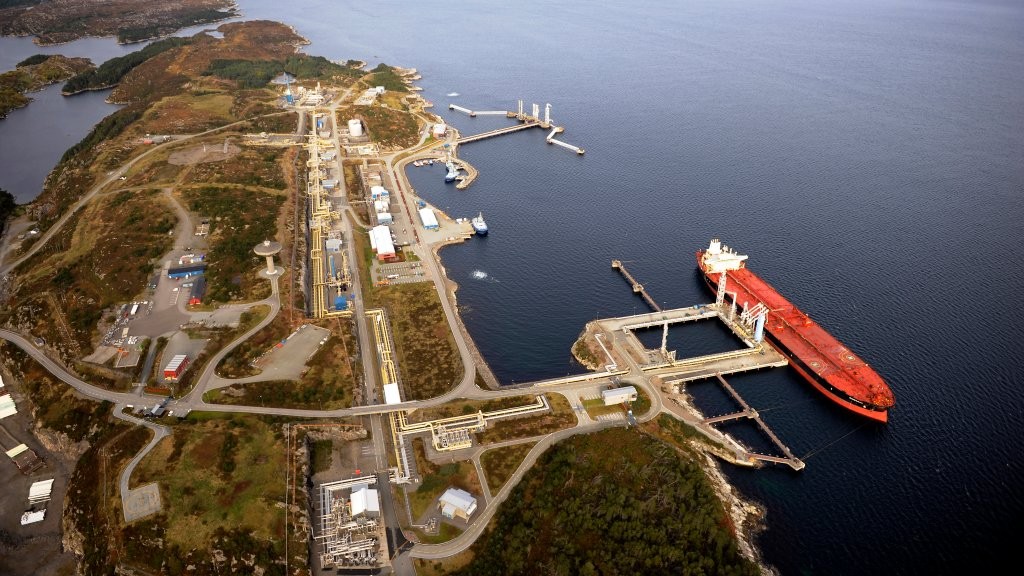
In this environment, the market is increasingly reliant on production sources outside the Persian Gulf, especially those that can reach refiners without navigating geopolitically sensitive chokepoints. Norwegian crude, produced close to Europe's refining system and largely insulated from maritime constraints, holds greater value to the current market than its share of global supply might suggest.
Norway's production also saw a month-over-month decline, with crude output falling by 47,000 barrels per day (2.6%) and total liquids production by 45,000 barrels per day (2.2%) from June figures. While a decline of this size might be absorbed in a well-supplied market, its significance is amplified when the global market is already drawing on inventories and reserves to compensate for Middle Eastern supply disruptions.
However, the annual decline should be viewed against an exceptionally strong July 2025 comparison period, when Norwegian production exceeded forecasts. Furthermore, fluctuations are common during the summer maintenance season. The July figures are not yet evidence of a structural decline, especially considering that cumulative production through June was above forecast. The market's reaction will depend on whether the July weakness proves temporary and if production recovers after the maintenance season.