Key facts
- Nicaragua accused Germany at the ICJ of facilitating genocide by exporting arms to Israel.
- Nicaragua urged the ICJ to reject Germany's preliminary objections and allow its case to proceed.
- Germany argues the court lacks jurisdiction and that Israel is an indispensable third party.
- Nicaragua stated Germany authorized over €1.5bn in military exports to Israel since October 7, 2023.
- Germany's purchase of Israel's Arrow 3 missile defense system was expanded to approximately $6.6bn.
Nicaragua has accused Germany of attempting to shield its support for Israel from judicial review, telling the International Court of Justice (ICJ) that Berlin continued to authorize substantial military exports despite knowing of the serious risk of genocide and other violations against Palestinians.
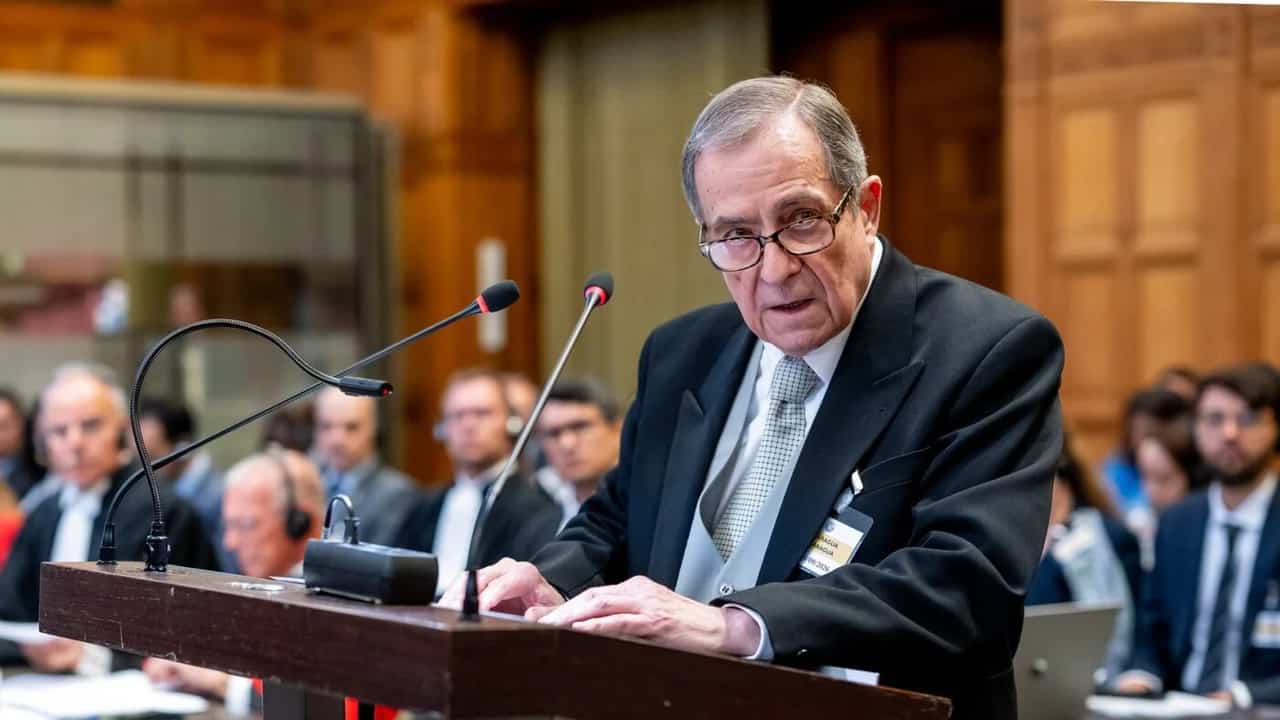
Appearing before the court in The Hague, Nicaragua urged judges to reject Germany’s preliminary objections and allow its case against Berlin to proceed to the merits. The proceedings concern Germany’s alleged breaches of the Genocide Convention and international humanitarian law in relation to its alleged support for Israel’s conduct in occupied Palestine.
Nicaragua filed the case in March 2024, accusing Germany of facilitating genocide by supplying Israel with weapons and suspending funding to the UN agency for Palestinian refugees, Unrwa. Tuesday’s hearing focused on Berlin’s arguments that the court lacks jurisdiction or that Nicaragua’s claims are inadmissible.
Germany has argued that no legal dispute existed between the two countries when Nicaragua filed the case, that some claims fall outside the temporal limits of its acceptance of the court’s jurisdiction, and that Israel is an indispensable third party whose conduct cannot be adjudicated in its absence. Nicaragua rejected each objection, insisting that the case concerns Germany’s own conduct and obligations, not Israel’s.
Nicaragua’s ambassador to the Netherlands, Carlos Arguello Gomez, told the court that Managua was invoking Germany’s responsibility in connection with alleged breaches of the Genocide Convention, international humanitarian law, the Palestinian right to self-determination, and the prohibitions of racial discrimination, racial segregation and apartheid. The claims also include alleged violations of Germany’s duties not to recognise or assist serious breaches of international law, and to investigate, prosecute and punish international crimes, such as war crimes and genocide.
Arguello said that, unlike under Nazi Germany, the destruction and suffering inflicted on Palestinians had been documented publicly and "livestreamed", making it impossible for the German government to argue that it did not know of the risk of grave violations. He stated that Germany’s close political, commercial and military relations with Israel meant it "could not [but] be aware, or normally should have been aware", of the serious risk that acts amounting to genocide were being committed.
Germany is Israel’s second-largest arms supplier and one of its most important trading partners, giving Berlin substantial means to influence its conduct, Nicaragua argued. Nicaragua recalled that in its April 2024 order declining to impose provisional measures against Germany, the ICJ nevertheless reminded all states of their obligations regarding arms transfers to parties to armed conflicts. Nicaragua said Berlin had ignored that warning.
It disputed Germany’s earlier claim that 98 percent of the exports in question consisted of subordinate or protective equipment. According to figures presented by Nicaragua, Germany authorised more than €1.15bn ($1.34bn) in military exports to Israel between early April 2024 and the end of June 2026. In the first half of 2026 alone, Germany approved almost €800m in military exports, Nicaragua said. Information released by the German government shortly before the hearing indicated that €508.8m of this amount related to weapons of war. The licences included a major maritime defence project, believed to involve a submarine, as well as ammunition, projectiles, propelling charges and other essential components. Nicaragua also highlighted German-made engines and transmission systems used in Israel’s Merkava tanks, which have been deployed extensively in Gaza and the occupied West Bank. The total value of German military equipment authorised for export to Israel since 7 October 2023 had exceeded €1.5bn ($1.75bn), Nicaragua told the court.
Berlin announced in August 2025 that it would suspend new authorisations for military equipment that could be used in Gaza. Nicaragua described the measure as largely symbolic because deliveries under previously approved licences were allowed to continue. New approvals resumed in November 2025. Germany’s assurances that it assesses each licence separately and receives guarantees from Israel that equipment will be used in accordance with international humanitarian law did not discharge its international obligations, Nicaragua said.
Arguello also pointed to the extensive trade flowing in the other direction. Germany’s agreement to purchase Israel’s Arrow 3 missile defence system, originally valued at $3.5bn, was expanded in December, bringing its value to approximately $6.6bn. "This was described as the largest defence export contract in Israel’s history," said Arguello. Nicaragua argued that these contracts created a mutually profitable, long-term military relationship that helped insulate Israel from sanctions.
Arguello challenged Germany’s assertion that its support for Israel formed part of its reason of state, or "Staatsrason", arising from its historic responsibility for the Holocaust. He stated that the Nuremberg trials were for multiple crimes against humanity, not only the Jewish Shoah, and that a sincere raison d’état would involve the obligation to do all possible to stop atrocities. "A sincere raison d’état would see Germany doing everything possible to stop the crimes being committed by Israel against the Palestinian people."
Germany’s key objection is based on the "Monetary Gold principle", under which the ICJ generally cannot decide a case if the legal responsibility of an absent, non-consenting state would constitute the very subject matter of its judgment. Germany argues that the court could not decide whether Berlin failed to prevent or facilitated violations without first determining that Israel committed the underlying wrongful acts. Nicaragua rejected that argument, saying it had not asked the court to adjudge that Israel was responsible or to issue any ruling binding Israel.
Discussion