Key facts
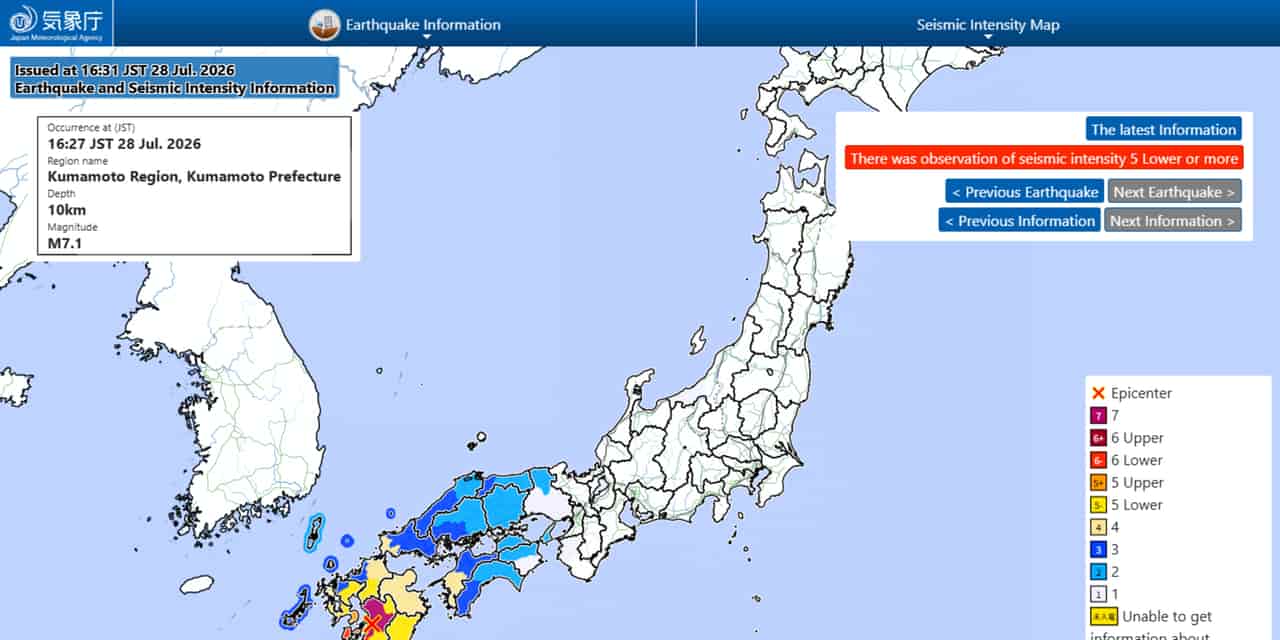
- A magnitude 7.1 earthquake struck Japan's Kumamoto prefecture on Tuesday, registering the maximum seismic intensity of 7.
- The earthquake caused widespread damage, including 13 confirmed deaths, numerous injuries, collapsed buildings, fires, and infrastructure disruptions.
- Operations at major companies including TSMC, Toyota, Sony, and Renesas Electronics were disrupted or temporarily halted.
- Significant transport and utility failures occurred, affecting roads, rail services, flights, power, water, and gas supplies.
- Rescue operations are ongoing at collapsed structures, including a mall and a paper mill, with dozens feared trapped or unaccounted for.
A magnitude 7.1 earthquake struck southwestern Japan's Kumamoto prefecture on Tuesday, registering the maximum seismic intensity of 7 in some areas. The quake, originating at a depth of about 16 kilometers, caused significant damage, including 13 confirmed deaths, numerous injuries, collapsed buildings, fires, and widespread infrastructure failures.
Prime Minister Sanae Takaichi confirmed 13 deaths and reported widespread damage, urging caution due to potential aftershocks. Dozens are feared trapped in a collapsed mall following an explosion and partial building collapse at Aeon Mall Kumamoto, where eight people were rescued but two deaths and one case of cardiopulmonary arrest were confirmed. A smokestack collapse at a Nippon Paper Industries mill also trapped workers, with four rescued.
The earthquake disrupted operations at major companies including TSMC, Toyota, Sony, and Renesas Electronics. TSMC evacuated its Kumamoto fab, while Toyota and others suspended production. Transport and utilities were severely affected, with road and rail services halted, flights cancelled, and tens of thousands of households experiencing power, water, and gas outages.