Key facts
- Tens of thousands of Lebanese have been displaced from their homes in southern Lebanon due to Israeli bombardment.
- Families are living in crowded shelters, such as a school in Sidon, with limited resources.
- Destruction of homes and infrastructure has forced many to flee, with some villages razed.
- Displaced individuals face challenges with sanitation, loss of livelihoods, and the emotional toll of displacement.
- Some displaced Lebanese are considering leaving the country, while others hope to return and rebuild.
- A newborn baby was delivered in a school shelter in Sidon, highlighting the difficult conditions.
Tens of thousands of Lebanese have been displaced from their homes in southern Lebanon due to Israeli bombardment, seeking refuge in crowded shelters. Families are struggling with poor sanitation, destroyed infrastructure, and the loss of livelihoods, with some contemplating leaving the country entirely.
A 72-hour-old newborn is sleeping on a mattress on the floor of a school in Sidon, south Lebanon, which has been converted into a shelter. His mother, Hala Loubany, 29, is recovering from a C-section performed at the hospital after her water broke at the school.
Loubany, her husband, their two sons aged six and one, and her father, Ali Mahmoud Loubany, 54, fled their home in Nabatieh when she was six months pregnant. The school in Sidon is their second shelter.
Ali Mahmoud Loubany discovered his home in Zawtar had been destroyed by looking at Google Maps, describing the village as flattened. He recounted fleeing Nabatieh amid random Israeli bombings and targeting of fleeing cars. He also mentioned previous efforts in demining and rebuilding his home after the 2006 war.
Loubany expressed frustration with being displaced again and the inability to afford necessities. He stated, "We are stuck here but at least we are alive and safe," but sees no future and feels the Lebanese government does not care.
Mina Jardali from Action for Humanity (AFH) noted that many displaced individuals consider leaving Lebanon for escape.
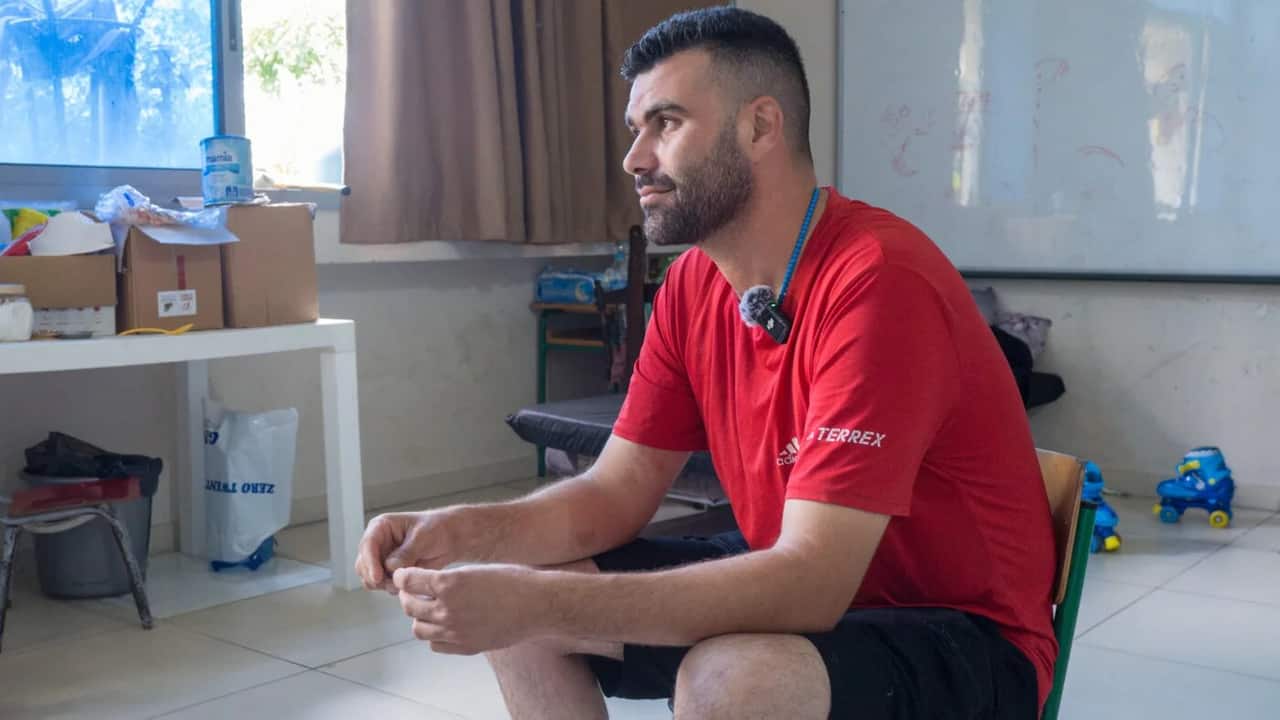
Hala's husband, Hassan Bisher, 33, a taxi driver, is entertaining his two young sons, Jaffar, six, and Haydar, one, while Hala rests. Their home in Kfar Tebnit was destroyed, marking the second time it has been demolished, the first being in the 2006 war. Bisher expressed difficulty in providing for his children and dreams of returning to Kfar Tebnit, even if it means living in a tent.
The Darwish family, also from Nabatieh, lost their four-story home and a brother, Samih, who was killed in an Israeli strike. Sobheya Darwish, 71, showed a picture of her son, who left behind three children. Hussein Darwish, 42, described feeling numb and angry about the destruction of his home, questioning why their house was targeted when others nearby remained standing.