Key facts
- Syria's foreign minister visited Beirut to meet Lebanese leaders.
- The visit follows U.S. President Donald Trump's suggestion that Syria combat Hezbollah.
- Syrian President Ahmed al-Sharaa has denied rumors of Syrian intervention in Lebanon.
- Lebanon's President Joseph Aoun and Foreign Minister Youssef Raggi defended a framework agreement with Israel.
- Hezbollah supporters are protesting the agreement, arguing it does not make Israeli withdrawal contingent on disarmament.
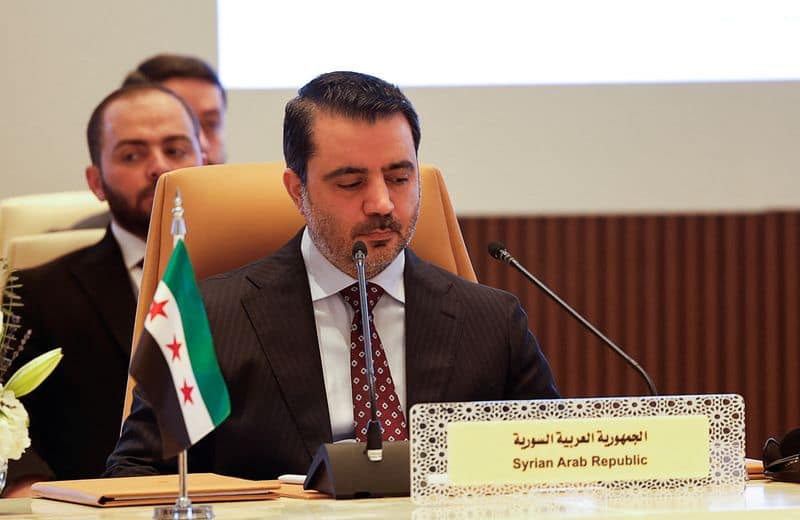
Syria's foreign minister, Asaad al-Shibani, traveled to Beirut to meet Lebanese government leaders, marking his first visit since U.S. President Donald Trump suggested that Syrian forces could combat Iran-backed Hezbollah in Lebanon. Al-Shibani met with Lebanese President Joseph Aoun and Parliament Speaker Nabih Berri, an ally of Hezbollah.
Syrian President Ahmed al-Sharaa has denied rumors of any Syrian presence entering Lebanon, stating that such reports are unfounded. Syria's new government, which emerged as a U.S. ally after toppling President Bashar al-Assad, has largely avoided involvement in the regional conflict between the U.S. and Israel, and Iran. Trump's comments followed criticism of Israel's handling of civilian casualties in Lebanon, suggesting Syria might be more effective against Hezbollah.
Reuters previously reported that the U.S. had encouraged Syria to consider sending forces into eastern Lebanon to disarm Hezbollah, but Damascus was hesitant due to fears of being drawn into the wider Middle East war and exacerbating sectarian tensions. Historically, Syria dominated Lebanon for decades, with forces present from 1976 until their withdrawal in 2005.
Meanwhile, Lebanon's President Joseph Aoun and Foreign Minister Youssef Raggi have defended a U.S.-brokered framework agreement with Israel, emphasizing diplomacy. However, Hezbollah supporters are protesting the deal, arguing it does not make Israeli troop withdrawal contingent on Hezbollah's disarmament. The agreement aims to establish peace and security, with Lebanese Armed Forces restoring sovereign authority pending the disarmament of non-state groups. The return of displaced residents to southern Lebanon remains a challenge, with over 61,000 housing units destroyed or damaged.