Key facts
- Residents of Rmeich, a predominantly Christian town in southern Lebanon's Israeli-occupied zone, fear isolation once UN peacekeepers withdraw.
- UNIFIL's mandate is set to conclude at the end of the year, with no extension yet granted.
- The UN force has been escorting convoys of food and goods to Rmeich and other towns.
- Stocks of fresh produce and fuel are beginning to run low in Rmeich.
- An Israeli military official stated Israel did not consider UNIFIL's role vital to humanitarian efforts.
- Lebanon's parliament has petitioned to extend UNIFIL's mandate, with the President supporting an extension.
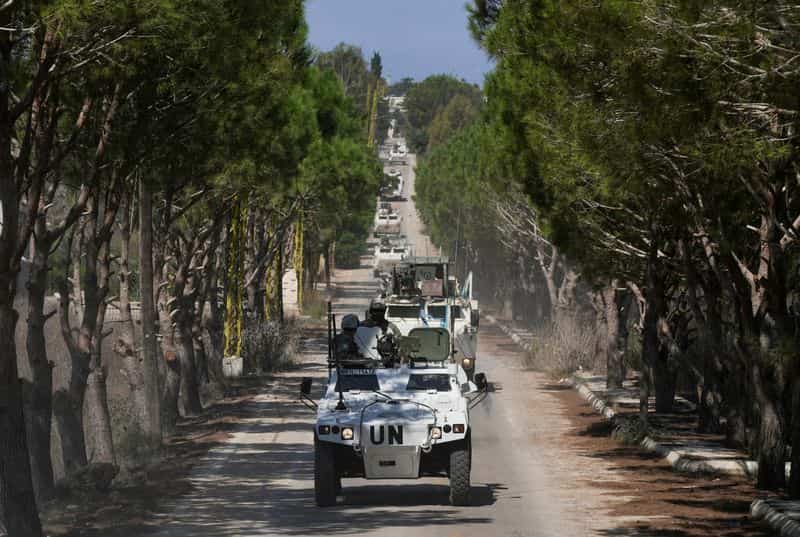
Residents of Rmeich, a predominantly Christian town in southern Lebanon's Israeli-occupied zone, are bracing for a bleak future as the United Nations Interim Force in Lebanon (UNIFIL) prepares to withdraw by the end of the year. The UN peacekeeping force has been instrumental in escorting convoys of food and goods to the town and monitoring the de facto border, known as the Blue Line.
More than six months of Israeli bombardment, triggered by a Hezbollah rocket attack in early March, have left villages abandoned and residents displaced. Entry into the occupied zone is controlled by Israeli checkpoints, with Israeli tanks stationed along key roads. UNIFIL's mandate, established in 1978 and expanded after the 2006 war, is set to conclude without a renewal, raising fears among residents like George Ibrahim, a 45-year-old schoolteacher, that their link to the rest of Lebanon will be severed.
"We consider ourselves to be living in a large prison, isolated," Ibrahim told Reuters. "Without UNIFIL, I don't know what the future is." Stocks of fresh produce and fuel are reportedly running low in Rmeich, with fruit and vegetable shops closed and non-perishables on half-filled shelves. Convoys of aid and goods destined for the town were recently canceled at the last minute.
An Israeli military official stated that Israel did not consider UNIFIL's role vital to humanitarian efforts and that Israel was working to ease things for the population. However, Captain Julien, who heads a French reconnaissance company within UNIFIL, noted that a security escort was needed to cross the Israeli checkpoints and expressed hope for another way for civilians to access goods peacefully.
More than half of UNIFIL's nearly 50 bases are located within Israeli-occupied territory, including its headquarters. If no extension is granted, over 7,500 peacekeepers will leave, handing positions to Lebanese troops. The withdrawal could also end UNIFIL's role as the "world's eyes and ears" in the south, monitoring exchanges of fire and violations of international law, and facilitating access for investigations into possible war crimes.
A last-minute scramble is underway to extend the mission, with two-thirds of Lebanon's parliament signing a petition and President Joseph Aoun stating an extension is Lebanon's "first choice." However, diplomats privately describe an extension as unlikely. The U.S. and Israel had previously welcomed the UN Security Council's decision to renew UNIFIL's mandate only one final time, with Israel stating a gradual withdrawal was the "correct decision" after UNIFIL failed to prevent Hezbollah's military build-up.