Key facts
- An advisory committee on autism proposes nearly doubling federal spending on autism care and support to $747.4 million annually.
- The plan aims to improve medical care, housing, and lifelong support for individuals with autism, with a focus on those with profound needs.
- The Interagency Autism Coordinating Committee (IACC) is set to discuss the strategic plan on Thursday.
- The proposal includes funding for research into neurodevelopmental regression and estimating the prevalence of autistic adults.
- Current federal spending on autism is considered less than for other diseases like Alzheimer's and asthma.
An advisory committee on autism, appointed by U.S. Health Secretary Robert F. Kennedy Jr., is preparing to propose a significant increase in federal investment for autism research and support. The Interagency Autism Coordinating Committee (IACC) plans to suggest nearly doubling the annual federal spending to $747.4 million from the current $390.4 million.
The draft strategic plan, to be discussed at an upcoming meeting, outlines two overarching priorities: urgently improving medical care and research for individuals with autism, and supporting them across their lifespans, with a particular focus on those with profound needs. The committee notes that current federal spending on autism is comparatively lower than for diseases like Alzheimer's and asthma.
The proposal includes enhancing assessment and treatment for various health conditions associated with autism, such as gastrointestinal disorders, sleep disruption, seizures, and mental health issues. It also calls for new federal funding to study neurodevelopmental regression and, for the first time, to estimate the prevalence of autistic adults. The plan aims to reduce reliance on unsupported families by improving housing and professional caregiver capacity.
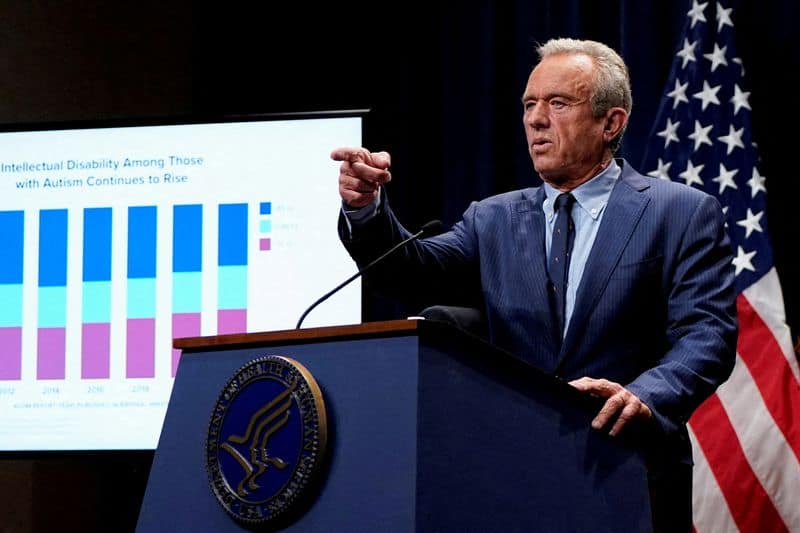
The prevalence of autism has risen significantly in recent decades, with an estimated 1 in 31 children aged 8 diagnosed in 2022, up from 1 in 150 in 2000. The CDC estimates that 26.7% of those diagnosed have profound autism.