Key facts
- US President Donald Trump expressed concern about the yen's weakness during a summit with Japanese Prime Minister Sanae Takaichi.
- Japanese Finance Minister Satsuki Katayama disclosed the exchange, stating that Prime Minister Takaichi told Trump an undervalued yen is problematic.
- The discussion reaffirmed the US-Japan stance on their July 31 coordinated intervention to counter excessive yen volatility.
- The yen strengthened slightly to around 158 per dollar after Katayama's remarks.
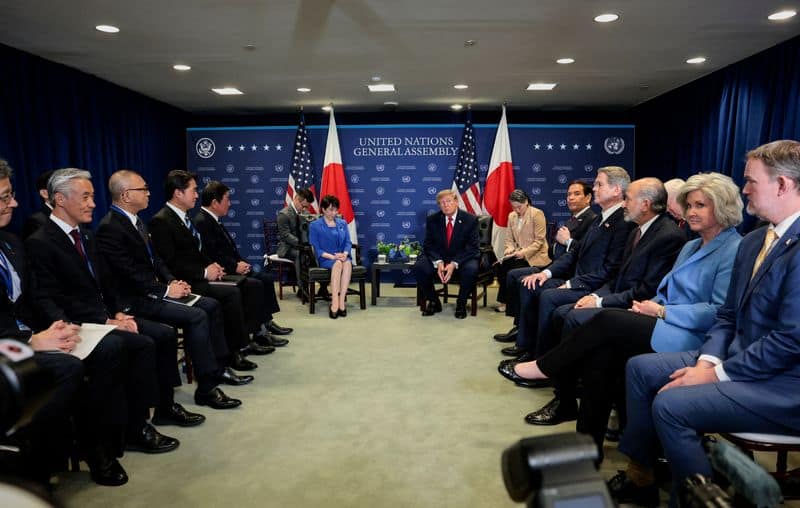
US President Donald Trump raised concerns about the yen's weakness during a recent summit with Japanese Prime Minister Sanae Takaichi, according to Japanese Finance Minister Satsuki Katayama. Katayama disclosed the exchange, stating that Takaichi told Trump that an undervalued yen is problematic. The discussion reaffirmed the US-Japan stance on their July 31 coordinated intervention aimed at countering excessive yen volatility.
The yen strengthened slightly to around 158 per dollar following Katayama's remarks. The dollar has been rallying against major currencies, driven by strong US economic data, a hawkish Federal Reserve, and surging US bond yields. The weak yen is increasing Japan's energy import costs and fueling concerns about inflation overshoot, a challenge for Japanese policymakers. The US is also concerned about potential spillover effects into the Treasury market from a selloff in Japanese bonds.
Separately, Minoru Kiuchi, the minister in charge of economic revitalization, indicated that the era of Abenomics-style reflation policies is over. These remarks appeared to be a response to Treasury Secretary Scott Bessent's suggestion that Japan should prioritize fighting inflation over stimulating growth. Hirofumi Suzuki, chief FX strategist at Sumitomo Mitsui Banking Corp, noted that remarks from both Katayama and Kiuchi reflect a heightened concern over the yen's weakness, especially after Tokyo conducted rate checks, a move often seen as a precursor to currency intervention.