Key facts
- Indonesia's rupiah was headed for its biggest weekly decline since May.
- The rupiah was down more than 1% so far this week.
- Bank Indonesia kept its benchmark interest rate unchanged at 5.75%.
- The rupiah has fallen 7% against the dollar this year.
- 30-year US bond yields hit their highest since 2004.
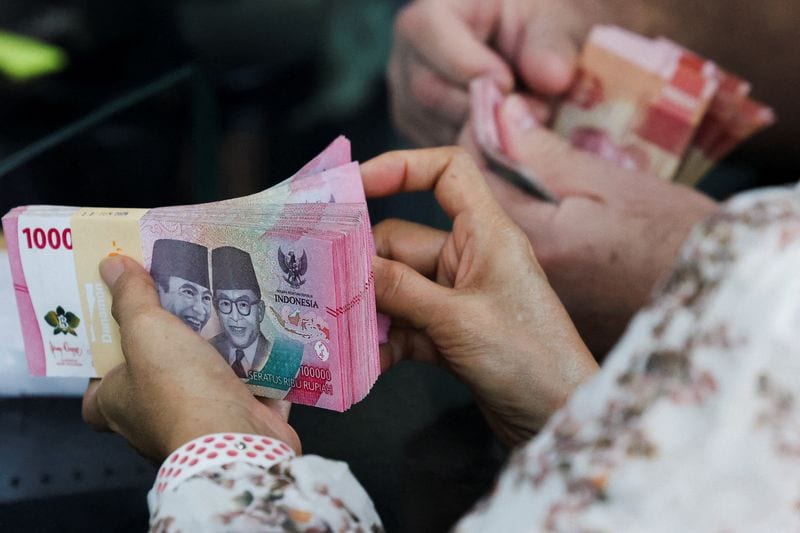
Indonesia's rupiah was on course for its largest weekly decline since May on Friday, pressured by rising US Treasury yields, a stronger dollar, and expectations that the Federal Reserve will maintain higher interest rates for an extended period. Other regional currencies traded mixed.
The rupiah extended its losses, weakening as much as 0.3% to 17,935 per dollar, putting it on track for its worst weekly performance since mid-May, with a depreciation of over 1% so far this week. Bank Indonesia had previously raised its benchmark interest rate by a cumulative 100 basis points between May and June to support the weakening currency. The central bank signaled it would prefer to support the rupiah through market-based measures, as elevated oil prices and higher US yields continue to pressure the currency.
Lloyd Chan, an FX strategist at MUFG, noted in a research update that Bank Indonesia and the finance ministry are coordinating next year's financing plans to alleviate pressure on the domestic bond market. However, he cautioned that such coordination would offer limited protection against a prolonged external shock, and further deterioration in the external environment could place more of the adjustment burden on the rupiah, increasing pressure on the central bank to maintain tight monetary policy.
The rupiah has been the worst-performing currency among emerging Asian economies that import oil this year, having fallen 7% against the dollar. This performance is attributed to fuel subsidies aimed at shielding consumers from soaring crude prices, which have intensified concerns over the fiscal health of Indonesia's $1.4 trillion economy.
Other Asian currencies were largely mixed on Friday, with a cautious tone prevailing as 30-year US bond yields reached their highest levels since 2004, and a stronger dollar continued to weigh on regional foreign exchange markets. The Thai baht weakened further to 33.455 per dollar, while the Indian rupee saw a slight increase on expectations of intervention by the Reserve Bank of India. The Malaysian ringgit strengthened by 0.2%, and the South Korean won and Taiwan's dollar gained 0.5% and 0.2%, respectively, although trading volumes were thin due to holidays in both markets.
Regional equity markets showed a slight upward trend, with China, South Korea, and Taiwan closed for holidays. Stocks in Thailand and the Philippines rebounded from previous session losses, rising 0.5% and 0.7%, respectively, while equities in Jakarta fell 0.6%. South Korea's KOSPI climbed 2.7% for the week, and Taiwanese stocks rose 1.8% for their second consecutive weekly gain, driven by renewed optimism about chip demand. Investors were also monitoring a summit between US President Donald Trump and Chinese President Xi Jinping in Washington, though no significant breakthroughs were reported on contentious issues such as AI, trade, and Taiwan.