All NewsEducationTV
Equities & FundsCrypto & Digital AssetsAI & TechnologyBusiness & CorporateUS Politics & PolicyGeopolitics & Global RiskMacro, Rates & FXCommodities & EnergyEuropean Politics & MarketsAsia-PacificReal Estate & Property
All NewsHome
← Back to Geopolitics & Global Risk

Iran warns of 'new capabilities' if US sanctions persist

Created at 26 Aug · 6:16 AM1 source↑ Market-relevant
IN SHORT

Iran's deputy foreign minister warned that Tehran would reveal 'new capabilities' if the U.S. continues to impose sanctions, stating the country would no longer deal with America as before and would inflict reciprocal harm. Iran also indicated the Strait of Hormuz is not its only economic leverage.

Key Numbers

80%Iran's shipped oil bought by China (2025 data)

Who's Involved

Kazem Gharibabadi
Iran's deputy foreign minister
Esmail Baghaei
Iran's Foreign Ministry spokesperson
Scott Bessent
U.S. Treasury Secretary threatening sanctions
Donald Trump
U.S. President warning of economic consequences
Asim Munir
Pakistan's army chief visiting Tehran
Abbas Araqchi
Iran's foreign minister dismissing sanctions threat
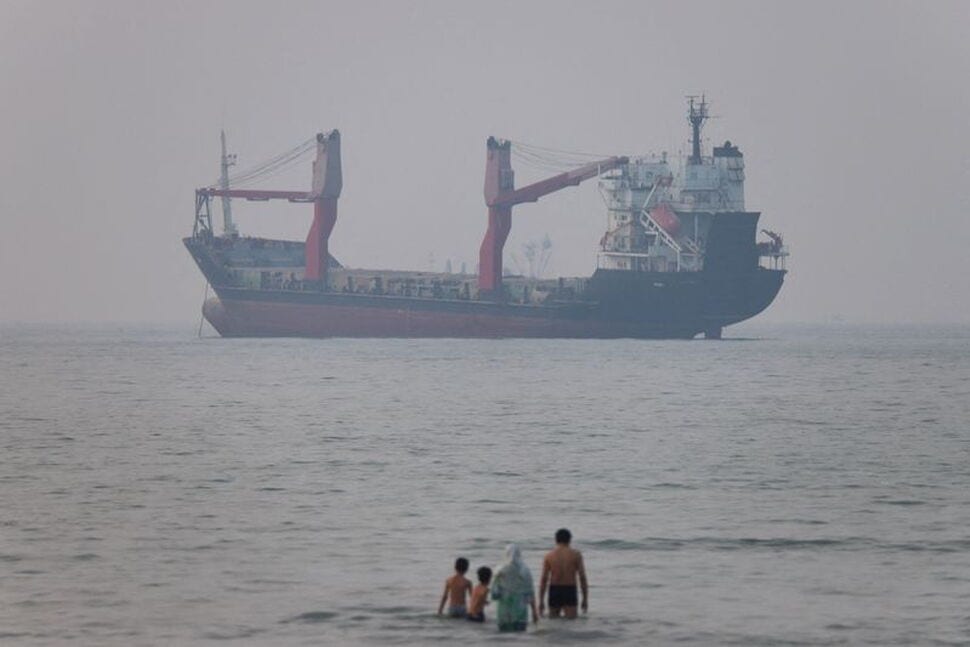
Iran warns of 'new capabilities' if US sanctions persist

↳ Why This Matters

Iran's defiant stance and threat of new capabilities in response to U.S. sanctions signal a potential escalation of regional tensions and further economic pressure on Tehran, impacting global oil markets and geopolitical stability.

Key facts

  • Iran's deputy foreign minister warned of revealing 'new capabilities' if the U.S. continues to inflict harm.
  • Tehran stated it would inflict reciprocal harm if attacked.
  • Iran suggested the Strait of Hormuz is not its sole economic leverage against the U.S.
  • New U.S. sanctions on Iran were announced.
  • Iran's foreign minister dismissed the threat of new sanctions as a sign of desperation.

Iran has warned of revealing 'new capabilities' if the United States continues to impose sanctions, with a deputy foreign minister stating that Tehran would no longer deal with America in the same manner as before and would inflict reciprocal harm. The official, Kazem Gharibabadi, also indicated that the Strait of Hormuz is not Iran's only economic tool against Washington, suggesting the U.S. should not assume it is the sole party capable of causing economic damage.

These statements come as the U.S. announced new sanctions on Iran. Iran's Foreign Ministry spokesperson, Esmail Baghaei, warned that any escalation would bring consequences, stating that Tehran's hands are not tied. The new head of Iran's top security body had previously warned that support for the sanctions would be considered an 'act of war.'

However, Iran's foreign minister, Abbas Araqchi, dismissed the threat of new U.S. sanctions as a sign of desperation, stating that such measures would fail. He described the U.S. approach as 'repetitive scenarios' and urged Washington to engage in respectful dialogue for a solution.

Historically, sanctions have pressured Iran's economy, but Tehran has adapted by finding new trading partners and developing domestic industries. The country's currency hit a record low on Monday. The U.S. Treasury Secretary, Scott Bessent, has threatened to impose 'the toughest sanctions in history.'

Meanwhile, Pakistan's army chief, Asim Munir, was scheduled to visit Tehran to discuss regional developments, including the U.S. threat of new sanctions, as Pakistan has been mediating in the conflict.

Frequently asked questions

Iran's demands for reopening the Strait of Hormuz include lifting the U.S. naval blockade, withdrawing U.S. forces from the region, and receiving reparations for damages sustained in the war.

After decades of sanctions, Iran's economy has adapted by finding new trading partners and building domestic industries, though its currency recently hit a record low.

The Strait of Hormuz is a vital waterway through which a fifth of the world's traded oil passed before the recent conflict began.

What Happens Next

01U.S. Treasury Secretary Scott Bessent to hold a press conference on sanctions.
02Pakistan's army chief to visit Tehran for regional discussions.

How It Developed

Iran's deputy foreign minister warned of revealing 'new capabilities' if the U.S. continues to inflict harm.
Iran stated it would no longer deal with the U.S. in the same way as before.
Iran indicated it would mitigate harm and inflict reciprocal harm if attacked.
Iran suggested the Strait of Hormuz is not its only tool against Washington.
Iran's Foreign Ministry spokesperson warned of harsh responses to expanded U.S. sanctions.
The U.S. announced new sanctions on Iran.
Iran's foreign minister dismissed new U.S. sanctions as a sign of desperation.
Iran's currency hit a record low on Monday.

Sources

T1
Iranian minister warns US against 'inflicting harm', says Tehran would 'reveal new capabilities'Middle East Eye
T2
Iran warns of harsh response as US announces new sanctions and other ...apnews.com
T2
Iran's foreign minister calls threat of new US economic sanctions ...theguardian.com
T2
Iran Says New Sanctions Threatened by 'Desperate' US Will Failusnews.com

Related Stories

Rubio says US not expected to launch new strikes on Iran
25 Aug · 10:06 PM
Trump says Strait of Hormuz mine-free, warns Iran against new placement
25 Aug · 3:07 PM
Iran's Ghalibaf calls for new regional order during Iraq visit
25 Aug · 9:56 PM
Iran's Strait of Hormuz leverage erodes amid infrastructure shifts
26 Aug · 4:11 AM
China Warns of Retaliation as US Tightens Iran Sanctions
25 Aug · 1:46 PM