Key facts
- JPMorgan analysts no longer have a clear baseline for exiting the Iran war's impact on oil markets.
- Roughly 10 million barrels per day of oil supply has been disrupted.
- Iranian attacks have damaged 17% of Qatar's LNG capacity, with repairs expected to take up to three years.
- US diesel refining margins hit a record $118.62 per barrel on September 14.
- Chevron reported its highest quarterly profit in at least six years in Q2, earning $12 billion.
- ConocoPhillips' quarterly earnings rose to $3.9 billion from $2 billion a year earlier due to higher prices.
For the first time since the Iran war began, JPMorgan analysts have indicated they no longer possess a clear baseline for how the oil market might navigate the conflict's conclusion. The bank had previously operated under the assumption that rising oil prices and their associated economic damage would naturally impose limits on the conflict's duration. However, six months into the war, JPMorgan observes that many of these thresholds have been surpassed without yielding a discernible exit strategy.
Approximately 10 million barrels per day of oil supply has been disrupted. JPMorgan estimates Brent crude's fair value for September at around $90 per barrel, contrasting with market prices hovering near $106. The ongoing conflict has created multiple profit avenues for oil and gas companies, including elevated crude prices, extreme refining margins, and the loss of Qatari liquefied natural gas (LNG) supply, alongside trading volatility.
Companies with substantial commodity exposure are not necessarily the primary beneficiaries, especially when their own Middle Eastern assets are considered. A producer selling oil above $100 per barrel gains limited advantage if a significant portion of its own production is hampered by the conflict. LNG exporters outside the immediate region are capitalizing on a supply problem extending beyond the Strait of Hormuz. Iranian attacks have reportedly disabled 17% of Qatar’s LNG capacity, with repairs to two damaged LNG trains anticipated to take as long as three years. Consequently, QatarEnergy is seeking 2 to 3 million tonnes of LNG annually from external suppliers until 2031, including from U.S. producers, to fulfill its contractual obligations.
Refiners are also profiting from the disruption. U.S. diesel refining margins reached a record $118.62 per barrel on September 14, while U.S. distillate inventories dropped to 107.9 million barrels, marking the lowest level for this period of the year since 1982. The severe loss of Middle Eastern and Russian fuel supplies has led traders and analysts to anticipate a global diesel shortage persisting into 2027.
Around 2.5 million barrels per day are expected to be moved via ship-to-ship transfers in the Gulf of Oman during September, an increase from 1.4 million barrels per day in August. This workaround involves Gulf producers using shuttle tankers to transport crude through Hormuz before transferring it to conventional export vessels off the coast of Oman. While this method keeps more oil flowing, it comes at an extraordinary cost. VLCC freight rates from the Gulf to China have exceeded $30 per barrel as of Tuesday's reporting, and tanker availability remains severely constrained.
Geographical positioning is proving critical. ExxonMobil holds significant upstream assets in Qatar and Abu Dhabi, placing a portion of its production directly within the war-affected region. In contrast, Chevron's portfolio exhibits considerably less exposure to Middle Eastern production. Cheniere benefits from the reduced output of competing Qatari LNG, while Marathon Petroleum is capitalizing on the surge in refining margins driven by the shortage of finished fuels.
Based on current operations, recent earnings reports, and analyst commentary, Chevron, ConocoPhillips, Cheniere Energy, Shell, and Marathon Petroleum are identified as companies to watch in a prolonged standoff.
Chevron's advantage lies in its limited direct production losses from the Middle East coupled with substantial exposure to the higher prices resulting from the disruption. In the second quarter, Chevron earned an adjusted $12 billion, its highest quarterly profit in at least six years, with upstream earnings tripling year-over-year to $8.2 billion. Worldwide production increased by 20% to 4.07 million barrels of oil equivalent per day (boe/d), with U.S. production reaching a record 2.08 million boe/d. Chevron's U.S. liquids realization rose to $70.80 per barrel from $47.77 a year prior, and its international liquids realization increased to $96.41 from $58.88.
Chevron also benefited from strong refining performance, with downstream earnings reaching $4.9 billion in Q2 amid tight global fuel inventories and elevated refining margins due to Middle East disruptions. Its U.S. refineries processed a record 1.07 million bpd of crude in the quarter, operating at over 97% crude unit utilization. The acquisition of Hess has expanded Chevron's production base, adding a 30% interest in Guyana’s Stabroek Block, where production now exceeds 900,000 bpd. The Hess deal, along with growth in the Permian Basin and Gulf of America, contributed to a 20% year-over-year increase in companywide production. Chevron has already achieved $1.5 billion in annual run rate synergies from the Hess acquisition, surpassing its initial target ahead of schedule.
Chevron returned $6.5 billion to shareholders in Q2, comprising $3.5 billion in dividends and $3 billion in share repurchases. The company also reduced its debt by a record $8.4 billion during the quarter and maintained its full-year share repurchase range of $10 billion to $20 billion. Wall Street analysts have raised their expectations, with Piper Sandler increasing its price target to $243 from $207, BMO Capital to $235 from $210, Wells Fargo to $230 from $226, and Goldman Sachs to $240 from $225 before adjusting it to $228.
ConocoPhillips offers investors more direct exposure to high oil prices compared to integrated majors. In Q2, the company produced 2.248 million boe/d, with 1.479 million boe/d from the Lower 48 states. The war has impacted ConocoPhillips' production in Qatar, averaging approximately 82,000 boe/d, representing about 3.5% of total company production. The company excluded Qatar from its Q2 production guidance due to uncertainty. Despite higher royalties in Canada, ConocoPhillips' average realized price increased by 36% year-over-year to $62.33 per boe in Q2, primarily driving quarterly earnings to $3.9 billion from $2 billion. Cash from operations reached $7.2 billion, with $2 billion spent on share buybacks and $1 billion on dividends.
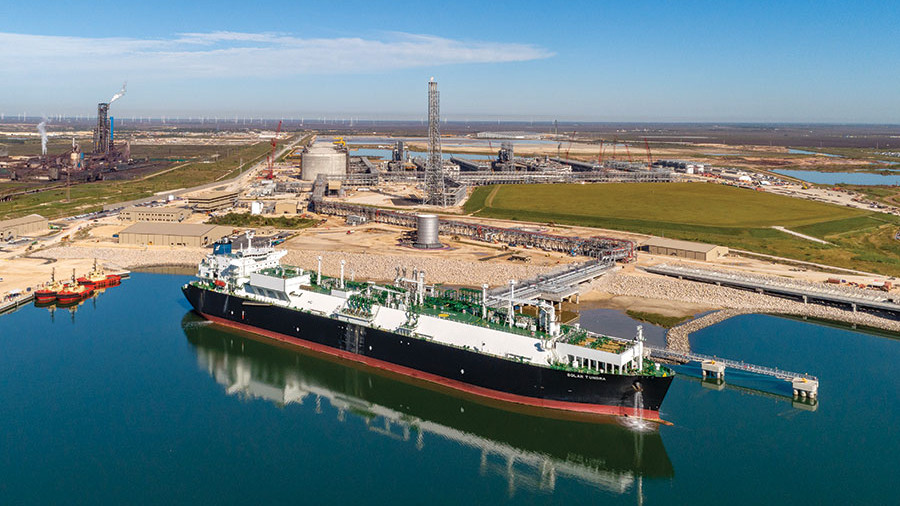
Cheniere Energy has a direct commercial opportunity arising from Qatar's need to replace lost LNG production. QatarEnergy is negotiating multi-year supply agreements with Cheniere, Venture Global, and Woodside, potentially securing contracted demand through 2031. Cheniere completed its Corpus Christi Stage 3 project on August 28, boosting its LNG production capacity by over 20% to approximately 56 million tonnes per year.