Key facts
- Inheritance tax receipts have reached a new record high.
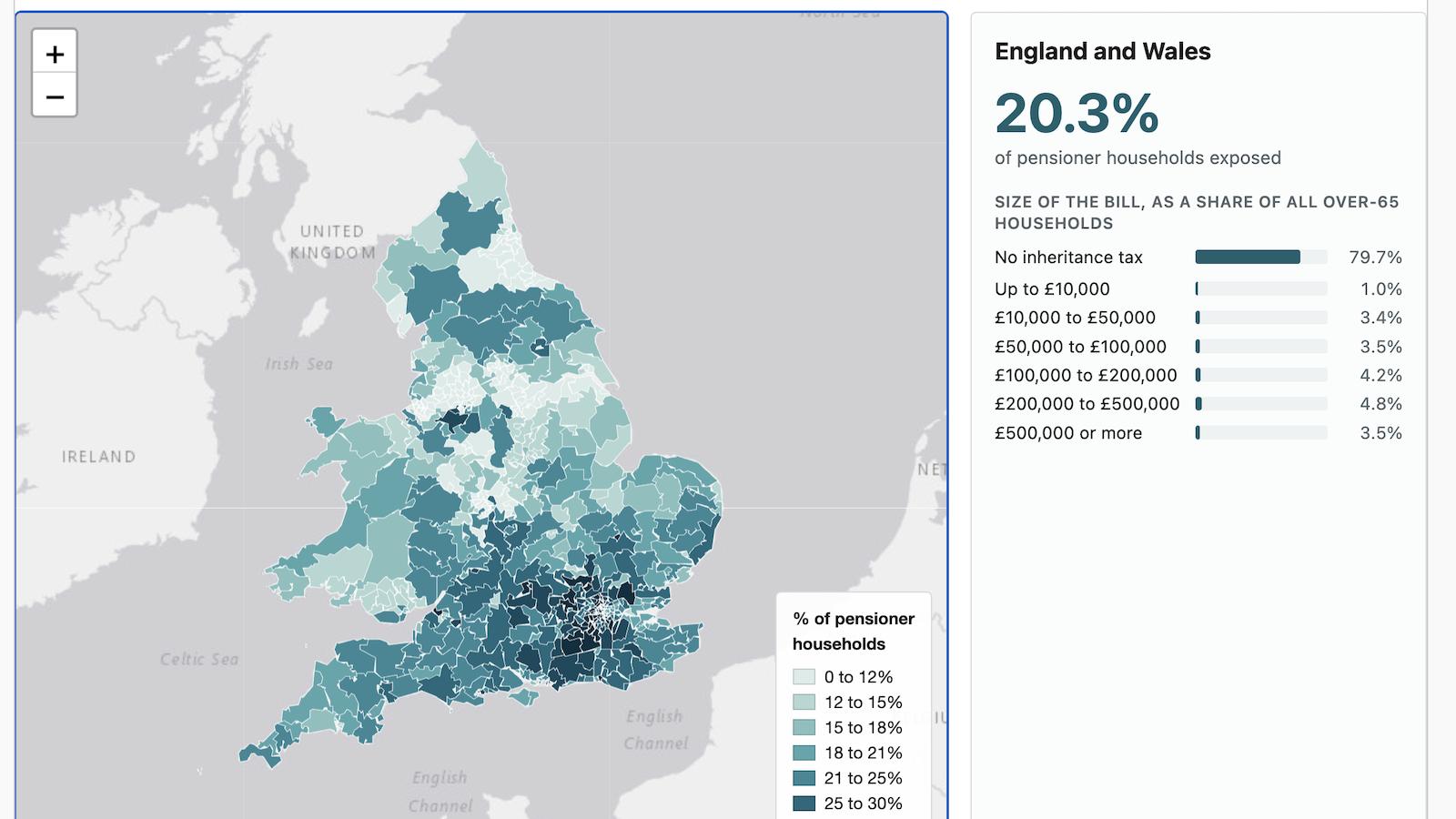
- By April 2027, 20% of pensioner households in England and Wales are projected to have assets large enough to incur an inheritance tax liability.
- The percentage of pensioner households exposed to inheritance tax varies by constituency, from under 9% to 52%.
- Approximately 40% of exposed households owe their liability solely to house price gains.
- Pensioner households in Liberal Democrat-held seats are most exposed on average (28.6%), followed by Conservative (23.3%) and Labour (17.6%).
- A promise to abolish inheritance tax may have a limited impact on general election results, potentially causing a one percentage point national swing.
Inheritance tax receipts have reached a new record high, with a growing number of households facing potential liability due to frozen tax thresholds and rising property values. A model developed by taxpolicy.org.uk projects that by April 2027, 20% of pensioner households in England and Wales will have assets large enough to incur an inheritance tax bill if they were to die at that point. This figure is significantly higher than the current statistic of fewer than 5% of estates actually paying the tax.
The exposure to inheritance tax varies considerably across different regions and constituencies. Wimbledon, for example, has the highest exposure at 52% of pensioner households, while Durham has around 9%. The analysis indicates that approximately 40% of these exposed households would be liable even if their home's value had not increased. The tax's political significance is also highlighted by its uneven distribution across party-held seats, with Liberal Democrat constituencies showing the highest average exposure (28.6%), followed by Conservative (23.3%) and Labour (17.6%).
Despite the potential impact on a significant number of voters, a promise to abolish inheritance tax may have a limited effect on general election outcomes, with the model suggesting a maximum of a one percentage point national swing. The complexity of inheritance tax planning is also noted, with many individuals not discussing it with their families due to awkwardness or perceived rudeness, despite the fact that planning must be done years in advance.