Key facts
- President Prabowo Subianto has set ambitious macroeconomic targets and fiscal assumptions for the upcoming year.
- Concerns have been raised by business leaders and economists regarding policy uncertainty and fiscal risks.
- Despite positive signs like falling inflation and increased tax revenue, the budget deficit widened significantly, and the rupiah depreciated.
- Credit rating agencies Moody's and Fitch have downgraded Indonesia's credit rating outlook to negative.
- A new state agency will be created to manage exports of key commodities like nickel, palm oil, and coal.
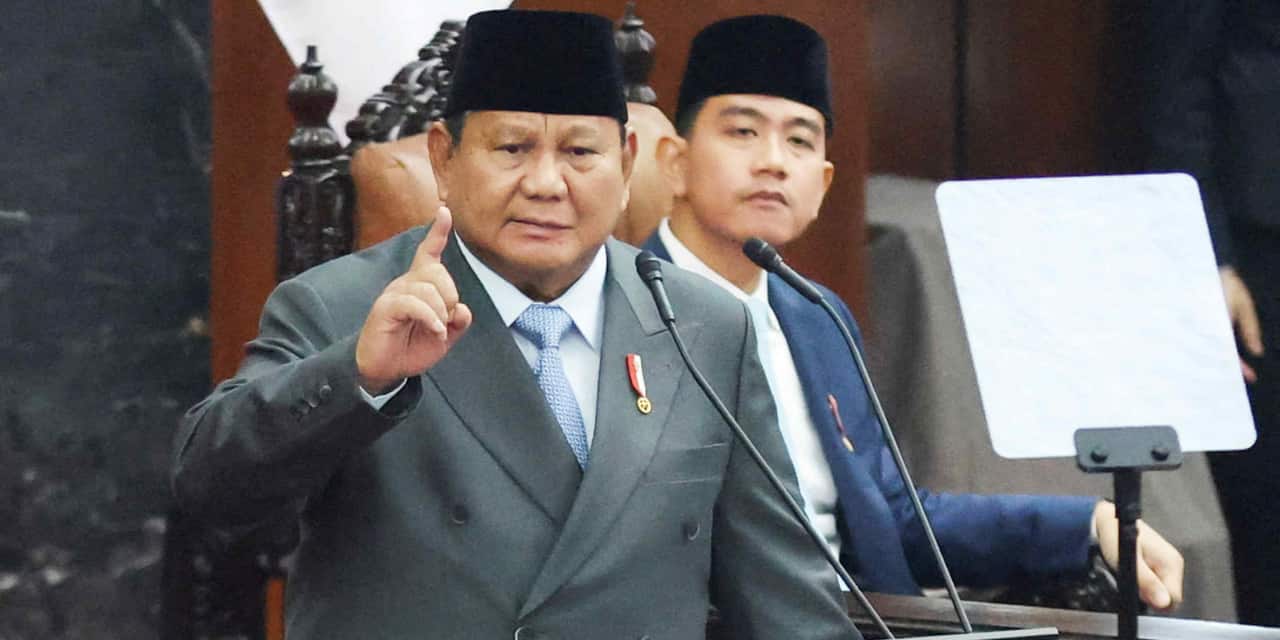
President Prabowo Subianto has set an ambitious economic growth target for Indonesia, aiming for 8% by 2029. This requires an average annual acceleration of 0.6 percentage points, a feat achieved by some East Asian economies in previous decades. However, recent economic data and policy concerns are casting doubt on the feasibility of these goals.
While Indonesia has seen positive developments such as inflation falling within Bank Indonesia's target range and a significant increase in tax revenue in the first quarter of 2026, warning signs are mounting. The budget deficit widened substantially year-on-year, the rupiah has weakened past Rp17,000 per dollar, and capital has flowed out of the country's financial markets. These factors present a challenging environment for achieving faster growth while managing increased fiscal burdens.
Concerns are amplified by structural issues. Government spending has outpaced revenue growth, raising questions about sustainability. Consumer confidence remains optimistic, yet spending as a share of income has decreased, suggesting underlying caution. The financial system shows a divergence, with credit contracting for small and medium-sized enterprises (SMEs) while corporate credit grows strongly, potentially widening inequality. Online lending default rates are also approaching regulatory limits.
External factors, such as Middle East conflict driving up oil prices, further strain fiscal resources through energy subsidies. Credit rating agencies Moody's and Fitch have responded by cutting Indonesia's credit rating outlook to negative, citing reduced policymaking credibility and predictability. MSCI also warned of a potential downgrade to frontier market status, which triggered a significant market rout.
In response to revenue concerns, President Prabowo announced plans to create a new state agency to manage exports of key commodities like nickel, palm oil, and thermal coal, aiming to capture lost revenue. This move, however, has already spooked markets, with the stock index experiencing declines due to potential impacts on pricing mechanisms and trader margins.