Key facts
- Indonesia is intensifying efforts to combat forest and land fires in six priority provinces.
Indonesia is deploying cloud-seeding aircraft and increasing fire suppression efforts in six priority provinces to combat intensifying forest and land fires exacerbated by an El Nino-driven dry season. Haze from the fires is spreading regionally, impacting air quality in Malaysia.
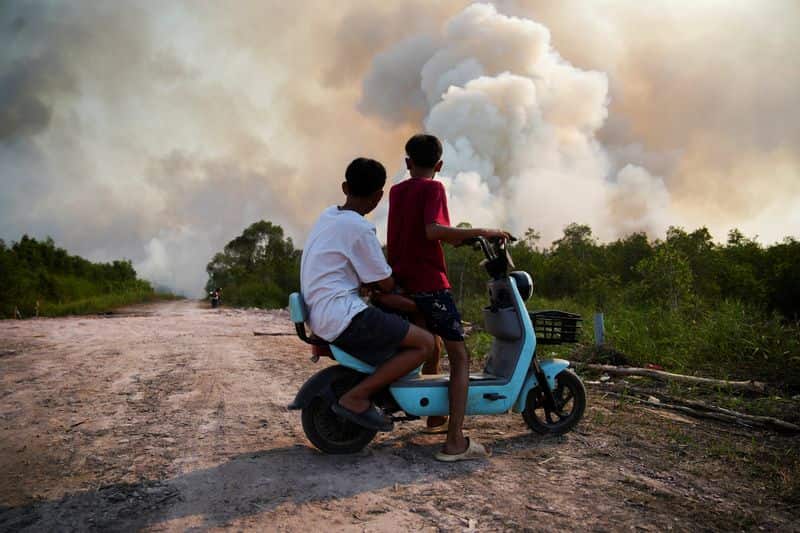
The fires and resulting haze pose significant risks to public health, ecosystems, and regional economies, potentially disrupting agriculture and tourism.
Indonesia is escalating its response to widespread forest and land fires, particularly in six key provinces, as a prolonged and severe dry season driven by an intensifying El Nino raises the risk of drought and air pollution. Officials have deployed cloud-seeding aircraft to stimulate rainfall and are utilizing 43 helicopters and 15 fixed-wing aircraft for fire suppression efforts.
From January to June, fires have impacted 107,465 hectares, marking a 110% increase compared to the same period in 2023. Chief security minister Djamari Chaniago expressed concern over the weather conditions that facilitate the spread of fires, noting that El Nino may have reached its peak intensity in the region.
The six priority provinces are Riau, Jambi, and South Sumatra on Sumatra island, and West Kalimantan, Central Kalimantan, and South Kalimantan on Borneo island. Fires have also occurred in Java, Papua, and Nusa Tenggara. In Pontianak, the capital of West Kalimantan, air quality has deteriorated to the point where classes for students have moved online.
Authorities are facing challenges with cloud seeding due to a scarcity of rain clouds, requiring close monitoring of weather patterns. Meanwhile, the haze has extended to Malaysia, with 11 areas in Sarawak state recording unhealthy air quality levels. Schools in Sarawak have been instructed to suspend outdoor activities when air quality exceeds 100.
Separately, a fire in Mount Bromo national park in East Java, which damaged at least 899 hectares, has been largely extinguished, though over 150 personnel continue to work on remaining hotspots.
Pick the topics you care about. Get only what matters, on your cadence.