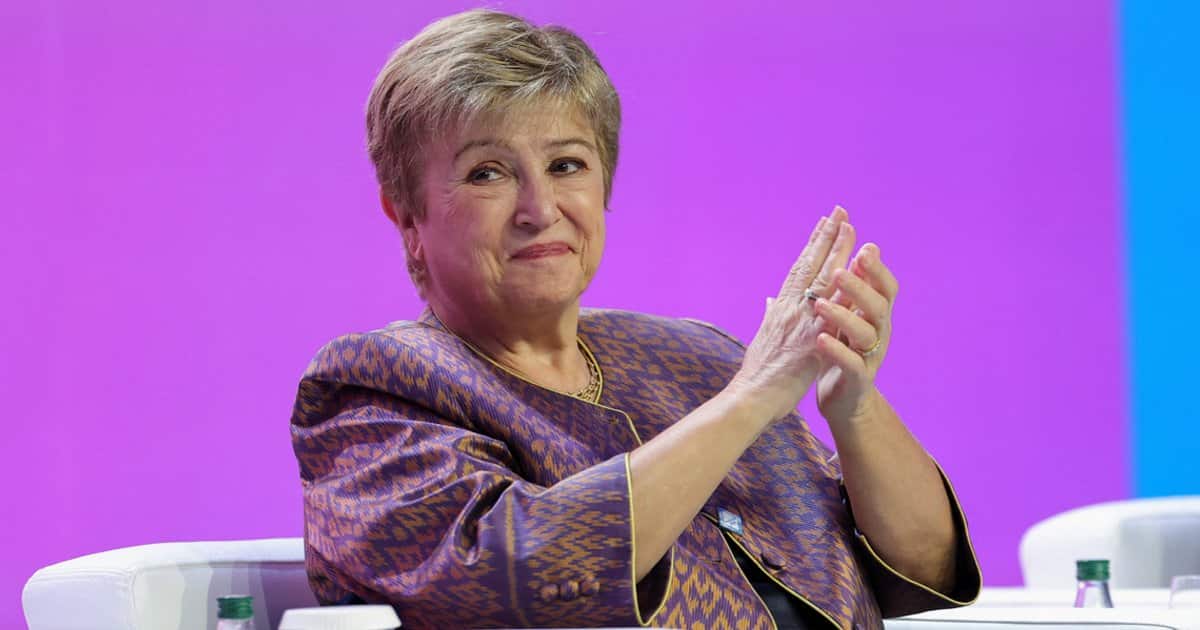
International Monetary Fund Managing Director Kristalina Georgieva stated that the United States cannot overcome its public debt without tax or spending adjustments, and China must shift from export-led growth to domestic consumption. Georgieva also highlighted that advanced economies, particularly the US and European countries, are the primary contributors to excessive debts, with their high benchmark yields negatively impacting low-income nations.
Speaking at the IMF and World Bank annual meetings in Bangkok on Wednesday, Georgieva admonished the world's two largest economies to make painful policy changes to reduce growing fiscal and trade imbalances. Her fiscal affairs chief, Rodrigo Valdes, noted that inflation, high debt levels, and rising yields have heightened the urgency for budget consolidation globally.
Georgieva specifically pointed to the US and European countries as the "worst offenders" on excessive debts, explaining that higher benchmark yields are spilling over to low-income countries that have already been forced by financial markets to curb borrowing.
When asked about the need for tighter fiscal policy in the US, Georgieva said Treasury Secretary Scott Bessent acknowledges that US deficit and debt levels are too high and require greater sustainability. While strong growth helps, she believes it cannot deliver the necessary adjustments quickly enough, necessitating some fiscal measures.
The IMF's Fiscal Monitor report on Wednesday echoed this call, warning that delays in fiscal consolidation in an era of higher borrowing costs would make the task more difficult in the coming years.
Regarding China, Georgieva reiterated long-standing advice to Beijing to increase domestic consumption to rebalance its growth model, especially as data showed the country was on track to post a record trade surplus. She stated that deficit countries need to save more and spend less, while Europe needs to invest more in competitiveness.
US Treasury Secretary Scott Bessent is not attending the Bangkok meetings, opting instead for domestic engagements amid the US midterm election campaign. He has been a proponent of President Donald Trump's economic policies, including tax cuts.