Key facts
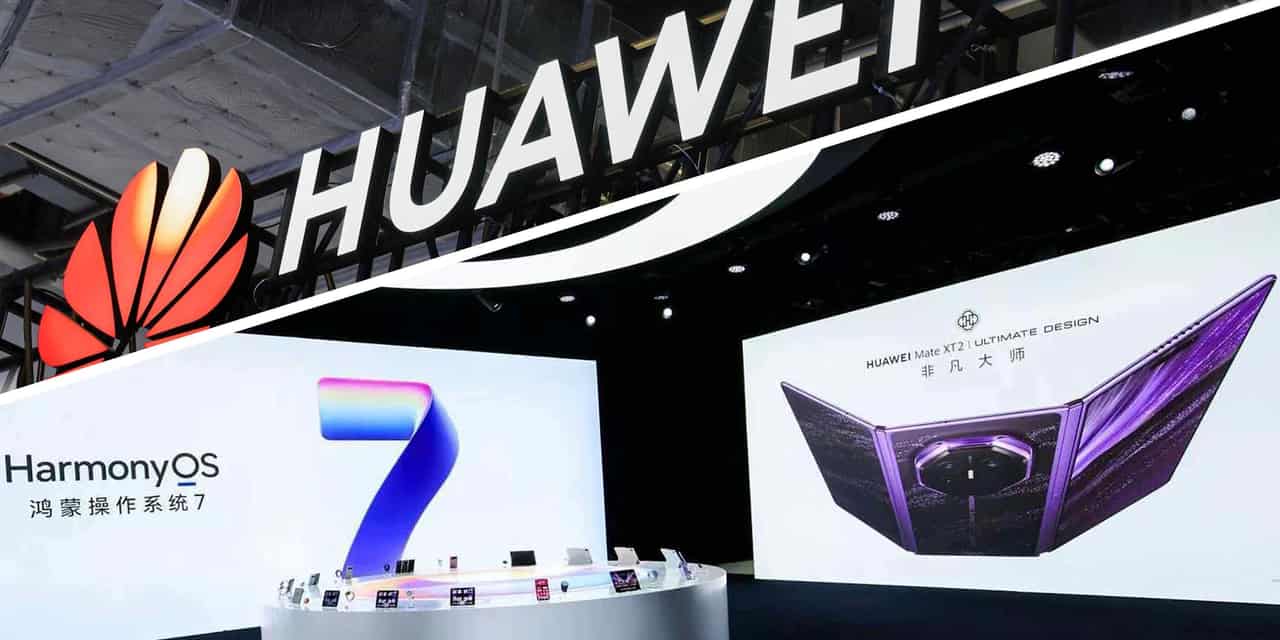
- Huawei launched its new Mate XT2 foldable phone with a triple-fold design.
- The Mate XT2 is powered by Huawei's proprietary Kirin 9050 Pro chip, based on the 'Tau Scaling Law'.
- This chip design aims to bypass US technology restrictions and improve power efficiency.
- Xiaomi also launched a rival foldable phone featuring its self-developed Xring O3 processor.
- Both companies are releasing their devices ahead of Apple's expected foldable iPhone announcement.
Huawei has launched its new Mate XT2 foldable smartphone, featuring a triple-fold design and powered by its proprietary Kirin 9050 Pro chip. This move intensifies competition in the premium handset market, particularly against Apple and Xiaomi, both of which are also unveiling new products. The Kirin chip is based on Huawei's 'Tau Scaling Law' and LogicFolding architecture, designed to bypass US technology restrictions and improve power efficiency.
Xiaomi is releasing a rival foldable phone on the same day, reportedly using its self-developed Xring O3 processor and memory from CXMT. These launches come just ahead of Apple's expected announcement of its latest iPhone series, which is widely anticipated to include a foldable model.
The Mate XT2 series starts at 19,999 yuan ($2,980), with the most expensive version costing 24,999 yuan. Huawei Executive Director Richard Yu cited rising memory costs and the adoption of new technologies as reasons for the premium pricing. The phones boast a redesigned folding mechanism, improved water resistance, an optional privacy screen, and upgraded cameras, delivering 42% better performance than their predecessors according to company tests.
In China's smartphone market for the second quarter, Huawei led with a 22.6% share, followed by Apple (18.1%) and Xiaomi (12.4%). Huawei holds a dominant 68% share of the foldable phone market in China. However, the overall smartphone market is facing a significant contraction, with Chinese makers particularly affected by surging component prices.