Key facts
- The Houthis' arsenal is largely designed or supplied by Iran.
- The group has expanded its fighting force to an estimated 350,000 by 2024.
- The Houthis have medium-range missile capabilities that have hit targets in northern Israel.
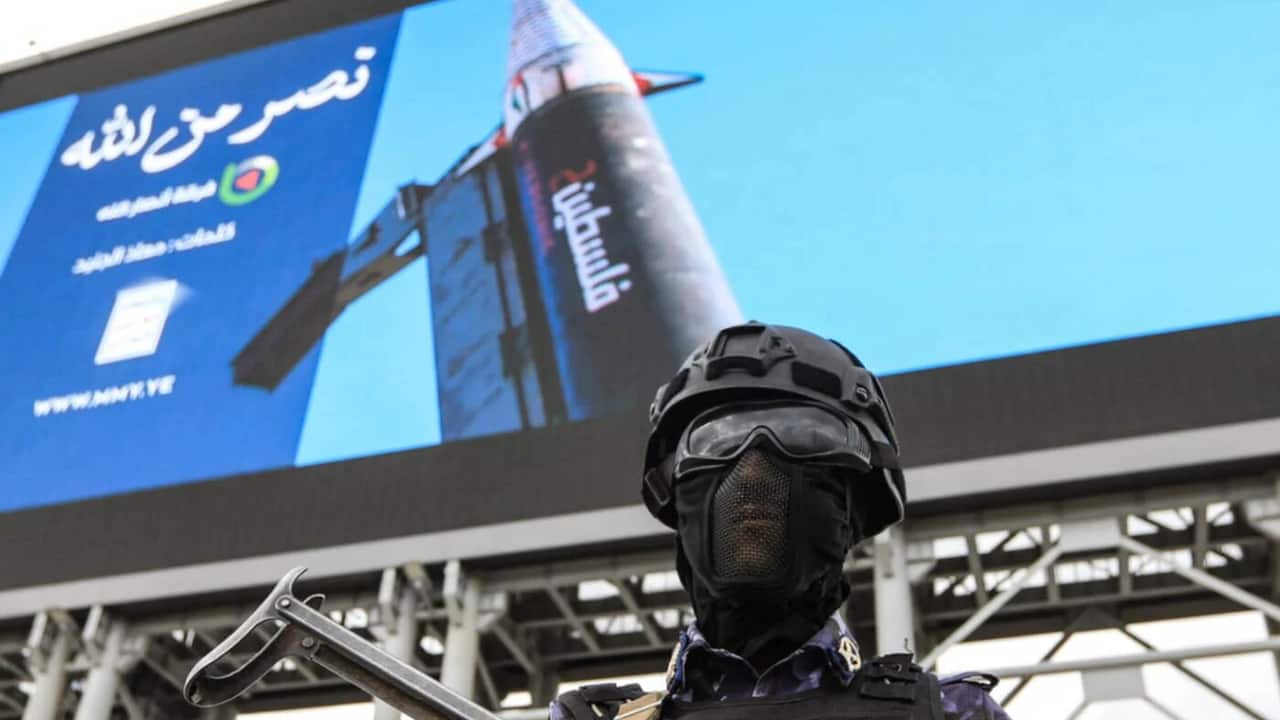
- The Palestine-2 missile, claimed by the Houthis, has a stated range of 2,150km.
- The Houthis have used short-range ballistic missiles and anti-ship cruise missiles against ships in the Red Sea.
Yemen's Houthi rebels, officially known as Ansar Allah, have significantly expanded their military capabilities, evolving from a loosely organized force to one capable of launching sophisticated missile and drone attacks. Much of their arsenal, including medium-range ballistic missiles and anti-ship cruise missiles, is reportedly designed or supplied by Iran, which considers the Houthis part of its "Axis of Resistance." The group has used these weapons to target shipping traffic in the Red Sea and Gulf of Aden, as well as striking targets in Israel, Saudi Arabia, and the UAE.
While the exact size of the Houthi stockpile remains unknown, analysts suggest their medium-range missile capabilities allow them to strike targets approximately 2,000km away. The Palestine-2 missile, claimed by the Houthis, is said to have a range of 2,150km and is described as hypersonic with a 500kg warhead, though analysts express skepticism about the hypersonic claim. The Hatem-2 missile, believed to be a variant of Iran's Kheibar Shekan system, has a reported range of 1,450km and a 500kg warhead. The Houthis have also employed short-range ballistic missiles and anti-ship cruise missiles, some modeled on Iran's Quds series with ranges of at least 800km. They have also acquired older Soviet-era tanks and helicopters and captured US-supplied military vehicles.
Founded in 1994 by cleric Hussein al-Houthi and now led by his brother Abdul-Malik al-Houthi, the Zaydi Shia group seeks more autonomy for northern Yemen. They seized control of the capital, Sanaa, between 2014 and 2016 during the Yemeni civil war. Their fighting force is estimated to have grown from 30,000 in 2015 to 350,000 by 2024. The Houthis have also collaborated with other Iranian allies like Hezbollah and have received support from Russia, which has provided targeting data and used its UN Security Council veto to block arms embargoes against the group. The Houthis utilize open-source intelligence, including data from maritime intelligence websites, to locate vessels for attacks.