All NewsEducationTVBrokers
Equities & FundsCrypto & Digital AssetsAI & TechnologyBusiness & CorporateUS Politics & PolicyGeopolitics & Global RiskMacro, Rates & FXCommodities & EnergyEuropean Politics & MarketsAsia-PacificReal Estate & Property
All NewsHome
← Back to Geopolitics & Global Risk

Iran Plans 'Exclusion Zone' Near Strait of Hormuz Amid Intensifying Risks

Created at 7 Sep · 4:28 AM4 sources↑ Market-relevant4 events
IN SHORT

Iran plans to announce a new 'exclusion zone' for suspicious vessels near the Strait of Hormuz, as attacks on shipping continue and US military escorts reach a wartime high. Both sides appear unwilling to escalate to full-scale conflict, but the situation remains perilous.

Key Numbers

10vessels daily in Strait of Hormuz
40commercial vessels escorted by US military
18 millionbarrels of oil escorted through Strait of Hormuz
$40 billioncost of conflict to Washington as of July
$4.14US national average price for gas per gallon

Who's Involved

Iran
planning new 'exclusion zone' near Strait of Hormuz
U.S. military
escorting commercial vessels through Strait of Hormuz
ADNOC
continuing LNG loading despite risks
Donald Trump
warned Iran against retaliation
Danny Citrinowicz
former head of Iran branch of Israeli military intelligence
Hamidreza Azizi
senior Iran analyst at International Crisis Group
Iran Plans 'Exclusion Zone' Near Strait of Hormuz Amid Intensifying Risks

↳ Why This Matters

The escalating tensions and Iran's planned 'exclusion zone' near the Strait of Hormuz threaten global energy supplies and could lead to further economic instability, impacting oil prices and trade routes vital to the world economy.

Key facts

  • Iran plans to announce a new 'exclusion zone' for suspicious vessels near the Strait of Hormuz.
  • Commodity ship traffic in the Strait of Hormuz has fallen to its lowest point since May.
  • The U.S. military is escorting commercial vessels through the Strait of Hormuz.
  • Both Iran and the U.S. have engaged in renewed exchanges of fire.
  • The conflict has had severe economic impacts on both Iran and the U.S.

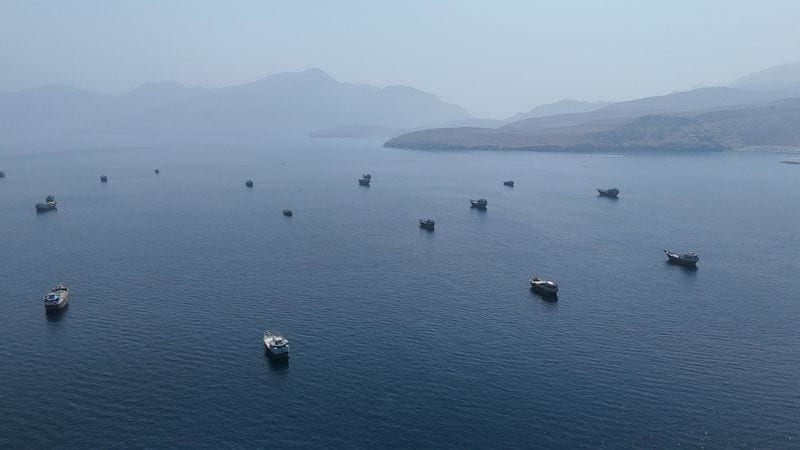
Iran is planning to announce a new 'exclusion zone' for vessels it deems suspicious in waters near the Strait of Hormuz, as risks in the critical shipping lane intensify. This move comes as commodity ship traffic in the Strait has fallen to an average of 10 vessels daily over the past 10 days, the lowest since May.

Despite the heightened risks, ADNOC continues to load LNG, employing tactics such as using dark mode tankers and ship-to-ship transfers. The U.S. military is actively involved in escorting commercial vessels through the Persian Gulf, with one operation involving 40 vessels carrying 18 million barrels of oil, marking a wartime high.

This development follows a renewed exchange of fire between Iran and the U.S. The U.S. military struck Iran, which led to Tehran attacking Jordan, Bahrain, and Kuwait. However, experts suggest that both sides are largely avoiding full-scale conflict, concentrating attacks on military rather than civilian or energy targets. Senior analysts note that neither side desires a return to full-scale war, but the current situation is precarious and carries a risk of miscalculation.

The economic consequences of the ongoing tensions are significant. The U.S. is applying economic pressure on Iran, impacting its ability to sell oil and potentially depleting weapon stockpiles, while citizens struggle with access to basic goods. The conflict has also reportedly cost Washington approximately $40 billion as of July, with the national average price for gas at $4.14 a gallon.

Frequently asked questions

The Strait of Hormuz is a vital chokepoint for global oil transportation, connecting the Persian Gulf to the open ocean.

Iran plans to announce an 'exclusion zone' for vessels it deems suspicious amid intensifying risks and ongoing attacks on shipping in the region.

The U.S. military is escorting commercial vessels, and there have been renewed exchanges of fire between the U.S. and Iran, though both sides appear to be avoiding full-scale conflict.

What Happens Next

01Iran is expected to announce the new 'exclusion zone' for vessels.
02Further exchanges of fire between Iran and the U.S. remain a possibility.

How It Developed

Commodity ship traffic in the Strait of Hormuz fell to an average of 10 vessels daily, the lowest since May.
ADNOC continues loading LNG despite Hormuz risks, using dark mode tankers and ship-to-ship transfers.
Iran plans to announce a new 'exclusion zone' outside the Strait of Hormuz for vessels it deems suspicious.
The U.S. military struck Iran, prompting Tehran to attack Jordan, Bahrain, and Kuwait.
The U.S. military escorted 40 commercial vessels carrying 18 million barrels of oil through the Strait of Hormuz.

Sources

T1
Iran says it plans to announce a new 'exclusion zone' near the Strait of HormuzAP News
T1
Iran’s Attacks Keep the Strait of Hormuz in a Lethal StalemateThe New York Times
T1
Hormuz traffic drops to lowest since MayMiddle East Eye
T1
ADNOC Keeps Loading LNG as Hormuz Risks IntensifyOilPrice.com
T2
How a 95 percent drop in Hormuz traffic changed global shippingaljazeera.com
T2
The US wants to manage the stalemate in the Strait of Hormuz. Iran wants to break itcnn.com
T2
The Case for a Stalemate With Iran | Foreign Affairsforeignaffairs.com
T2
Deccan Herald on X: "Iran's attacks keep the Strait of ...x.com

Related Stories

South Korea in talks on Hormuz security, keeps Iran channel open
7 Sep · 6:26 AM
UAE building alternative trade routes amid Iran conflict
7 Sep · 8:48 AM
Canada Slams Iran for 'Destabilizing Actions', Vows Continued Pressure
7 Sep · 6:26 AM
Iran threatens US energy companies after US strikes on tankers
7 Sep · 10:51 AM
Iran claims successful test of new anti-ship missile over US warship
7 Sep · 9:06 AM