Key facts
- Israel conducted a drone strike in southern Lebanon.
- Hezbollah leader Naim Qassem rejected the Israel-Lebanon framework agreement.
- Hezbollah vowed to continue armed resistance.
- Israeli forces are preparing for an extended stay in a security zone within Lebanese territory.
- Lebanon's Public Prosecutor ordered security forces to prevent riots following protests.
Israel carried out a drone strike in southern Lebanon targeting an individual perceived as a threat, a day after signing a framework agreement with Lebanon aimed at easing border tensions. The Israel Defense Forces stated the strike was on an individual posing a threat. Lebanon's state news agency reported the attack hit the town of Nabatieh al-Fawqa.
Following the strike, Hezbollah leader Naim Qassem rejected the US-brokered deal, accusing the Lebanese government of undermining sovereignty and calling the agreement "humiliating, shameful, and a surrender of sovereignty." He criticized provisions linking Israel's withdrawal to Hezbollah's disarmament, stating they crossed "all red lines." Qassem vowed that Hezbollah would continue its armed resistance.
The framework agreement, reached after five rounds of talks, permits Israel to withdraw its forces from the South Litani area, with the Lebanese army taking exclusive control of vacated territory. However, Israeli forces are permitted to remain in an expanded security area up to 10km inside Lebanese territory. Israeli Defence Minister Israel Katz stated that forces had been ordered to "prepare for an extended stay in the security zone."
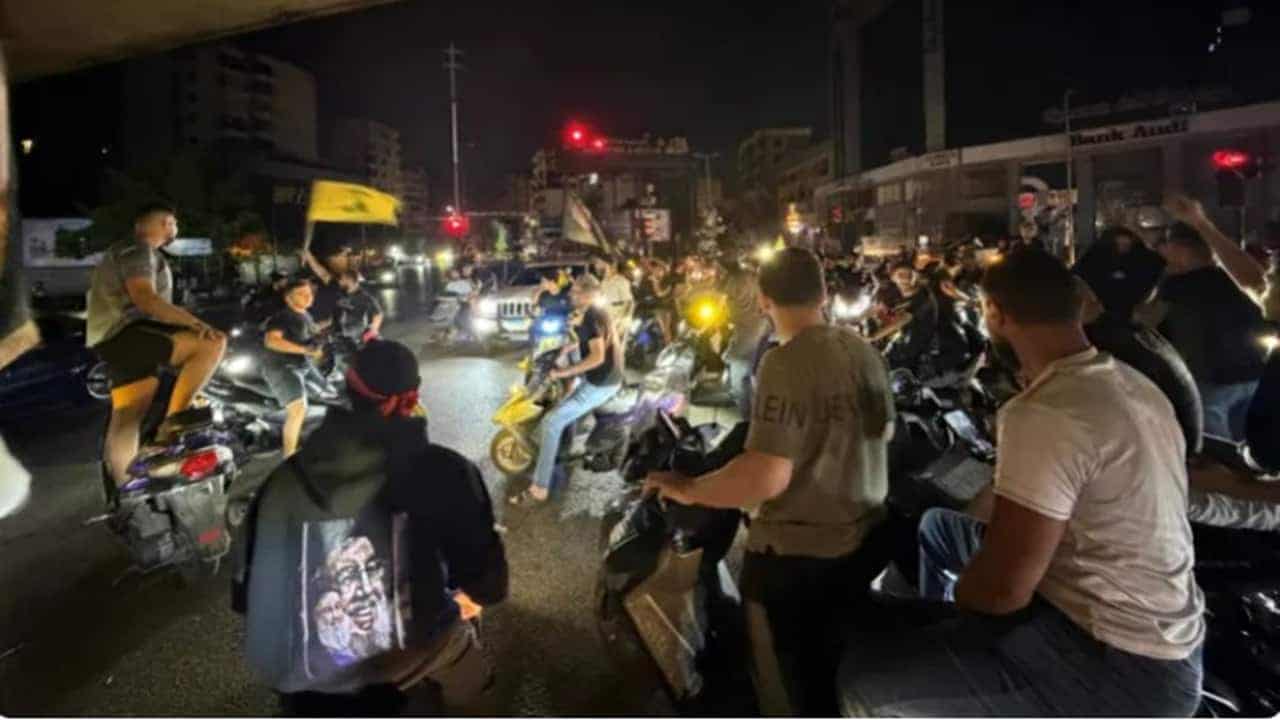
Hezbollah supporters had previously protested the agreement in Beirut, blocking roads and burning tires. Lebanon's Public Prosecutor ordered security forces to take measures to prevent riots following these protests. The agreement's text does not specify a timeline or conditions for Israel's withdrawal from occupied Lebanese territories.