Key facts
- General Motors is not offering a wide range of hybrid vehicles in the U.S. market.
- Consumer demand for hybrid vehicles has increased significantly due to high gasoline prices.
- Hybrids represented 19% of U.S. retail vehicle sales in August.
- GM's U.S. market share declined in the first half of the year.
- GM plans to introduce plug-in hybrids in North America by 2027, with a broader hybrid strategy to be implemented later in the decade.
General Motors is currently not benefiting from a significant increase in demand for hybrid vehicles in the U.S., a trend driven by high gasoline prices. While the automaker has prioritized investment in fully electric vehicles, its limited hybrid offerings mean dealers are losing potential customers to competitors who provide a wider range of fuel-efficient options.
Consumers are actively seeking hybrid vehicles, which combine a gasoline engine with an electric motor and battery to save fuel. This interest has surged, particularly since late February, with hybrid sales accounting for 19% of total U.S. retail vehicle sales in August, up from around 16% prior to the increase in gas prices. According to JD Power, hybrids sold more than twice as fast as non-hybrid gasoline cars during the second quarter.
GM executives have historically viewed hybrids as adding unnecessary cost and complexity, preferring to invest directly in EVs with the long-term goal of an all-electric market. GM CEO Mary Barra had previously described hybrids as an "interim solution." However, as EV sales have not met expectations, GM has adjusted its strategy, with Barra indicating that plug-in hybrids would be available in North America by 2027 and that hybrids would be offered in important segments, though a specific timeline has not been provided. Supplier sources and forecasting firms suggest GM may not have a new hybrid model available in the U.S. until the end of the decade.
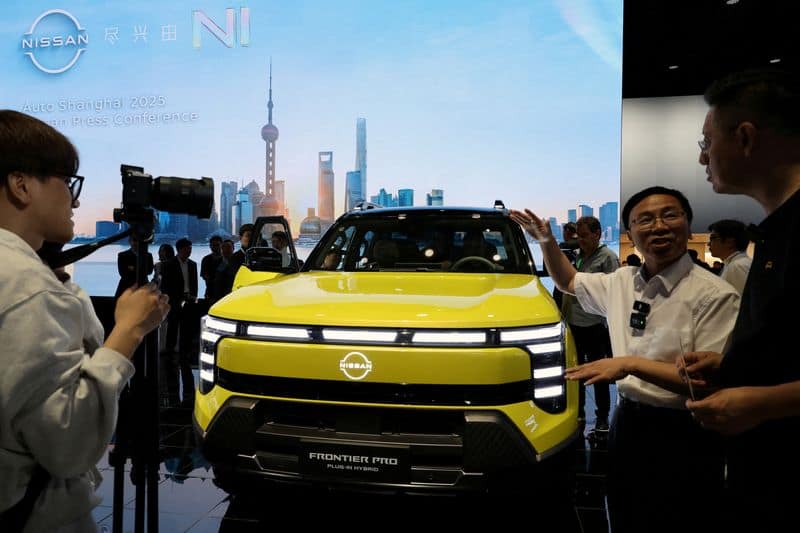
In contrast, other automakers, while also facing challenges with EV sales, have hybrids as a fallback and are looking to expand their offerings. Toyota Motor, a pioneer in hybrid technology, has seen strong sales performance attributed to its electrified vehicles, which include a significant number of hybrids. Nissan is accelerating the rollout of a new hybrid Rogue compact SUV in response to consumer demand. Industry experts note that hybrids are becoming a substantial part of the market, not just a temporary trend.
GM's U.S. market share has seen a slight decline, while hybrid leaders like Toyota and Honda have gained ground. Automotive analyst John Murphy suggests that GM's focus on profitable gas-only trucks and SUVs could still position the company well if regulations tighten, and that its strategy may not be a definitive mistake. However, some dealers express concern, with one New Jersey GM dealer hoping the company can adapt to produce more hybrids.