Key facts
- Germany's rail network has experienced a significant decline in punctuality and efficiency.
- The privatization of Deutsche Bahn in 1994 led to a focus on cost-cutting and underinvestment in infrastructure.
- Millions of commuters now travel longer distances daily, increasing network strain.
- The rail system now operates at 100% capacity, with delays causing cascading effects across the network.
- Deutsche Bahn's definition of an on-time train is one arriving less than 6 minutes late.
Germany's once-renowned rail network, known for its punctuality and efficiency, has deteriorated significantly over the past three decades due to a flawed privatization process and chronic underinvestment. In the late 1990s, trains were so reliable that they were described as being able to 'set your watch by them.' However, the 1994 privatization of Deutsche Bahn (DB), which merged the East and West German state railways with the mandate to operate as a profit-seeking entity for a potential IPO, led to a drastic shift in priorities.
To attract investors, DB implemented aggressive cost-cutting measures, including staff reductions, outsourcing of maintenance, and divestment into global logistics. Crucially, the company dismantled nearly 8,000 kilometers of secondary rail lines and removed essential infrastructure like track crossovers and passing loops. This thinning of the network, which once provided buffers for rerouting trains, now means that a single stalled train can cause widespread, cascading delays across the entire country.
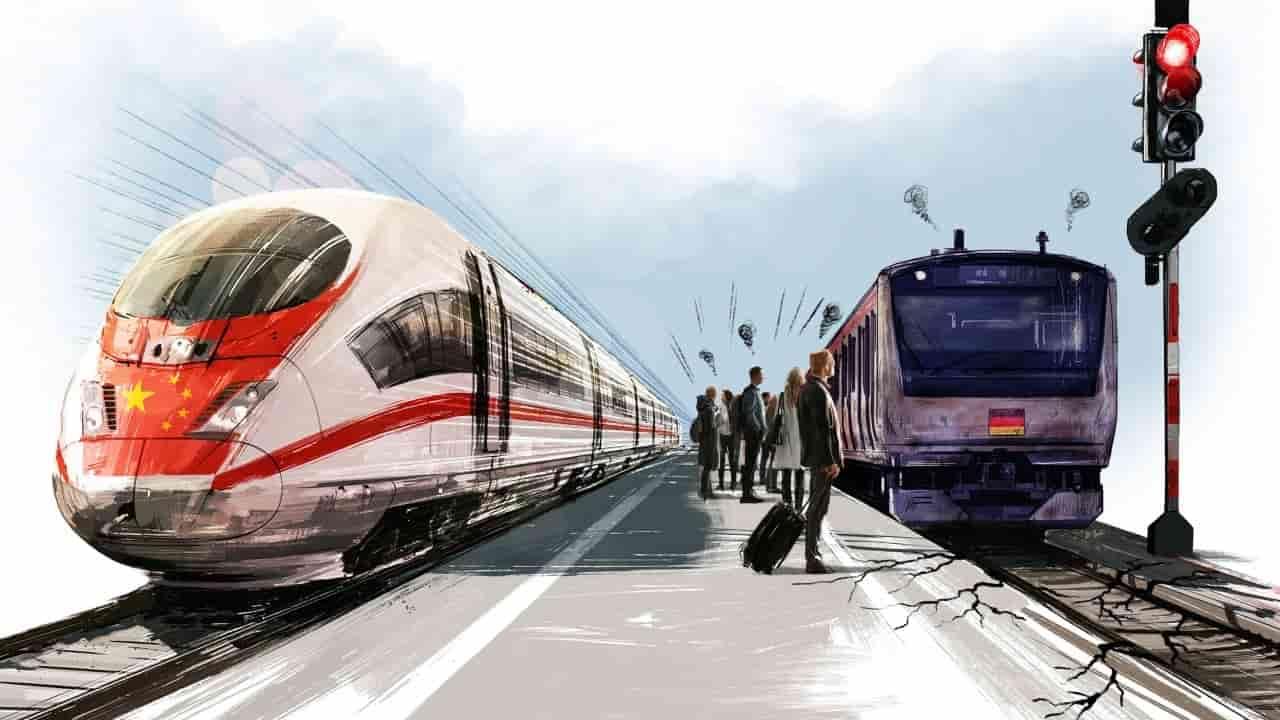
The situation is exacerbated by a mixed-rail system where high-speed Intercity Express (ICE) trains share tracks with slower regional commuter trains and heavy freight. This contrasts with dedicated high-speed networks in countries like China and France. Compounding the infrastructure issues, Germany has experienced a surge in passenger numbers, from 1.5 billion in 1994 to 2.4 billion today. This increase is largely attributed to rising housing costs in major urban centers, forcing a growing portion of the workforce to commute longer distances from suburban areas and smaller towns.
As a result, the DB system now operates at near-constant 100% capacity. The definition of an 'on-time' train has been lowered to arriving less than six minutes behind schedule, and even by this lenient standard, punctuality hovers around 50% to 60%, falling short of DB's own 70% target. The official explanations cite aging infrastructure and heavy construction, but the underlying cause is seen as decades of underinvestment stemming from the privatization model.