Key facts
- Germany's automotive industry is facing declining demand, increased competition from China, and new US tariffs.
- Volkswagen Group is considering closing four of its German factories.
- Volkswagen Group wrote down $11.5 billion due to financial challenges, including its stake in Porsche.
- Mercedes-Benz warned of potential closure of one German assembly plant and one German powertrain plant.
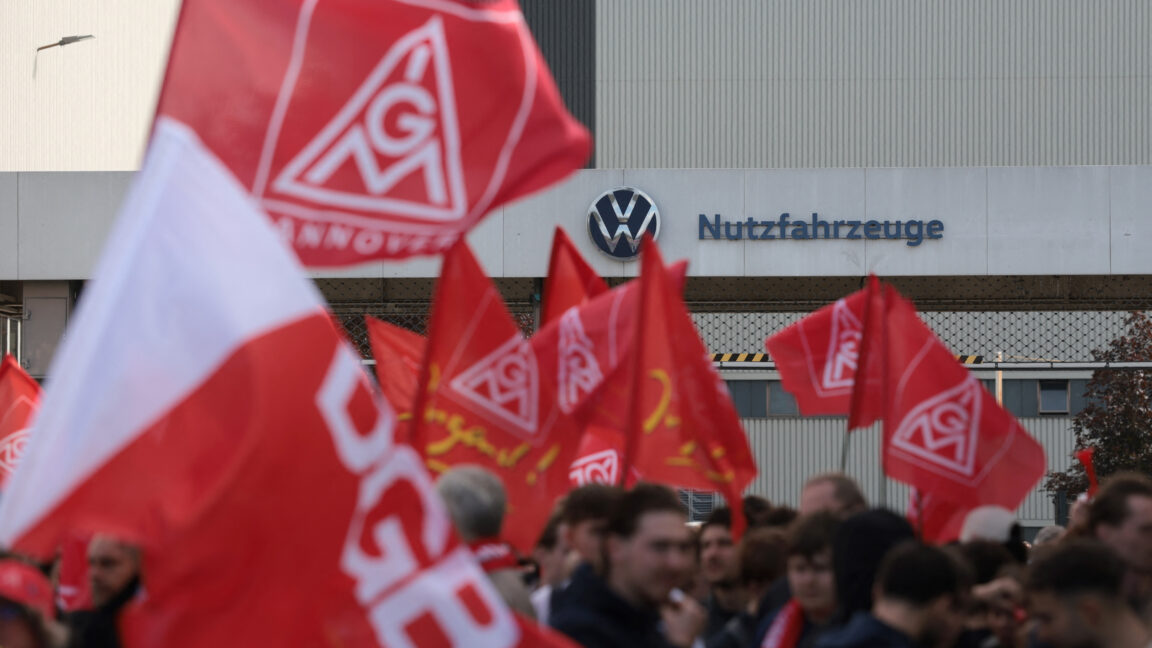
- Unions are protesting potential job losses and urging corporate leaders to protect Germany's automotive sector.
Germany's once-dominant automotive industry is facing a severe downturn, with carmakers like Volkswagen and Mercedes-Benz warning of potential factory closures and significant job losses. This crisis is driven by a confluence of factors including declining domestic and European demand, intensified competition from Chinese manufacturers, and new US import tariffs. Total automotive sales in Europe have fallen from a peak of nearly 18 million in 2019 to around 13 million in 2025, with a growing share of the market being captured by Chinese companies. The imposition of 25 percent US import tariffs further complicates exports for German carmakers, which have historically relied on the profitable US market. Volkswagen Group is reportedly considering closing four of its German factories. The company recently announced a $11.5 billion write-down, largely due to its 75 percent stake in Porsche, which has seen its electric vehicle sales fall short of expectations. VW brand head Thomas Schaefer indicated that performance improvement measures will be significantly accelerated. Mercedes-Benz has also alerted workers to the possibility of closing one German assembly plant and one German powertrain plant to cut costs. These developments have led to protests by workers and unions, such as IG Metall, who are calling on corporate leaders to take responsibility for the future of Germany as an automotive nation.