Key facts
- European companies operating in China are urging Beijing to address overcapacity and intense price competition.
- The EU's goods trade deficit with China reached nearly €400 billion in 2022.
- The European Commission plans to present new economic security tools by September 2026.
- Five EU member states have called for more aggressive action against Chinese industrial overcapacity.
- Proposed EU procurement rules would limit sourcing from any single non-EU country to 30-40% for critical components.
- The EU imposed countervailing duties on Chinese electric vehicles in October 2024.
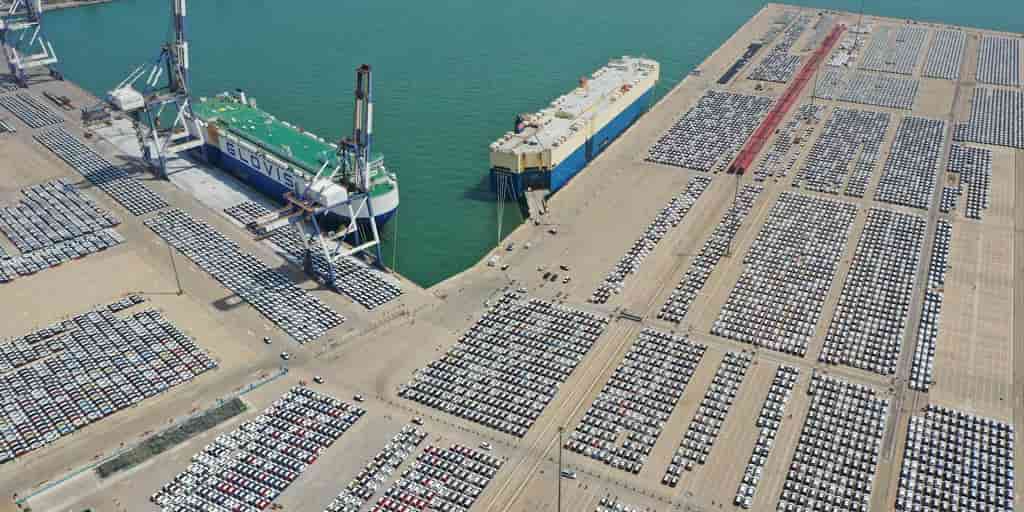
European companies operating in China are urging Beijing to address industrial overcapacity and intense price competition ahead of crucial trade talks scheduled for next month. A report released Tuesday by the EU Chamber of Commerce in China highlights concerns that an influx of Chinese products is hollowing out European industries and contributing to a widening trade imbalance.
The EU's goods trade deficit with China reached a peak of nearly €400 billion in 2022, while its services surplus remains meager and net positive foreign direct investment stocks have stagnated. Despite a shrinking Chinese market for European goods and investment, China's output continues to grow, with Beijing increasingly looking to Europe to absorb these goods.
In response, the European Commission is preparing to present new economic security tools by September 2026. A policy orientation debate on the issue is scheduled for May 29, with five member states—Spain, Italy, France, the Netherlands, and Lithuania—having signed a joint paper calling for more aggressive action against "systemic and structural industrial overcapacity."
Among the measures being considered are tighter public procurement rules that would require companies to source from at least three different suppliers, with no single supplier accounting for more than 30 to 40 percent of critical components. These rules, building on existing provisions under the Critical Raw Materials Act, would apply to sectors like chemicals, industrial machinery, and green technologies where China often dominates input supply.
Brussels is also considering measures that complement the Industrial Accelerator Act, which expands rules on public procurement, FDI screening, and input diversification. The EU has previously imposed countervailing duties on Chinese electric vehicles in October 2024, a move that required extensive economic analysis to assess subsidies and comply with WTO rules. However, such measures cannot be easily replicated across all at-risk sectors and have not significantly slowed the flow of Chinese products into the European market.