All NewsEducationTVBrokers
Equities & FundsCrypto & Digital AssetsAI & TechnologyBusiness & CorporateUS Politics & PolicyGeopolitics & Global RiskMacro, Rates & FXCommodities & EnergyEuropean Politics & MarketsAsia-PacificReal Estate & Property
All NewsHome
← Back to Geopolitics & Global Risk

Gaza 'ceasefire' has merely slowed the pace of societal destruction

Created at 1 Sep · 10:41 AM1 source↑ Market-relevant
IN SHORT

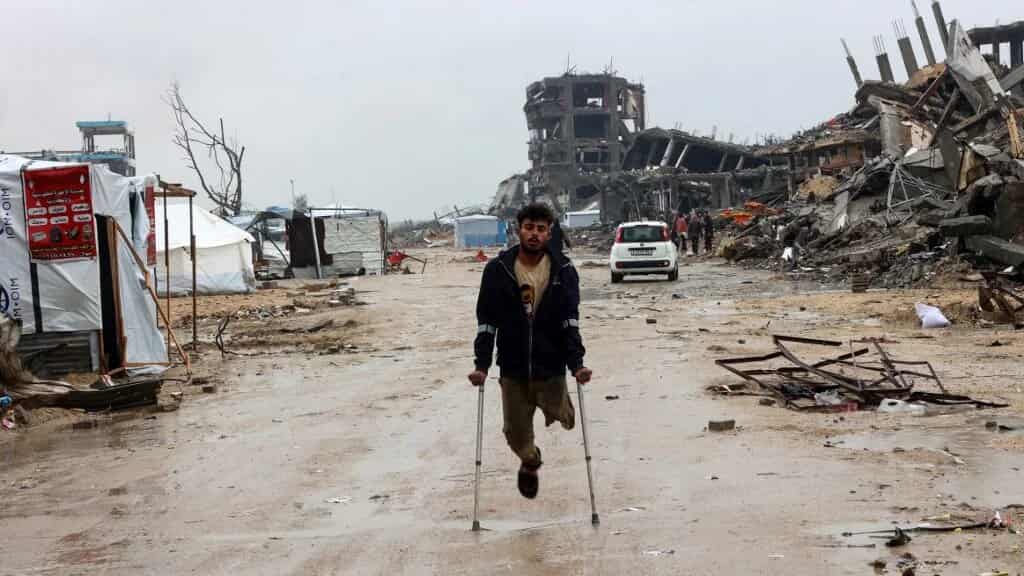
Despite a ceasefire, Gaza faces a growing population of survivors with life-altering injuries due to restricted rehabilitation supplies and destroyed infrastructure. The World Health Organization estimates that 43,000 individuals have sustained severe injuries, with limited access to necessary medical equipment and long waiting times for assistive products.

Key Numbers

43,000people injured with life-changing conditions
10,000children among those with life-changing injuries
136 daysaverage waiting time for assistive products
878commercial truckloads entered Gaza between Aug 3-9
2truckloads reportedly carried medical equipment
1,300Palestinians killed since ceasefire announcement
82 percentof structures damaged or destroyed
200,000buildings damaged or destroyed
1.2 millionPalestinians lost their homes
22,000major limb injuries recorded
5,000limb amputations
2,300amputees evaluated
500amputees fitted with permanent prosthetics
1 in 5amputees are children
1,200required specialised limb reconstruction treatment in 2018
1,900Palestinians injured since Oct 2025 ceasefire

Who's Involved

World Health Organization
estimated injuries and rehabilitation supply restrictions
Gaza 'ceasefire' has merely slowed the pace of societal destruction

↳ Why This Matters

The ongoing destruction of infrastructure and denial of critical medical supplies in Gaza are transforming survivable injuries into permanent disabilities and exacerbating a humanitarian crisis, fundamentally altering the fabric of Palestinian society.

Key facts

  • 43,000 Palestinians in Gaza have sustained life-changing injuries, including limb trauma, amputations, and brain injuries.
  • No rehabilitation equipment entered Gaza between May 2024 and April 2026, with assistive products facing long delays.
  • 82% of structures in Gaza are damaged or destroyed, impacting recovery conditions.
  • Less than a quarter of amputees have received permanent prosthetics due to severe shortages.
  • Rehabilitation facilities in Gaza are not fully functional, facing constraints in staffing, equipment, and supplies.

Despite a declared ceasefire in October 2023, the pace of destruction in Gaza has continued, particularly for those sustaining severe injuries. The World Health Organization estimates that 43,000 individuals have suffered life-changing injuries, including limb trauma, amputations, and brain damage, representing approximately 2% of Gaza's pre-war population. However, access to rehabilitation supplies and equipment remains severely restricted, with aid agencies reporting no rehabilitation equipment entered Gaza between May 2024 and April 2026, and shipments of assistive products facing average waiting times of 136 days.

Palestinian bodies are increasingly being maimed while the infrastructure necessary for recovery is simultaneously destroyed. Even after the ceasefire, critical aid continues to be denied, and Palestinians are still killed while sleeping, shopping, or on the beach. Aid deliveries and medical supplies are frequently blocked or severely restricted. As of August, Kerem Shalom was the only operational crossing for cargo, but the volume of supplies was insufficient, with only two of 878 commercial truckloads between August 3-9 carrying medical equipment.

The violence has changed in form and pace, but the conditions leading to preventable Palestinian deaths persist. Tents sheltering displaced people and remaining buildings are still bombed daily, with over 1,300 Palestinians killed since the ceasefire announcement. Around 82% of structures, approximately 200,000 buildings, have been damaged or destroyed, leaving over 1.2 million Palestinians displaced and without homes.

For those with life-changing injuries, these conditions are devastating. Major limb injuries account for the largest share, with over 22,000 recorded, and more than 5,000 limb amputations. Yet, less than a quarter of evaluated amputees have received permanent prosthetics due to severe shortages. No rehabilitation facility in Gaza is fully functional, operating under significant constraints. Surviving an initial injury does not guarantee survival when the conditions for treatment and recovery are systematically dismantled or denied.

Israel's practice of maiming Palestinian bodies while attacking rehabilitation infrastructure is not new, dating back to the 2018 Great March of Return. However, since October 2023, this has escalated with mass casualties from explosives, attacks on medical facilities, and severe restrictions on medical supplies. The destruction of healthcare infrastructure deepens and prolongs the effects of bodily injury, extending the impact of injuries across households and communities. The situation is increasingly being normalized as 'postwar' Gaza, despite ongoing killing, injury, and deprivation, a pattern seen in previous Israeli assaults followed by ceasefires that failed to end the violence.

Frequently asked questions

The World Health Organization estimates that 43,000 people have sustained life-changing injuries in Gaza since October 2023.

Rehabilitation supplies and equipment have been severely restricted, with no rehabilitation equipment entering Gaza between May 2024 and April 2026. Assistive products faced an average waiting time of 136 days.

Approximately 82 percent of all structures in the Gaza Strip, roughly 200,000 buildings, have been damaged or destroyed.

Less than a quarter of the 2,300 amputees evaluated between September 2024 and May 2026 had been fitted with permanent prosthetics.

What Happens Next

01Reconstruction remains far from reach for damaged and destroyed buildings.
02Tens of thousands of people continue to live with life-changing injuries amid inadequate conditions.

How It Developed

The World Health Organization estimated that 43,000 people have sustained life-changing injuries in Gaza since October 2023.
Rehabilitation supplies have been restricted, with no equipment entering Gaza between May 2024 and April 2026.
Shipments of assistive products faced an average waiting time of 136 days.
Despite a ceasefire, Palestinians continue to be killed, and aid deliveries remain restricted.
As of August, Kerem Shalom was the only operational crossing for cargo, with insufficient medical equipment entering.
Over 1,300 Palestinians have been killed since the ceasefire was announced.
Approximately 82 percent of structures in Gaza have been damaged or destroyed.
Less than a quarter of amputees evaluated have been fitted with permanent prosthetics due to shortages.

Sources

T1
Gaza 'ceasefire' has merely slowed the pace of societal destructionMiddle East Eye

Related Stories

Israeli army kills first, seeks justification later, veterans group alleges
31 Aug · 1:06 PM
Morocco's Ceuta and Melilla claim not a decolonisation demand
31 Aug · 3:11 PM
Lebanese child dies from Israeli cluster bomb blast
1 Sep · 12:26 AM
Sudan's RSF held discreet meetings with Israeli officials over two years: Report
31 Aug · 5:51 PM
US condemns settler attack on NBC News crew in West Bank
31 Aug · 9:51 PM