All NewsEducationTVBrokers
Equities & FundsCrypto & Digital AssetsAI & TechnologyBusiness & CorporateUS Politics & PolicyGeopolitics & Global RiskMacro, Rates & FXCommodities & EnergyEuropean Politics & MarketsAsia-PacificReal Estate & Property
All NewsHome
← Back to Geopolitics & Global Risk

Morocco's Ceuta and Melilla claim not a decolonisation demand

Created at 31 Aug · 3:11 PM1 source↑ Market-relevant
IN SHORT

Morocco's recent proposal for talks with Spain on the future of Ceuta and Melilla is not a decolonisation demand, despite renewed refugee crossings and historical claims. The move comes amid Morocco's strengthened alliance with the US and Israel.

Key Numbers

141people died in refugee crossings
17th centuryMorocco ruled by local dynasty
1415Portugal conquered Sabtah
1640Sabtah stayed with Spain
1668Treaty of Lisbon formally ceded Sabtah
1497Spain conquered Maliliah
18th to 20th centuryrepeated Moroccan attempts to recapture territories
1859-60Spanish-Moroccan War
1898Spain's defeat in Spanish-American War
1900Treaty of Paris demarcated Spanish colonies
1904France recognised Spanish zone
1912Treaty of Fez established French protectorate
191340,000 Spanish troops occupied Tetouan
1919 to 1921Spanish forces invaded protectorate territories
July 17, 1921Abd al-Karim launched pre-emptive strike
13,000 to 19,000Spanish troops died in retreat from Anwal
March 1922Rifians sank Spanish warship
four million pesetaspaid to Rifians for prisoners of war
$11.6mequivalent value of payment today
570Spanish prisoners held by Rifians
326Spanish prisoners survived
1924Spaniards retreated from Shafshawan
17,000 to 20,000Rifian casualties inflicted
June 1925French and Spanish commanders met in Madrid
123,000European troops assembled against Rif Republic
12,000Rifian fighters
September 1925European forces attacked
spring of 1926Spain launched naval assault
May 1926'Abd al-Karim surrendered
10,000Rifians killed defending lands
43,500Spanish troops killed, wounded or missing

Who's Involved

Morocco
renewed demands for Spain to return Ceuta and Melilla
Spain
rejected Morocco's proposal for talks on Ceuta and Melilla
Giorgia Meloni
Prime Minister of Italy, whose government introduced border checks
Muhammad 'Abd al-Karim al-Khattabi
leader of the Rif resistance against Spanish rule
US
strengthened ally of Morocco
Israel
strengthened ally of Morocco
Morocco's Ceuta and Melilla claim not a decolonisation demand

↳ Why This Matters

The renewed Moroccan claims to Ceuta and Melilla, coupled with the refugee crisis and geopolitical maneuvering, highlight ongoing tensions over territorial sovereignty in North Africa and underscore the complex interplay of historical grievances, migration pressures, and international alliances.

Key facts

  • Morocco has renewed its demands for Spain to return the territories of Ceuta and Melilla.
  • The demands follow a wave of refugee attempts to reach the Spanish enclaves.
  • At least 141 people died during these crossings.
  • Morocco proposed talks with Spain regarding the future status of Ceuta and Melilla.
  • Spain has rejected Morocco's proposal for talks.
  • The article argues Morocco's claim is not a decolonisation demand, given its geopolitical alliances.

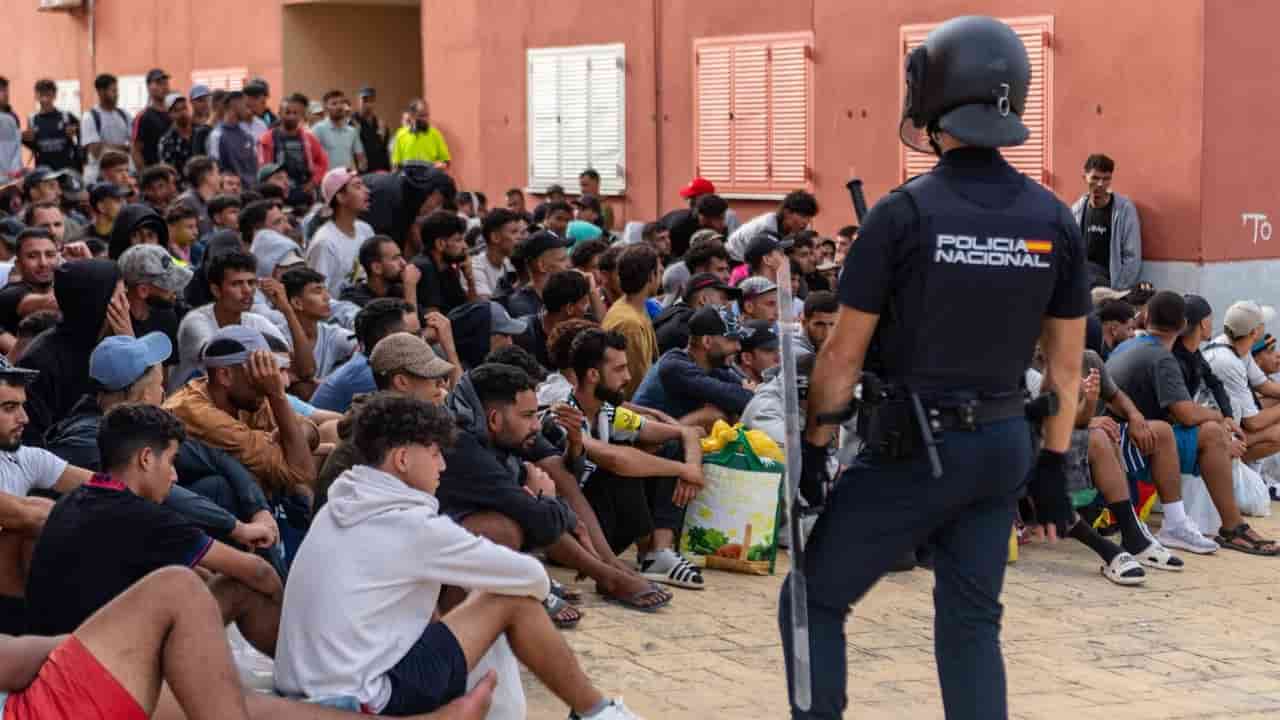
Morocco has recently renewed its claims to the Spanish territories of Ceuta and Melilla, known in Arabic as Sabtah and Maliliah. This resurgence of demands follows a wave of tens of thousands of Moroccan and other African economic refugees attempting to reach these Spanish enclaves, a situation that resulted in at least 141 deaths. The article argues that Morocco's revived claim is not a straightforward demand for decolonisation, particularly given its strengthened alliance with the US and Israel, which are described as hostile to Spain's current government.

Historically, Portugal conquered Sabtah in 1415, and it remained with Spain after the Iberian Union broke up in 1640, being formally ceded in the 1668 Treaty of Lisbon. Spain conquered Maliliah in 1497. Both cities have remained under Spanish rule despite repeated Moroccan attempts to recapture them from the 18th to the 20th century. Spain's colonial ambitions in Morocco were reignited after its defeat in the Spanish-American War of 1898. Through treaties in 1900 and 1912, French and Spanish zones of influence in Morocco were demarcated, with Spain establishing a protectorate over a northern strip including Ceuta and Melilla.

The region saw significant resistance, notably the Rif War led by Muhammad 'Abd al-Karim al-Khattabi. In 1921, 'Abd al-Karim's forces inflicted heavy casualties on Spanish troops, leading to the proclamation of the Republic of the Rif. The republic eventually fell in 1926 after a coordinated invasion by French and Spanish forces, which employed poison gas against civilians and fighters. 'Abd al-Karim surrendered and was exiled.

In response to the recent refugee crisis, Italy's government introduced targeted border checks for non-EU nationals arriving from Spain, which Spain reciprocated. Amidst this, Morocco proposed talks with Spain on the future status of Ceuta and Melilla, a proposal that Spain outright rejected.

Frequently asked questions

Ceuta and Melilla are Spanish cities located on the north coast of Africa, bordering Morocco. They are referred to in Arabic as Sabtah and Maliliah.

The claims have been renewed following a recent influx of refugees attempting to reach these Spanish enclaves, and in the context of Morocco's strengthened alliance with the US and Israel.

Portugal conquered Sabtah (Ceuta) in 1415, and Spain conquered Maliliah (Melilla) in 1497. Both have remained under Spanish rule despite historical Moroccan attempts to reclaim them, and were part of Spanish colonial efforts in North Africa.

The Rif War (1919-1926) was a major resistance movement led by Muhammad 'Abd al-Karim al-Khattabi against Spanish and French colonial rule in northern Morocco, including areas around Ceuta and Melilla.

What Happens Next

01Morocco and Spain are expected to continue diplomatic exchanges regarding the status of Ceuta and Melilla.
02Further developments in refugee flows and border control measures between Spain, Italy, and Morocco are anticipated.

How It Developed

Tens of thousands of refugees attempted to reach Ceuta and Melilla.
Morocco renewed demands for Spain to return Ceuta and Melilla.
At least 141 people died during the refugee crossings.
Italy imposed border checks on non-EU nationals arriving from Spain.
Spain retaliated with matching border controls on flights and boats from Italy.
Morocco proposed talks with Spain on the future status of Ceuta and Melilla.
Spain rejected Morocco's proposal for talks.
Morocco's claim is framed within its strengthened alliance with the US and Israel.

Sources

T1
Morocco's revived claim to Ceuta and Melilla is not a demand for decolonisationMiddle East Eye

Related Stories

Italy Extends Border Curbs With Spain Amid Ceuta Migrant Crisis Fallout
31 Aug · 10:27 AM
Lebanon's Aoun urges implementation of US-backed Israel deal
31 Aug · 11:51 AM
Israeli strike kills five Palestinians in Gaza
31 Aug · 10:49 AM
Ex-counterterrorism chief urges US troops out of Gulf amid Iran tensions
30 Aug · 9:46 PM
US-based Palestinian family faces settler violence in West Bank
31 Aug · 11:11 AM