Key facts
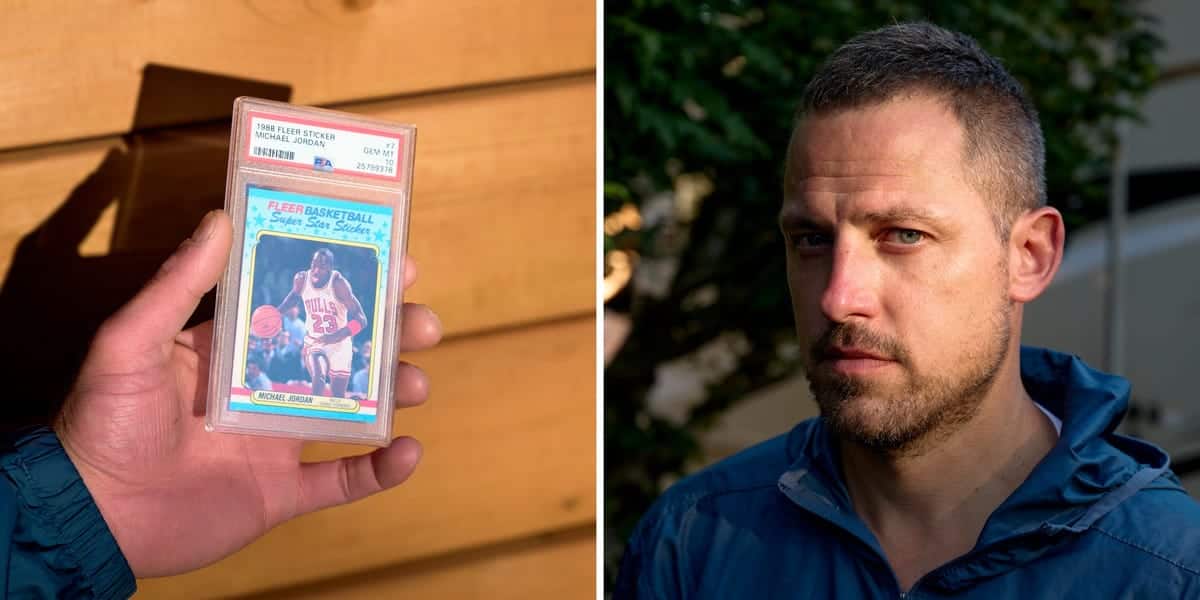
- Anthony Curcio, a former bank robber, is facing federal charges for alleged fraud in the $15 billion trading card industry.
- Prosecutors claim Curcio defrauded buyers by faking identities and doctoring labels on rare cards.
- Curcio's defense argues the charges are a result of retribution from Professional Sports Authenticator (PSA), the dominant grading company.
- PSA, owned by Collectors Holdings, holds approximately 80% of the card grading market.
- A congressman has requested an FTC antitrust investigation into Collectors Holdings.
- PSA has recently faced customer boycotts and allegations of grade manipulation.
Anthony Curcio, a figure previously known for a high-profile bank robbery, is now facing federal charges for allegedly defrauding buyers within the $15 billion trading card industry. Prosecutors allege that over a two-year FBI investigation, dubbed Operation Heist and Holder, Curcio engaged in wire fraud and conspiracy by lying to buyers, faking his identity, and altering the labels of rare trading cards. Evidence presented by the prosecution reportedly includes text messages, recordings, and forgery tools found in his home.
Curcio's defense, however, contends that the case is not about fraud but rather retribution against Curcio by Professional Sports Authenticator (PSA), the industry's dominant grading company. PSA, a subsidiary of Collectors Holdings and backed by billionaire Steve Cohen, holds an estimated 80% of the card grading market. The defense argues that Collectors Holdings has created a monopoly, effectively dismantling market competition.
This controversy has drawn broader attention, with a New York congressman calling for a Federal Trade Commission antitrust investigation into Collectors Holdings. PSA has also faced a customer boycott stemming from fee increases and accusations of grade manipulation. Curcio himself has spoken out, asserting that PSA has "a lot to hide" and accusing the company of maintaining a "horizontally and vertically integrated monopoly."
Curcio's past activities in the trading card community, including alleged involvement with counterfeit cards and altering grades, have resurfaced in light of the current charges. He previously detailed in his memoir how he obtained money by selling a counterfeit card after being defrauded himself. In response, a PSA spokesperson stated that the company authenticates, grades, and protects items to foster collector confidence, and that its systems intercepted approximately $200 million in potential counterfeit value last year.