Key facts
- The Rhine River's low water levels continue to restrict barge transport, impacting industrial supply chains.
- Chemical production and fuel distribution are constrained, leading to higher freight costs and localized shortages.
- Weak European demand is currently masking the full extent of the disruption, preventing a broader crisis.
- Alternative transport methods like rail and road cannot fully replace the Rhine's capacity.
- Future weather patterns, such as a strong El Niño, could exacerbate low-water conditions in subsequent years.
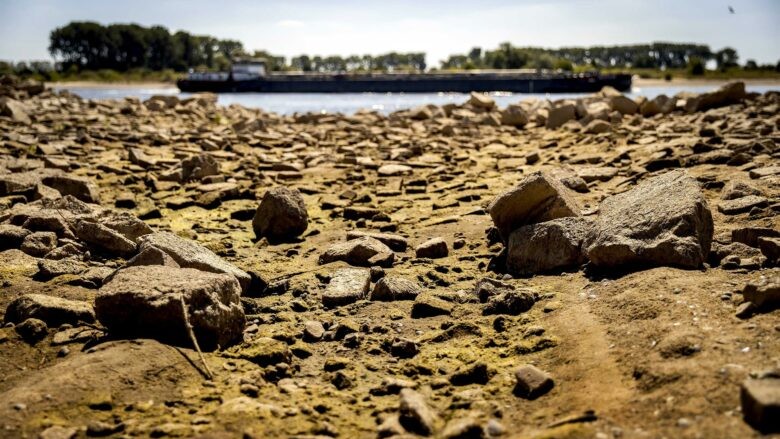
Europe is facing a significant logistical challenge as low water levels on the Rhine River severely limit barge transport, impacting crucial industrial corridors. While the river's level has slightly improved from record lows seen in mid-August, it remains far from normal, preventing barges from carrying full loads. This situation constrains transport capacity between major hubs like Rotterdam and Antwerp and industrial centers in Germany, France, and Switzerland, leading to higher freight costs, restricted chemical production, and uneven fuel distribution.
The Kaub gauge, a critical chokepoint on the Middle Rhine, dictates navigable depth. When it fell below 10 cm in August, the waterway was only about 1.2 meters deep, a stark contrast to the approximately 2.3 meters depth a year prior. Although the level has since recovered to around 45 cm, it is still well below the 77 cm benchmark required for normal commercial traffic. This fragmentation effectively divides what is typically a single market, with specialized low-draft barges being the only vessels capable of crossing at the lowest levels, and routes to the Upper Rhine becoming largely impassable.
The chemical industry is particularly vulnerable. Major steam cracker sites operated by BASF, INEOS, LyondellBasell, and Shell, with a combined ethylene capacity of 3.1 million tons per year, are located along the Rhine corridor. BASF's Ludwigshafen complex, situated south of Kaub, relies on the river for approximately 40% of its incoming and outgoing goods. While naphtha, a key feedstock, is largely transported by pipeline, the movement of finished products from crackers is heavily dependent on river transport. Restrictions on these movements lead to full storage facilities and necessitate production cutbacks. LyondellBasell's force majeure on its Wesseling butadiene unit exemplifies this, stemming from restricted feedstock flows and a subsequent decline in crude C4 production.
Refining operations are also affected. Although most inland German refineries receive crude via pipelines, they rely on the Rhine for distributing refined products like gasoline, diesel, and heating oil. The Miro refinery in Karlsruhe, for instance, is holding surplus products due to restricted barge movements in both directions, while distant markets face shortage premiums. The Rhine's freight rates reflect this imbalance, with the ARA-Karlsruhe barge rate surging five-fold to €215/t from €45/t in late June.
While road and rail can offer some relief, they cannot replace the Rhine's volume. One barge carrying 2,400 tons of diesel is equivalent to 90 trucks. Germany's temporary relaxation of Sunday and holiday driving restrictions for heavy vehicles offers some flexibility but cannot overcome the fundamental limitations of available infrastructure and specialized transport. The competition for scarce rail and truck capacity intensifies as industries seek workarounds, creating cumulative bottlenecks.
This disruption is not confined to Germany. Eastern France has experienced localized gasoline shortages, and Switzerland faces higher import costs. Although Rotterdam and Antwerp remain supplied by sea, congestion and slower terminal turnover are spreading costs across the wider northwest European market. The situation results in dispersed issues of trapped supply and local shortages rather than a single, unified European shortage.
Crucially, weak demand across Europe has so far prevented these localized issues from escalating into a broader crisis. European crackers were operating at only about 70% capacity in July due to factors including expensive energy, weak construction and automotive demand, and competition from Asian imports. However, if manufacturing activity rebounds and demand for chemicals and fuels increases, the current transport limitations could lead to a much more severe disruption, even with modest improvements in water levels.
The Rhine's low-water crisis serves as a stress test for an industrial system heavily reliant on efficient river transport. It highlights the limitations of pipelines, railways, and roads in quickly replicating the Rhine's unique capacity. The current situation underscores that while weak demand can cushion a logistics failure, it does not resolve it. A future economic rebound could expose the fragility of this system, extending the problem far beyond the river itself.
Furthermore, this summer's conditions may not represent the worst-case scenario. A strong El Niño could lead to a warmer winter, reduced Alpine snowpack, and a weaker meltwater buffer, potentially causing even lower Rhine levels in future summers.