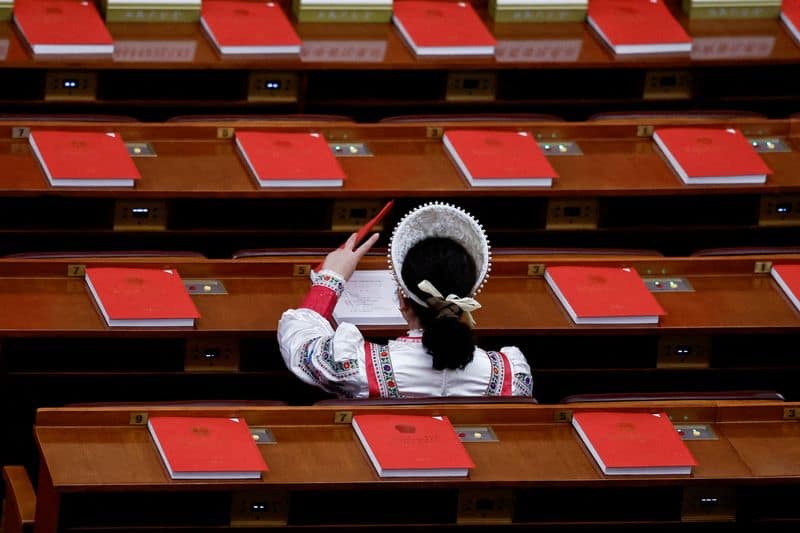
China has dismissed criticism from the United States and the European Union regarding its new ethnic unity law as a "malicious smear" and interference in its internal affairs. The law, which went into effect on Wednesday, provides Beijing with a legal basis to take action against individuals outside its borders, a move that has sparked alarm in Taiwan.
The legislation aims to foster a "shared" national identity among China's 55 ethnic minority groups, including Tibetans and Uyghurs, some of whom have historically resisted Chinese governance. A key clause states that people and groups beyond the borders of the People's Republic of China can be held legally accountable for undermining "ethnic unity and progress or inciting ethnic separatism."
China's foreign ministry spokesperson Guo Jiakun stated that strengthening the rule of law is conducive to protecting the rights and interests of all ethnic groups and enhancing ethnic unity. He accused "certain countries" of clinging to ideological bias and fabricating information to "maliciously smear" China's ethnic policies.
Taiwan's Mainland Affairs Council head Chiu Chui-cheng described the law's scope as "global and almost boundless," likening it to an imperial edict. He warned Taiwanese to be wary of travelling to countries with close ties to Beijing, where they could risk extradition to China. Taiwan's government rejects Beijing's sovereignty claims, asserting that China's legal system has no jurisdiction or authority in Taiwan.
Earlier, a spokesperson for China's Taiwan Affairs Office stated there was "no need for concern" for visiting Taiwanese but warned that "Taiwan independence forces" would be punished if they undermined ethnic unity.