Key facts
- Economist Mark Zandi warns the Federal Reserve risks a 'serious' policy mistake by raising interest rates too aggressively.
Mark Zandi, chief economist at Moody's Analytics, believes the Federal Reserve is at risk of making a significant policy error by raising interest rates too aggressively. He argues that current inflation is largely driven by supply shocks like energy prices and tariffs, which rate hikes cannot fix. Zandi suggests leaving rates unchanged could be more beneficial for consumers and the broader economy.
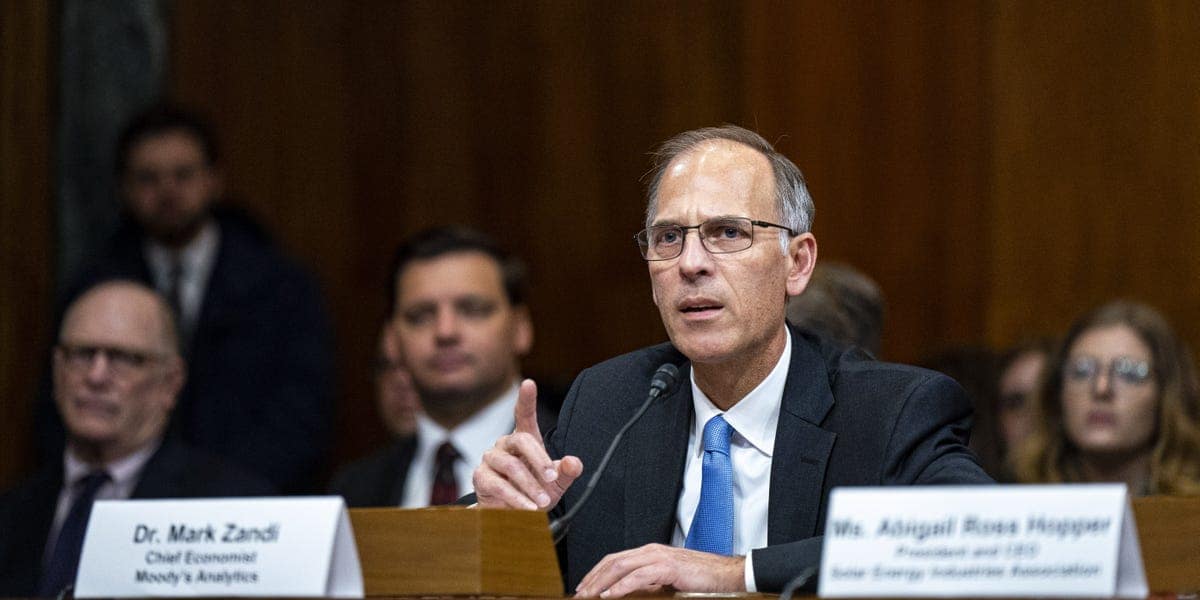
Consumers are facing mounting financial pressure from inflation and the fading benefits of tax cuts, and a Federal Reserve policy mistake of raising rates too aggressively could exacerbate these issues, potentially harming the labor market and overall economic growth.
Mark Zandi, chief economist at Moody's Analytics, has expressed concern that the Federal Reserve may be on the verge of making a significant policy error by tightening monetary policy too aggressively. Zandi argues that the current high inflation, which he notes is above 3%, is primarily driven by supply shocks such as elevated energy prices and tariffs. He believes these factors are temporary and that rate hikes are not an effective solution.
Instead, Zandi suggests that maintaining current interest rates might be a more sensible approach. He highlighted that the positive impact of last year's tax cuts on consumers has now dissipated, leaving households more vulnerable to rising costs. The ongoing geopolitical tensions, particularly the conflict in Iran, have already contributed to increased transportation and energy expenses, costing the average US household an estimated $1,000.
Zandi warned that a continued surge in oil prices, potentially reaching $110 to $130 per barrel, could push gasoline prices towards $5 per gallon nationwide. Such a scenario, coupled with higher interest rates, would place considerable strain on many US households.