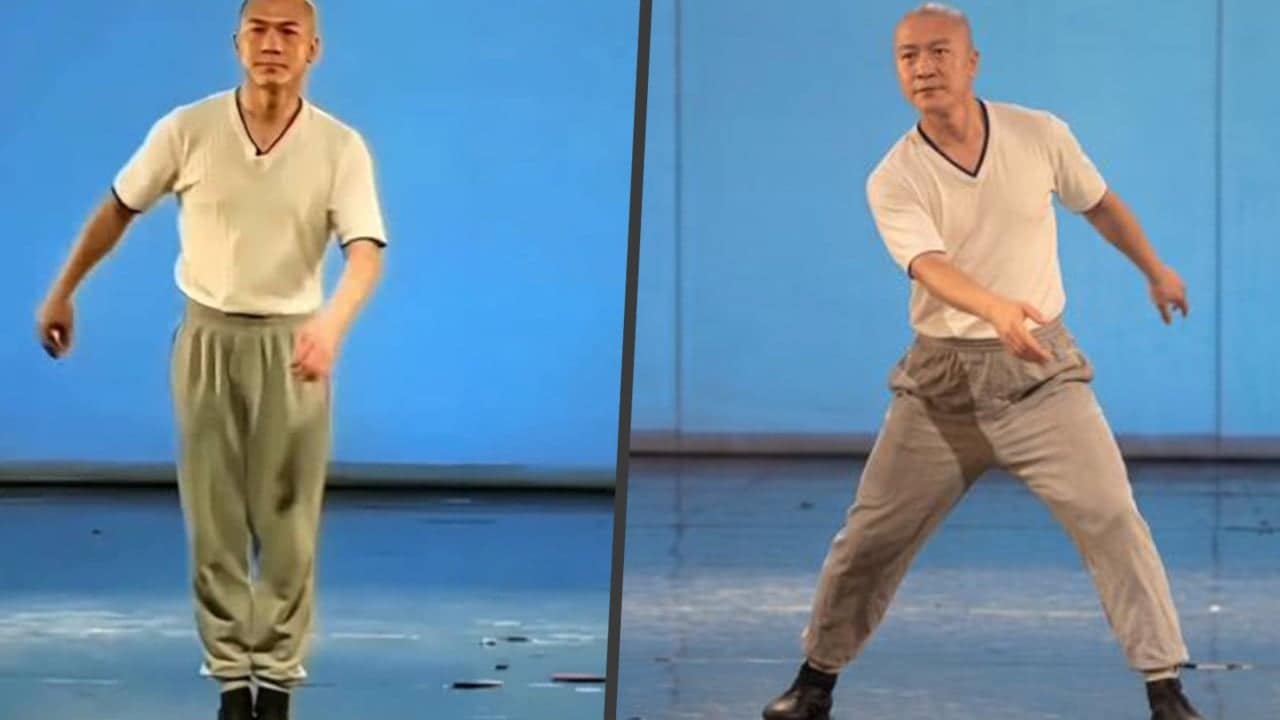
A viral dance move known as the "flash step," originating from traditional Chinese folk dance, has gained immense popularity on social media platforms, leading to widespread imitation and subsequent injuries. Doctors are now warning the public about the physical risks associated with blindly replicating complex dance routines without proper training.
The "flash step," along with other moves like "prodigal kicking the ball" and "black bear shaking fur," became a trend after a 1990s dance tutorial video resurfaced. While seemingly simple, the "flash step" is a fundamental technique for professional dancers of Anhui Hua Gudian, a national intangible cultural heritage. Professional dancers utilize a coordinated effort of their core, gluteal, and thigh muscles, maintaining a stable center of gravity and balanced force on their knee joints to prevent injury.
However, many individuals attempting to replicate the move only mimic the external appearance. They often keep their feet fixed on the ground while abruptly twisting their upper body, causing their center of gravity to shift and forcing their knee joints to rotate beyond their normal range. This action generates significant shear force, which is a common mechanism for non-contact anterior cruciate ligament (ACL) tears. The ACL acts as a crucial stabilizer for the knee, and its rupture can lead to instability and long-term issues, with a poor self-repair capacity.
Reports from hospitals indicate that numerous young patients have sought medical attention for knee injuries, including ACL sprains and partial tears, after attempting the "flash step." Medical professionals emphasize that ordinary individuals often have limited muscle strength and joint stability, and performing explosive twisting movements without adequate warm-up can easily lead to ligament damage. Warning signs include a "pop" sound in the knee, followed by pain, weakness, swelling, and difficulty bearing weight.
Experts advise that while the "flash step" bringing traditional dance to a younger audience is positive, imitation should not be a mere "copycat" exercise. They recommend proper warm-up routines, including light cardio, joint mobility exercises, and core strengthening, before engaging in any dance activity. It is crucial to choose movements that align with one's physical capabilities and to avoid forcing high-difficulty professional techniques. If any joint pain, swelling, or restricted movement occurs, individuals should stop exercising immediately and seek medical attention to prevent acute injuries from becoming chronic conditions.