Key facts
- China Mobile's Hohhot intelligent computing center now has a total capacity of 20,100 petaflops.
- The expansion triples the center's previous capacity.
- 16,700 petaflops of the total capacity are dedicated to AI workloads.
- 90% of the computing power will serve the Beijing-Tianjin-Hebei region.
- The facility uses 88% green electricity.
- Transmission latency to Beijing is 3.5 milliseconds.
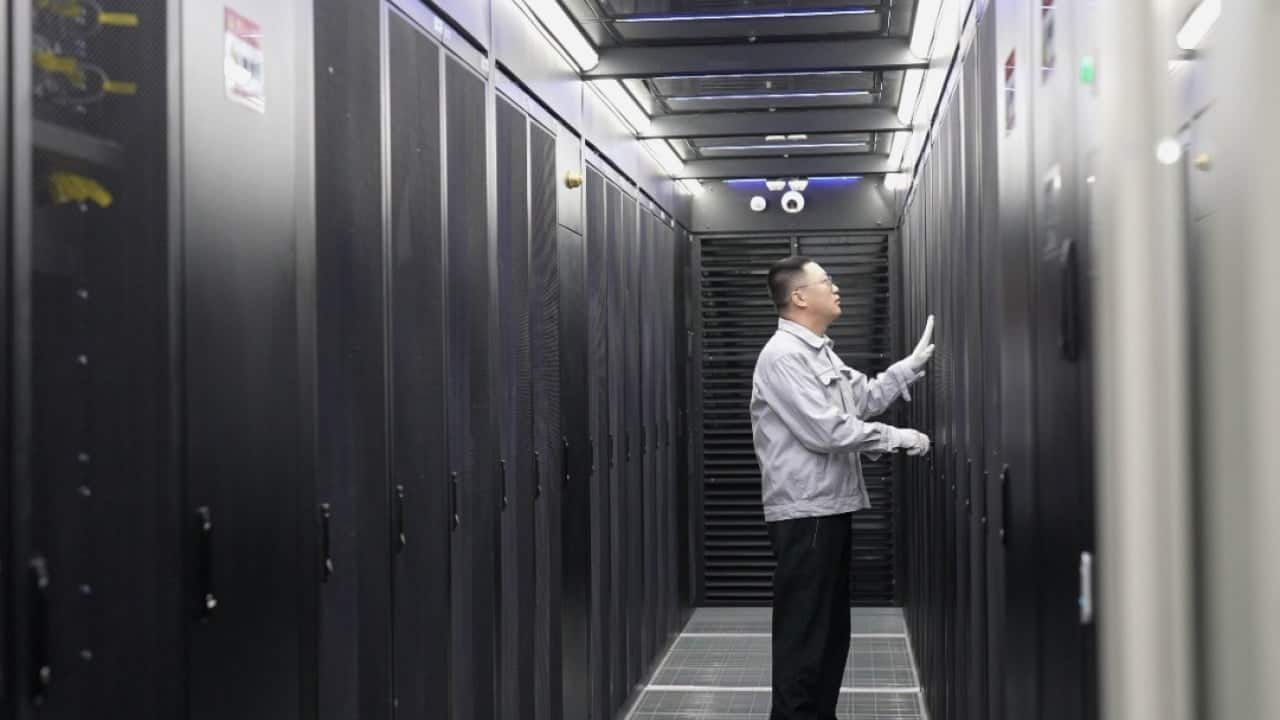
China Mobile has completed an expansion of its intelligent computing center in Hohhot, Inner Mongolia, significantly increasing its processing capacity to 20,100 petaflops. This expansion triples the facility's previous capacity and is part of China's broader national strategy to bolster its digital infrastructure and artificial intelligence capabilities.
The expanded data center, located in the Horinger New Area, now boasts a total computing power of 20,100 petaflops, with 16,700 petaflops specifically allocated for AI workloads. The project, which involved an IT total power of 120 MW, is designed to support the Beijing-Tianjin-Hebei region, with 90% of its computing power directed to serve these areas. The center's proximity to Beijing is enhanced by a transmission latency of just 3.5 milliseconds, facilitated by a 400G OTN backbone network, meeting the demand for low-latency computing services.
Aligning with national green energy initiatives, the Hohhot facility utilizes 88% green electricity, drawing from the abundant wind and solar resources in Inner Mongolia. This focus on renewable energy contributes to lower operational costs and reduced carbon emissions. The center employs advanced technologies such as liquid cooling and AI energy management systems to achieve a high energy efficiency, with an average power usage effectiveness (PUE) of 1.15.
China Mobile's Hohhot intelligent computing center is recognized as the largest single-site intelligent computing center operated by a telecom carrier globally. It is a key component of China Mobile's "4+N+31+X" computing network and a landmark project within the national "East Data West Computing" initiative, aiming to establish Inner Mongolia as a significant hub for data circulation and trade.