Key facts
- President Felix Tshisekedi announced a national dialogue to ease political tensions.
Democratic Republic of Congo President Felix Tshisekedi announced plans for a national dialogue to ease political tensions stemming from a bill that could allow him to seek a third term. Armed groups, including the M23 rebels, will be excluded from the process.
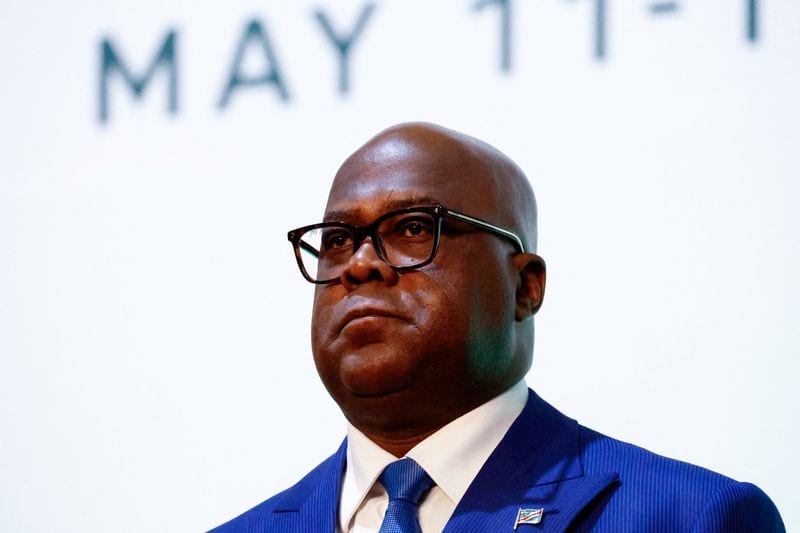
The initiative aims to de-escalate internal political tensions and address security concerns in eastern Congo, while the exclusion of key rebel groups raises questions about the potential for lasting peace and stability.
Democratic Republic of Congo President Felix Tshisekedi has announced plans for a national dialogue aimed at easing political tensions, particularly those surrounding a bill that critics suggest could enable him to seek a third presidential term. The dialogue is set to commence with consultations across Congo's 26 provinces, culminating in national talks in the capital, Kinshasa.
Tshisekedi specified that armed groups and entities acting on behalf of foreign powers would be excluded from the discussions, explicitly ruling out the Rwanda-backed AFC/M23 rebels who currently control significant areas in eastern Congo. The invited participants will encompass a broad spectrum of Congolese society, including political parties, civil society organizations, religious leaders, traditional authorities, business representatives, academics, youth and women's groups, and members of the Congolese diaspora.
The specific dates and conditions for this dialogue process are to be announced later, with the entire initiative expected to conclude within a maximum of three months. Political friction has intensified in the mineral-rich nation following the adoption of a bill in June that permits constitutional changes to be put to a referendum. Supporters of Tshisekedi have openly advocated for such reforms to allow him to run for re-election, despite the constitution limiting presidents to two five-year terms. Tshisekedi, first elected in 2018 and reelected in 2023, has previously stated he would accept another mandate if the Congolese people desired it, with his current term scheduled to end in 2028.
The proposed reforms have faced strong opposition and condemnation from the influential Catholic Church and various opposition groups. An opposition protest in June aimed at these reforms was met with a forceful dispersal. These groups have called for a more inclusive dialogue that would permit rebel factions and supporters of former President Joseph Kabila to participate. The entire process unfolds against a backdrop of a precarious security situation in eastern Congo and a rapidly spreading Ebola outbreak.
Pick the topics you care about. Get only what matters, on your cadence.