Key facts
- China has launched the world's first commercially operated underwater data center near Shanghai.
- The facility is powered by offshore wind and cooled by the ocean, achieving a PUE rating of 1.15.
- It is part of China's 'computing-power synergy' strategy to develop AI clusters with power infrastructure.
- Shanghai's Lingang Special Area plans to double intelligent computing capacity by year-end.
- China Telecom successfully tested remote AI computing task dispatching to a facility in Xinjiang.
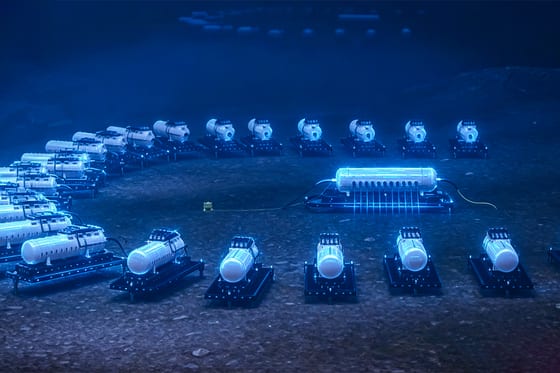
Ten kilometers off Shanghai's coast, Shenzhen HiCloud Data Center Technology Co. has launched a novel underwater data center. The 32-meter steel platform houses a submerged 1,950-ton cylindrical cabin containing a high-density computing hub, cooled by the ocean and powered by offshore wind, achieving a PUE rating of 1.15. This facility, commercially operational since February, is a key component of China's 'computing-power synergy' strategy.
This strategy, outlined in China's government work report, emphasizes the synchronized development of large AI clusters and their power infrastructure. Shanghai's Lingang Special Area exemplifies this, with data centers contributing to a nearly 30% surge in power consumption in early 2026. Local authorities are expanding substations and offering subsidies to support the expected doubling of intelligent computing capacity by year-end.
The underwater design addresses land scarcity and energy efficiency. Unlike a previous pilot, this design separates power equipment onto a surface platform and servers into the submerged cabin, reducing maintenance costs. Power is sourced from an offshore wind farm, the onshore grid, and backup generators. While connected to the wind farm, the project currently purchases green electricity at commercial rates from the state grid.
In line with the 'East Data, West Computing' initiative, China Telecom successfully tested dispatching computing tasks from Lingang to a data center in Karamay, Xinjiang, over 4,000 km away. This test reduced Shanghai's local power load by 75% and demonstrated seamless task transfer. China Telecom plans similar tests to Hubei and Fujian in 2025, but routine dispatches require a market-driven pricing mechanism, currently hindered by chip shortages and varying AI model energy demands.
On land, SenseTime Group is optimizing data center energy use by integrating an 18-megawatt energy storage station into its Lingang hub. Using a proprietary AI energy model, SenseTime predicts loads and strategically releases stored electricity to avoid peak surcharges, reportedly reducing annualized electricity costs by 7%. As Shanghai moves towards a continuous spot electricity market, AI-driven energy management is expected to become crucial.