Key facts
- China rejected a U.S.-drafted G20 joint statement on rectifying global trade imbalances.
- U.S. Treasury Secretary Scott Bessent accused China of flooding the world with cheap exports.
China refused to join a G20 consensus statement on rectifying global trade imbalances, rejecting U.S. Treasury Secretary Scott Bessent's accusations of flooding the world with cheap, subsidized exports. The U.S. issued a separate chair's statement outlining concerns.
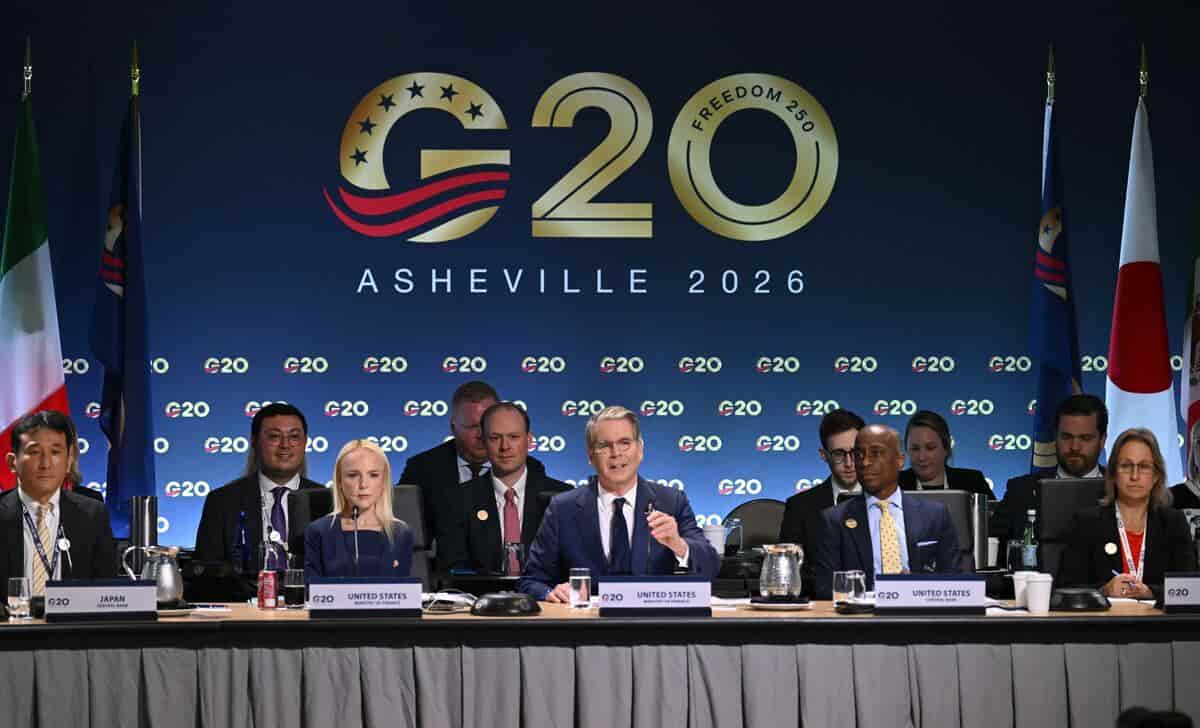
China's rejection of the G20 consensus on trade imbalances highlights ongoing global economic friction and sets a contentious backdrop for upcoming high-level discussions between the U.S. and China, potentially impacting international trade relations and supply chain stability.
China has refused to endorse a U.S.-drafted joint statement from a Group of 20 finance meeting aimed at rectifying global trade imbalances. U.S. Treasury Secretary Scott Bessent had accused China of flooding the world with cheap exports, a criticism Beijing consistently rejects.
Following China's objection to specific language in the proposed communique, the United States issued a separate chair's statement. This statement, agreed upon by all other G20 members present, including Russia, asserted that countries should "eliminate nonmarket policies and practices that exacerbate imbalances." The U.S. statement also called for countries with excessive external surpluses to "remove distortions that constrain domestic consumption and that result in an overreliance on exports for growth."
China's specific objections reportedly included language concerning efforts to secure reliable supply chains for critical minerals and improve the global sovereign debt architecture. Chinese Foreign Ministry spokesman Guo Jiakun expressed regret over the lack of a joint statement, citing "differing views held by various parties." He emphasized that the G20 should coordinate on global economic issues in an "objective, impartial, and balanced manner, based on the principles of consensus and equal participation."
Japanese Finance Minister Satsuki Katayama described the U.S. approach as "tactful," and some officials viewed the separate statement as meaningful for clarifying China's reluctance to address economic problems. The discord emerges approximately three weeks before a planned meeting between U.S. President Donald Trump and Chinese President Xi Jinping in Washington, where trade tensions and export restrictions are expected to be key discussion points.
The finance meeting occurred amidst broader global economic challenges, including rising inflation driven by ongoing conflicts and disruptions to supply chains, leading to concerns about borrowing costs and a sell-off in global bond markets. Despite these pressures, the finance chiefs acknowledged the global economy's resilience and reaffirmed their commitment to price stability and exchange rates reflecting economic fundamentals.
Pick the topics you care about. Get only what matters, on your cadence.