Key facts
- QatarEnergy secured a $3 billion loan from four Chinese banks.
- The loan is for five years and is the largest exclusively Chinese-underwritten corporate loan for a Qatari state entity.
- Attacks in March damaged Qatar's LNG facilities, impacting 17% of its export capacity.
- Repairs to damaged LNG trains are projected to take three to five years, with Shell's Pearl GTL plant expected to be fully repaired by Q1 2027.
- QatarEnergy is accelerating its North Field East (NFE) expansion program, aiming for significant new LNG production by 2029.
- The first LNG train under the NFE expansion program is expected to begin operation as early as next month.
QatarEnergy has secured a $3 billion loan from four major Chinese banks to accelerate its liquefied natural gas (LNG) expansion projects, a development that raises questions about its geopolitical balancing act. The loan, a five-year syndicated debt facility, is the largest exclusively Chinese-underwritten corporate loan to a Qatari state entity to date.
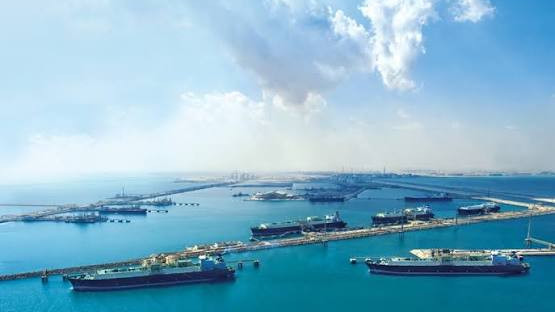
This financial move comes in the wake of significant damage to Qatar's primary LNG facilities at Ras Laffan Industrial City in March, which took offline 17% of the emirate's total LNG export capacity. The attacks, attributed to Iran, inflicted long-term damage on two major LNG processing 'trains' and Shell's Pearl GTL facility. QatarEnergy's CEO, Saad Sherida Al-Kaabi, confirmed that the loss of this capacity equates to approximately $20 billion in lost annual revenue. Repairs are projected to take three to five years, with Shell's Pearl GTL plant expected to be fully operational by the first quarter of 2027.
To counter these losses, QatarEnergy has aggressively pushed forward its North Field East (NFE) and North Field South (NFS) expansion programs, which will add six major new developments by 2029, totaling 48 million metric tons per year (mtpy) of new LNG production. Further projects focused on the North Field West (NFW) aim to increase Qatar's total LNG output from 77 million mtpy to 142 million mtpy before the end of the decade. Reports indicate that the first LNG train under the NFE expansion program could begin operation as early as next month, significantly ahead of previous timelines.
Qatar's strategic location and its role as a major LNG supplier, particularly to Europe following Russia's invasion of Ukraine, have placed it at the center of complex geopolitical dynamics. The country has sought to maintain pragmatic relationships with both Western allies and China, its key energy customer. The recent loan from Chinese banks underscores China's significant financial influence and its reliance on Qatari energy resources, even as Qatar plays a vital role in Western energy security strategies.