Key facts
- China plans to inject up to 360 billion yuan ($53.6 billion) into state-owned insurers.
- The Ministry of Finance will issue 300 billion yuan in special bonds to fund the injections.
- Five state insurers, including China Life Insurance, China Taiping Insurance, and PICC Group, will receive capital injections.
- Analysts believe the capital injections will alleviate solvency pressures and enable increased equity investments.
- Chinese insurance stocks declined on Monday due to concerns over earnings dilution.
China is planning significant capital injections into its state-owned insurers, totaling up to 360 billion yuan ($53.6 billion), according to reports. The Ministry of Finance will issue 300 billion yuan in special bonds to facilitate these injections, a move analysts believe will alleviate capital constraints and solvency pressures that have previously limited insurers' long-term investments in the stock market. This recapitalization is intended to support insurers that have been directed to invest in equities and to help regulators manage smaller, riskier insurance companies.
Analysts like Gary Ng from Natixis suggest that the state-led capital infusion will make it easier for insurers to purchase equities and meet solvency requirements, especially as Beijing has encouraged them to allocate a larger portion of new premiums to stocks. Zhongtai Securities analysts noted that in the short term, the capital will ease pressure on solvency ratios, and in the medium to long term, it removes a constraint on boosting equity investments and strengthens the capital base of these state-owned entities.
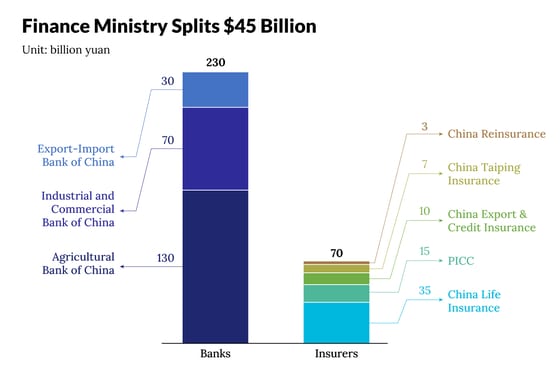
The timing of these funds is sooner than anticipated, with market expectations leaning towards support materializing around 2027. Five state insurers are set to receive a combined 70 billion yuan, with China Life Insurance (Group) Co receiving 35 billion yuan, China Taiping Insurance Group receiving 7 billion yuan, and PICC Group planning to raise up to 15 billion yuan through a private placement to the finance ministry. Citi analysts observed that the downsized package suggests healthier capital positions among Chinese insurers, indicating less urgency for aggressive capital replenishment than previously thought.
Despite the capital injections, Chinese insurance stocks experienced a decline on Monday. Some investors expressed caution, warning against overinterpreting the move and focusing instead on potential earnings dilution. Charles Wang, chairman of Shenzhen Dragon Pacific Capital Management Co, commented that the injections do not necessarily translate into more money flowing into the real economy and that further stimulus measures will need to be monitored.